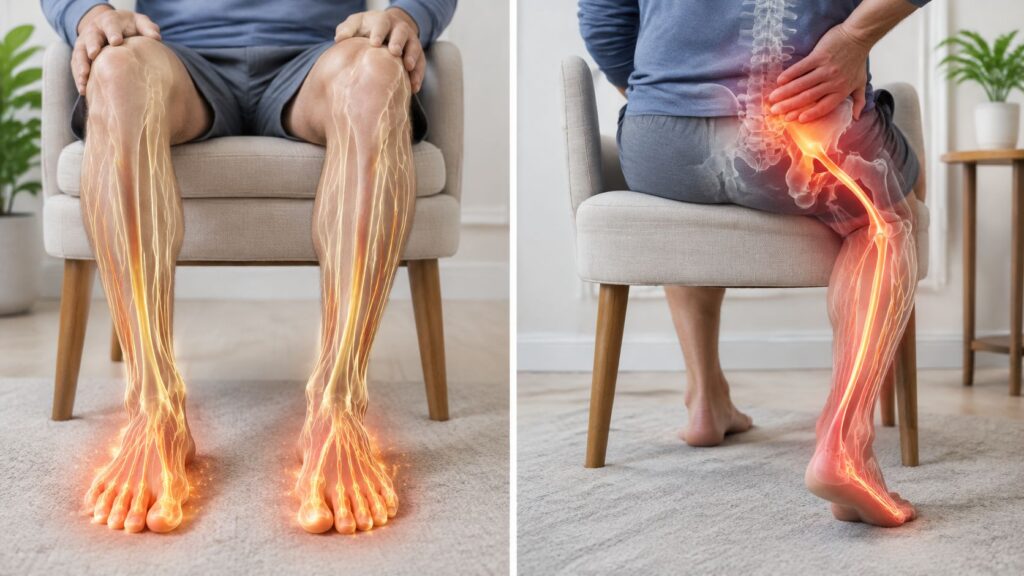
You rolled onto your shoulder at 2 a.m., reached for the coffee mug in the morning, or twisted to buckle your seatbelt, and a sharp pain stopped you cold. That kind of pain feels small for a second, then it starts running the day, because every reach, lift, and turn reminds you it's there. In Chicago Ridge and the surrounding Illinois communities, that's often the first real clue that the rotator cuff is involved.
Rotator cuff pain isn't one single diagnosis. It's a family of tendon and bursa problems around the shoulder that tend to flare with overhead work, lifting, and lying on the painful side, and the underlying issue is often degenerative load management rather than one dramatic injury. That matters, because the right plan usually starts with reducing stress on the tendon, not chasing panic, opioids, or an MRI before you've even had a proper exam.
When a Simple Reach Becomes a Real Problem
The pattern usually starts in an ordinary moment. A patient in Oak Lawn or Palos Hills spends Saturday painting a room, gardening, or lifting boxes, then wakes up the next day with a shoulder that hates certain movements. The pain might be dull at first, then sharper when the arm goes overhead or behind the back, and suddenly putting on a coat feels like a chore instead of a habit.
That's classic for rotator cuff pain. The rotator cuff is the tendon group that helps center the shoulder while the larger muscles move the arm, so when those tendons get irritated, frayed, or pinched, the whole joint starts to complain during daily motion.
Why this problem keeps showing up
This isn't a rare orthopedic curiosity. A systematic review reported rotator cuff tendinopathy incidence of 0.3% to 5.5% and annual prevalence of 0.5% to 7.4%, and structural abnormalities rise steeply with age, from 9.7% in people 20 years and younger to 62% in those 80 years and older (systematic review and age-related population data). In the U.S., shoulder pain drives about 4.5 million office visits and about $3 billion in annual healthcare costs, which is why this is a high-volume clinical issue, not a niche complaint (same U.S. context source).
Practical rule: if a shoulder hurts most when it's lifted, lowered, or rolled onto at night, think mechanical load first, not just “inflammation.”
That same load story helps explain why many people in Worth, Bridgeview, and Orland Park can have symptoms without a big injury. The tendon often wears down gradually, so the shoulder starts protesting before anything feels “torn.” The good news is that this usually gives us room to treat it in steps, with a conservative-first plan that's designed to spare opioids and reserve procedures for the shoulders that need them.
How the Rotator Cuff Works and Why It Hurts
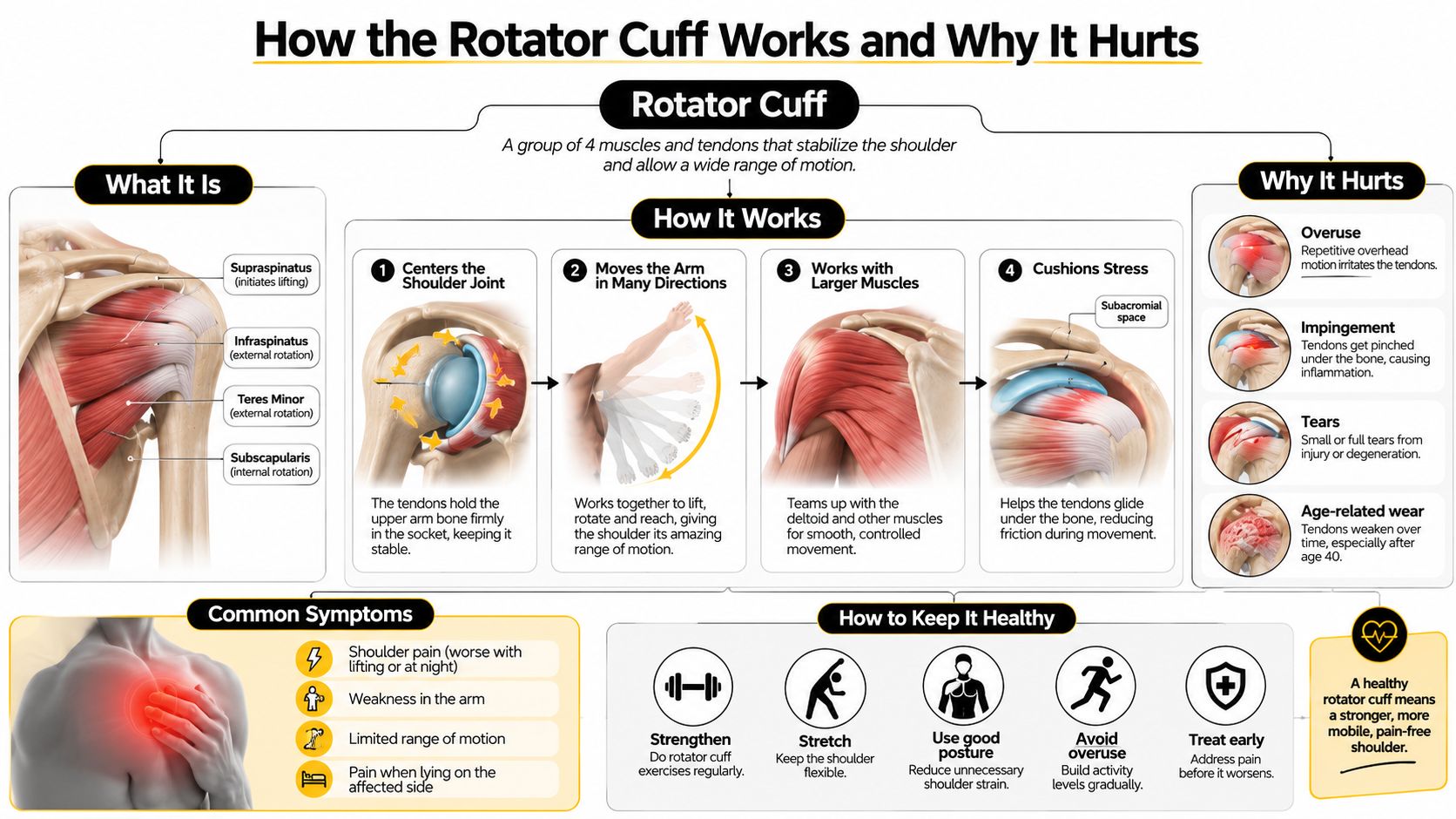
The shoulder moves through a wide arc because the joint is built for mobility, not deep bony stability. The rotator cuff works like four cables that keep the arm bone centered in the socket while the deltoid does the heavier lifting. When those cables are healthy, the motion stays controlled. When they are irritated, weakened, or crowded by the space around them, even a simple reach can start to hurt.
The four tendons in plain language
The supraspinatus starts the arm moving away from the body, which is why it often gets irritated first. The infraspinatus and teres minor turn the arm outward, which matters when you reach back for a seat belt or steer. The subscapularis turns the arm inward and helps steady the front of the shoulder during lifting and pushing.
A small lubricating sac called the subacromial bursa sits beneath those tendons and helps them glide with less friction. When the arm spends a lot of time overhead, the space above the cuff can narrow and the tendon-bursa unit gets mechanically crowded. That is why painters, lifters, and people who work overhead often notice pain in the same motions again and again.
Keep the shoulder out of the crowded position for a while, then rebuild tolerance gradually. That is the logic behind good rehab.
Age and wear fit this pattern. A clinical review describes rotator cuff pain as a degenerative load-management problem, with tendon wear, reduced blood supply, and repeated overhead or eccentric loading slowly lowering how much stress the tissue can tolerate. Once that tolerance drops, ordinary motions can feel too heavy for the shoulder, and pain may show up long before anyone would call it a major injury.
Common Types of Rotator Cuff Problems
Patients hear these terms thrown around as if they all mean the same thing, but they don't. Tendonitis means inflammation. Tendinopathy or tendinosis means tendon degeneration and disorganization. Calcific tendonitis means calcium has deposited in the tendon. A partial tear means the tendon is damaged but still attached. A full-thickness tear means the tendon has detached through its full depth.
| Condition | What's Happening | Typical Trigger | Symptom Pattern | Clinical Implication |
|---|---|---|---|---|
| Tendonitis | Inflammation in the tendon | Recent overload or irritation | Pain with motion, often after a flare | Often starts with load reduction and rehab |
| Calcific tendonitis | Calcium deposition in the tendon | Sometimes no clear trigger | Can be sudden and intense | May need targeted pain control if severe |
| Tendinopathy or tendinosis | Degenerative tendon change | Repetitive use, aging, cumulative stress | Achy pain, pain with overhead use | Load management and strengthening matter most |
| Partial-thickness tear | Tendon is partly torn, not fully detached | Wear, overload, or injury | Weakness, pain lifting or lowering the arm | Often treated nonoperatively first |
| Full-thickness tear | Tendon is torn through its full depth | Acute injury or long-term wear | Weakness, night pain, possible loss of function | Imaging and surgical discussion may be needed |
The tricky part is that pain intensity does not always match the tear size. Some tears hurt a lot, some hardly hurt at all, and some people with structural changes on imaging feel fine. That's why a “normal” MRI doesn't automatically end the story, and an abnormal MRI doesn't always explain the whole picture.
What the shoulder report doesn't tell you by itself
A structural abnormality can be present without being the primary pain generator. Historical population studies show that tears become much more common with age, including 22.2% prevalence of at least one full-thickness tear in a Norwegian community study, with 4.5% bilateral tears and age-group increases up to 29% in ages 80–89 (BMJ Open population study). That's why the exam and the story matter as much as the scan.
If your report says “tear,” the next question is whether that tear matches your symptoms, your strength, and your function. If it doesn't, the right answer may still be conservative care rather than immediate surgery.
Symptoms That Point to the Rotator Cuff
The classic shoulder pattern is mechanical. Pain often sits on the top of the shoulder or upper arm, then flares when you lift the arm, lower it to the front or side, reach behind the back, or lie on the affected shoulder (MedlinePlus symptom description). That's why getting dressed, combing your hair, or pulling a shirt off can hurt more than sitting still.
Use motion to screen your own symptoms
If reaching into a high cabinet hurts, that leans toward cuff irritation. If lowering the arm from overhead gives you a catch or sharp pull, that's another common clue. If pain spikes when you tuck your hand behind your back, the cuff may be getting compressed or stretched in a way it doesn't tolerate well.
Loss of strength matters too. MedlinePlus notes that some tears cause loss of strength and clicking or popping, and HSS adds that rotator cuff pain usually sits on the outside of the shoulder and may radiate to the elbow but not typically past it (MedlinePlus, HSS rotator cuff pain overview). That distribution helps separate cuff pain from pain that behaves more like neck, nerve, or chest-related discomfort.
If the pain runs below the elbow, comes with numbness, or feels tied to neck movement, don't assume it's the cuff.
Red flags that need prompt evaluation
Sudden weakness after a fall or jerk, inability to lift the arm, visible deformity, or shoulder pain with chest pressure or shortness of breath should push you to be seen quickly. Those patterns can point away from the rotator cuff entirely, or they can signal an acute tear that needs faster attention. A shoulder problem can be painful, but it should never distract you from symptoms that sound cardiac or neurologic.
How a Pain Specialist Diagnoses Rotator Cuff Pain
A good diagnosis starts with mechanics, not just imaging. I want to know what motion hurts, whether it started after a lift or a reach, whether it wakes you at night, and whether the pain lives in the shoulder itself or seems to travel from somewhere else. Then I watch how the shoulder moves, because the way a person lifts, lowers, and rotates the arm often tells you more than a static picture does.
The exam has to test more than one structure
The cuff isn't the only thing that can hurt around the shoulder. Referred pain can come from the cervical spine, thoracic spine, labrum, joint capsule, nerves, or even vascular tissues, so I don't blame the cuff until I've considered the other possibilities. That matters especially when the pain pattern is odd, weakness is present without a clear injury, or the shoulder findings don't line up neatly with the complaint.
X-rays can help look for arthritis or bone spurs, and they're useful when the question is, “Is something else going on in the joint?” Ultrasound can be a strong in-office option when I want a dynamic look at the soft tissues without radiation. MRI becomes more useful when I suspect a full-thickness tear, when conservative care hasn't helped, or when surgical planning is on the table.
Diagnostic principle: image the shoulder to answer a question, not just to collect a picture.
The same logic applies to treatment staging. A patient who wants to know whether they need a procedure may need a clearer diagnosis first, especially if the shoulder pain is being referred from the neck or another area. For that reason, a careful workup often lines up the exam, the imaging choice, and the first treatment together rather than racing straight to surgery.
If you're trying to understand where a diagnostic block fits into that process, this overview of a nerve block injection shows how targeted injections can help sort pain generators when the exam suggests a nerve component.
Self-Care and Rehab That Actually Helps
The first goal is to calm the shoulder down without letting it decondition. That usually means relative rest, not total shutdown. Skip the motions that spike pain, trim back repeated overhead work, and keep the arm moving in safe ranges so the joint doesn't stiffen up while it's healing.
Start with load control and simple symptom relief
Ice or heat can help with symptom control, and over-the-counter anti-inflammatories or acetaminophen may be appropriate depending on your health history and medication tolerance. Sleep position matters more than many realize. A pillow under the elbow can unload the cuff and keep the shoulder from collapsing forward at night.
The rehab piece should be specific. A program that strengthens the rotator cuff and scapular stabilizers is more useful than random shoulder exercises that just fatigue the deltoid. That's also why desk setup and driving posture matter, because a shoulder that stays shrugged, rounded, or propped in one position all day never gets a chance to settle.
Progress is measured in weeks to months, not in a single good day.
A flare during rehab usually means the load was too much, too soon. It doesn't mean you failed. The shoulder often improves best when exercises are scaled to tolerance, then advanced gradually as pain and motion settle.
Interventional and Surgical Treatment Options
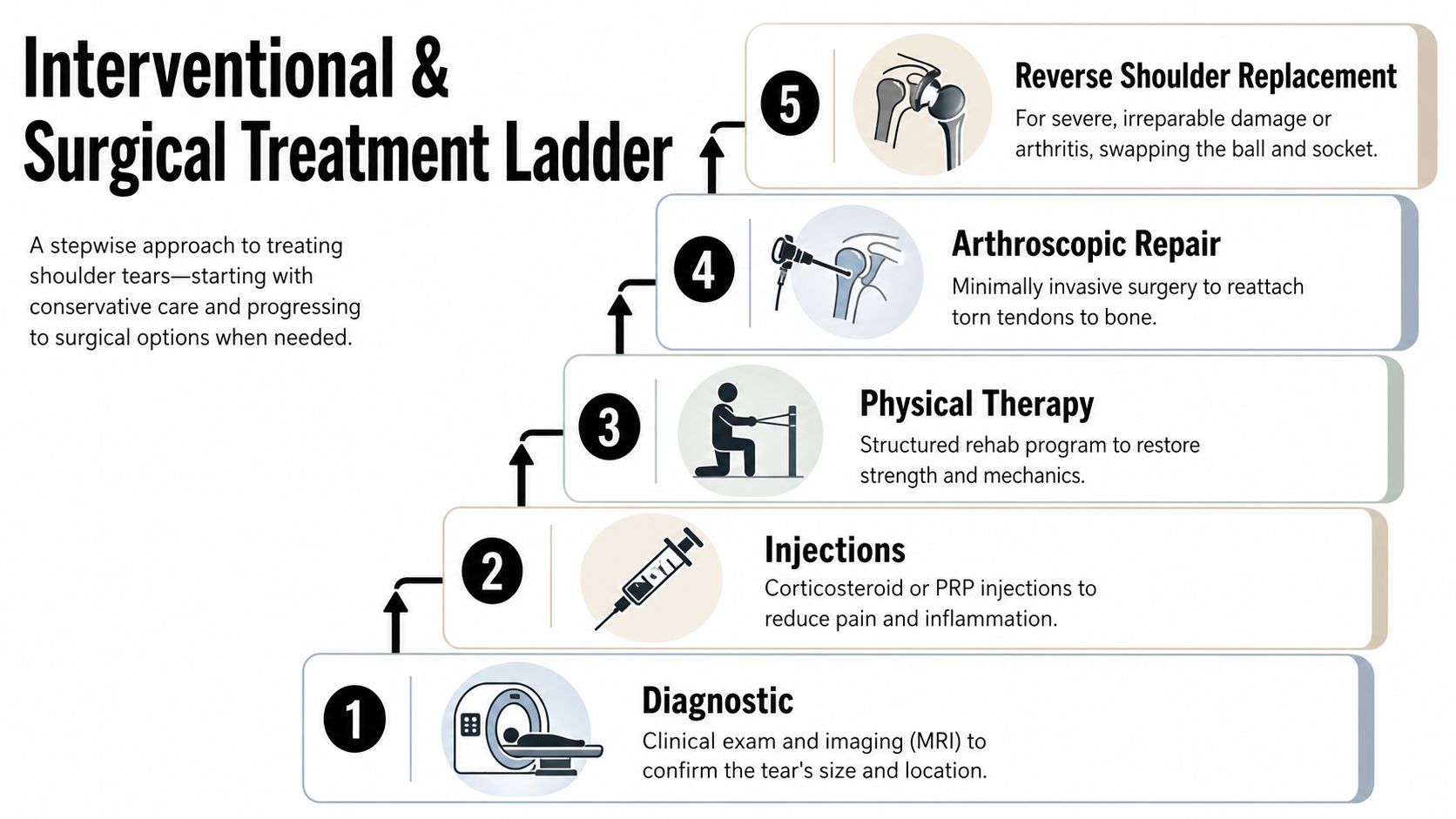
When the basics are not enough, a pain and wellness clinic can move up the ladder without sending you straight to surgery. Image-guided corticosteroid injection can quiet pain enough to let rehab work more effectively, but it is a tool for symptom control, not a permanent fix. PRP and hyaluronic acid are sometimes considered in regenerative or lubrication-oriented plans, though they are not a one-size-fits-all answer.
Matching the procedure to the pain pattern
If the shoulder pain seems to involve irritated sensory nerves, ultrasound-guided hydrodissection or a suprascapular nerve block may help calm the area and clarify the pain source. A suprascapular nerve block can also act like a temporary reset, showing whether the shoulder joint itself is the main driver or whether the pain is coming from a nearby structure. For patients who need longer-lasting relief and fit the right pattern, radiofrequency ablation can target the suprascapular or other sensory nerves. Refractory cases sometimes call for peripheral nerve stimulation or spinal cord stimulation, especially when pain has become chronic and the usual measures have not held up.
Regenerative medicine also has a place in selected cases, and when the pain story includes neck-driven referral, epidural or other spine-directed interventions may belong in the plan instead of more shoulder treatment. If you want to see how regenerative care fits into a broader pain plan, Midwest Pain & Wellness regenerative medicine options outline the general category of biologic approaches the clinic uses in appropriate situations.
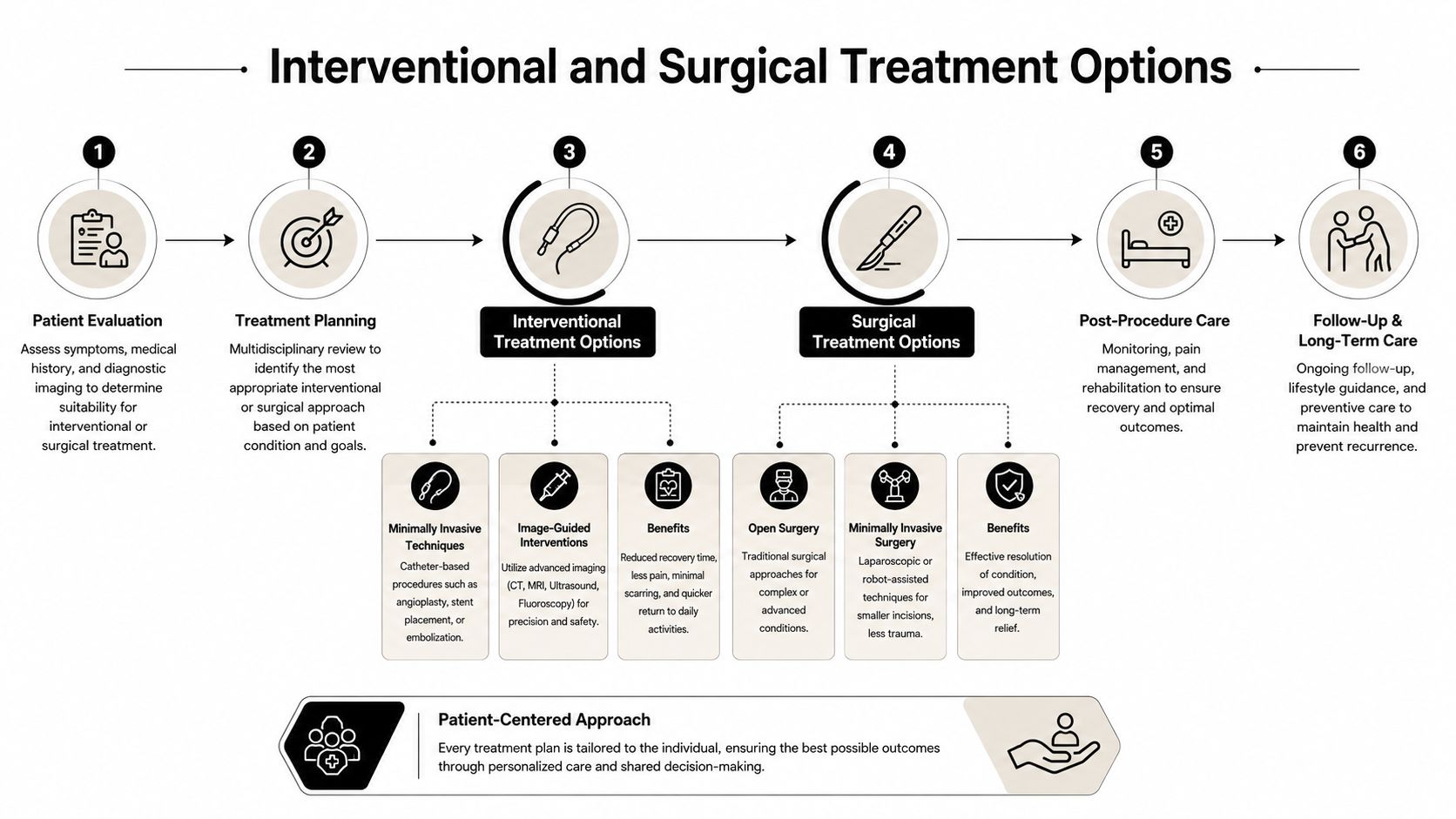
For a true full-thickness tear, an acute traumatic loss of function, or a shoulder that keeps failing conservative care, orthopedic referral makes sense. The decision should rest on the exam, the story, and the tissue involved, not on the idea that every shoulder problem should either be ignored or operated on right away.
Recovery, Prevention, and When to See a Specialist
Most tendinopathy improves gradually with load control and targeted strengthening, while partial tears may stay stable or improve functionally if the shoulder is managed well. After procedures, the goal is usually to create enough pain relief to keep the rehab moving, not to treat the procedure as the whole cure. The shoulder keeps responding to daily use long after the office visit ends.
Keep the cuff healthy after the flare settles
Balanced loading matters. So does regular cuff and scapular strengthening, smarter overhead mechanics at work and in the gym, smoking cessation, and managing cholesterol and diabetes for tendon health. Those habits don't just help the shoulder feel better, they help it tolerate the same life tasks without flaring again.
A specialist visit is reasonable if pain hasn't improved after six to twelve weeks of sensible self-care, if it wakes you every night, if weakness is getting worse, or if shoulder pain comes with neurological symptoms in the arm. That's especially true when the pain pattern is changing rather than slowly settling.
If you're in Oak Lawn, Palos Hills, Palos Heights, Worth, Bridgeview, Hickory Hills, Alsip, Burbank, Evergreen Park, or Orland Park, and you want a personalized, multimodal plan instead of a one-size-fits-all answer, Midwest Pain & Wellness in Chicago Ridge can help evaluate the shoulder, sort out the pain source, and match treatment to the tissue involved.
- Unload the shoulder first: stop repeating the motions that trigger the sharpest pain.
- Protect sleep: use a pillow to keep the arm from collapsing forward.
- Rebuild strength: focus on cuff and scapular control, not just arm lifting.
- Escalate wisely: if the shoulder isn't improving on a sensible timeline, get it examined.
If your shoulder pain keeps interrupting sleep, work, or simple daily reach, Midwest Pain & Wellness can evaluate whether the problem is tendon irritation, a tear, or referred pain from somewhere else. They offer thoughtful, opioid-sparing care for shoulder and nerve pain, with image-guided procedures and personalized treatment planning. Visit Midwest Pain & Wellness to take the next step toward a clearer diagnosis and a plan that fits your life.