The patient in my exam room is usually not there because one headache was unbearable. They're there because the pattern has taken over workdays, family time, sleep, and confidence in what to do next. In Chicago Ridge and the surrounding Illinois communities, that's often the point where people need a clearer plan, not another random pill.
Migraine care works best when you separate what stops an attack from what prevents the next one. Acute treatment is for the headache that's already happening, preventive treatment is for reducing how often attacks show up and how hard they hit. Once that distinction clicks, the rest of the migraine treatment options become much easier to sort through.
Understanding Acute Versus Preventive Migraine Care
A patient in Chicago Ridge may come in after missing work, taking an over-the-counter medicine at the first sign of pain, then spending the rest of the day in a dark room waiting for the attack to pass. The core issue is a recurring pattern, because the person is treating each episode as if it stands alone.
Acute treatment handles the attack in front of you
Acute care is rescue care. It is used once the migraine has started, and the goal is to reduce pain, nausea, light sensitivity, and the rest of the attack burden as quickly as possible. For some patients, that is enough. For others, it helps only part of the time, or it works early and then falls short when the attack gets stronger.
Practical rule: if rescue medicine is being used often and migraine is still taking away days, the plan usually needs more than rescue care.
Preventive treatment changes the pattern
Preventive care works differently. It is used to lower attack frequency and severity over time, and it makes the most sense when migraines are frequent, disabling, or hard to predict. For chronic migraine, a widely used threshold for Botox preventive treatment is 15 or more headache days per month lasting 4 or more hours per day (NCBI Bookshelf). That threshold matters because it shifts the conversation away from “How do I stop this one headache?” and toward “How do I change the whole month?”
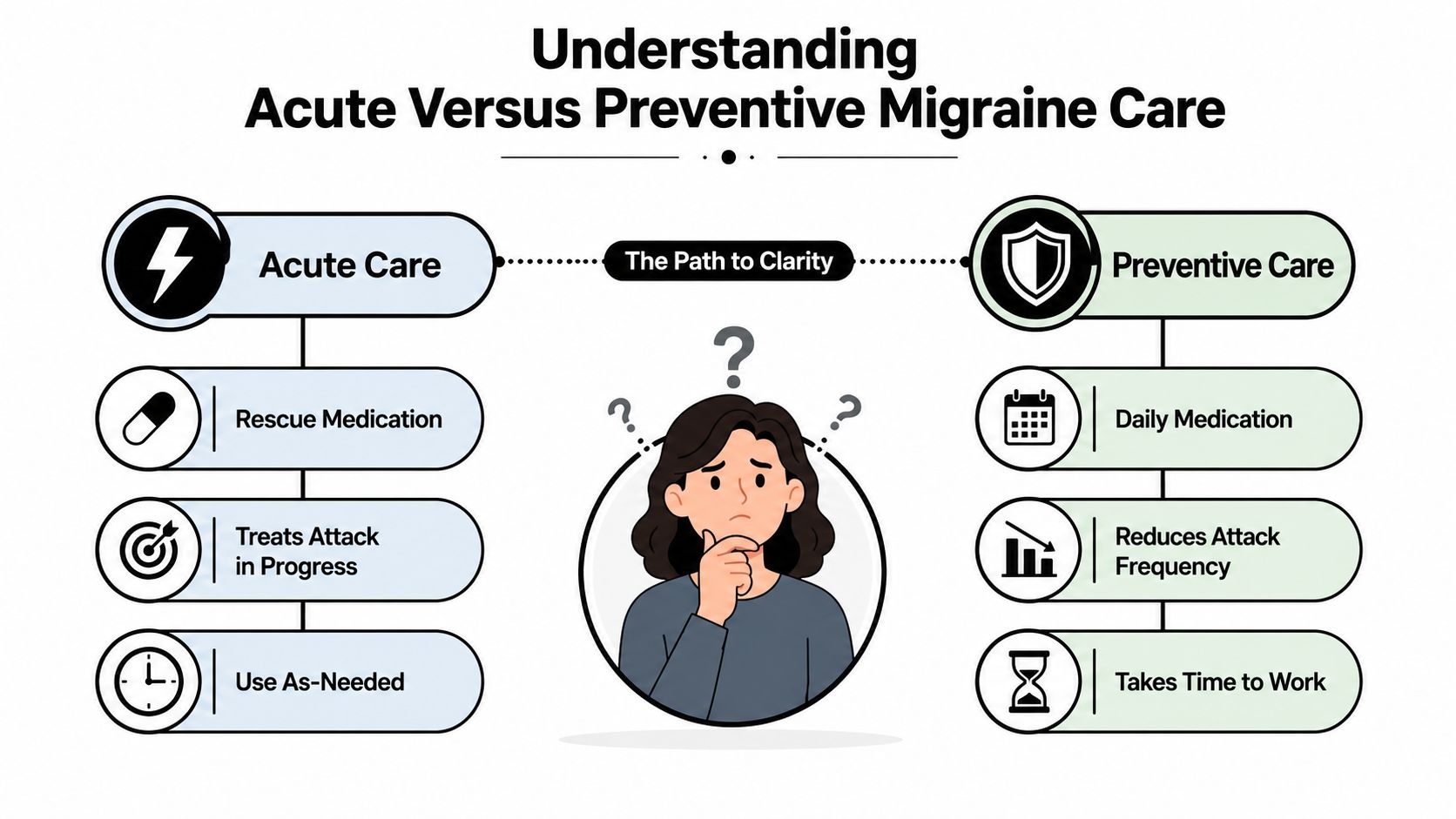
Acute treatment addresses the immediate attack, while preventive care focuses on reducing the frequency and severity of future attacks. If the same person keeps reaching for rescue medicine while attacks keep returning, the next discussion should usually be about prevention, not just a stronger rescue drug.
First-Line Acute Medications and How to Use Them
A patient can walk into a clinic in Chicago Ridge with a headache that started an hour ago, nausea building, and a sink full of pills that did little last time. The first clinical question is still practical: how fast did the attack start, how severe is it, and is the stomach involved? Those details matter because migraine-related gastric stasis can slow oral absorption enough that tablets look ineffective even when the medicine itself is reasonable.
Match the medicine to the attack
For mild attacks, NSAIDs are a standard starting point, and acetaminophen can still be reasonable for milder pain. A stratified approach is often the cleanest way to treat migraine in practice, with milder attacks starting on NSAIDs and more severe attacks moving to a triptan (AAFP). That approach fits the way migraine behaves at the bedside, where the goal is to stop the attack early without overtreating every headache the same way.
For moderate to severe attacks, triptans remain the mainstay when NSAIDs or combination analgesics are not enough (PMC). In the right patient, they can work well and quickly. In a patient with cardiovascular disease or another contraindication, they are the wrong tool, even if the headache is severe.
Nausea changes the route, not just the drug
When nausea or vomiting is part of the attack, oral tablets often become a poor fit. Non-oral options can make a real difference because they bypass the gastrointestinal tract during an attack. Subcutaneous sumatriptan, intranasal zolmitriptan, and dihydroergotamine are useful when vomiting or gastric stasis makes swallowing a pill a bad bet (PMC).
If the patient cannot keep medicine down, the route is part of the treatment, not an afterthought.
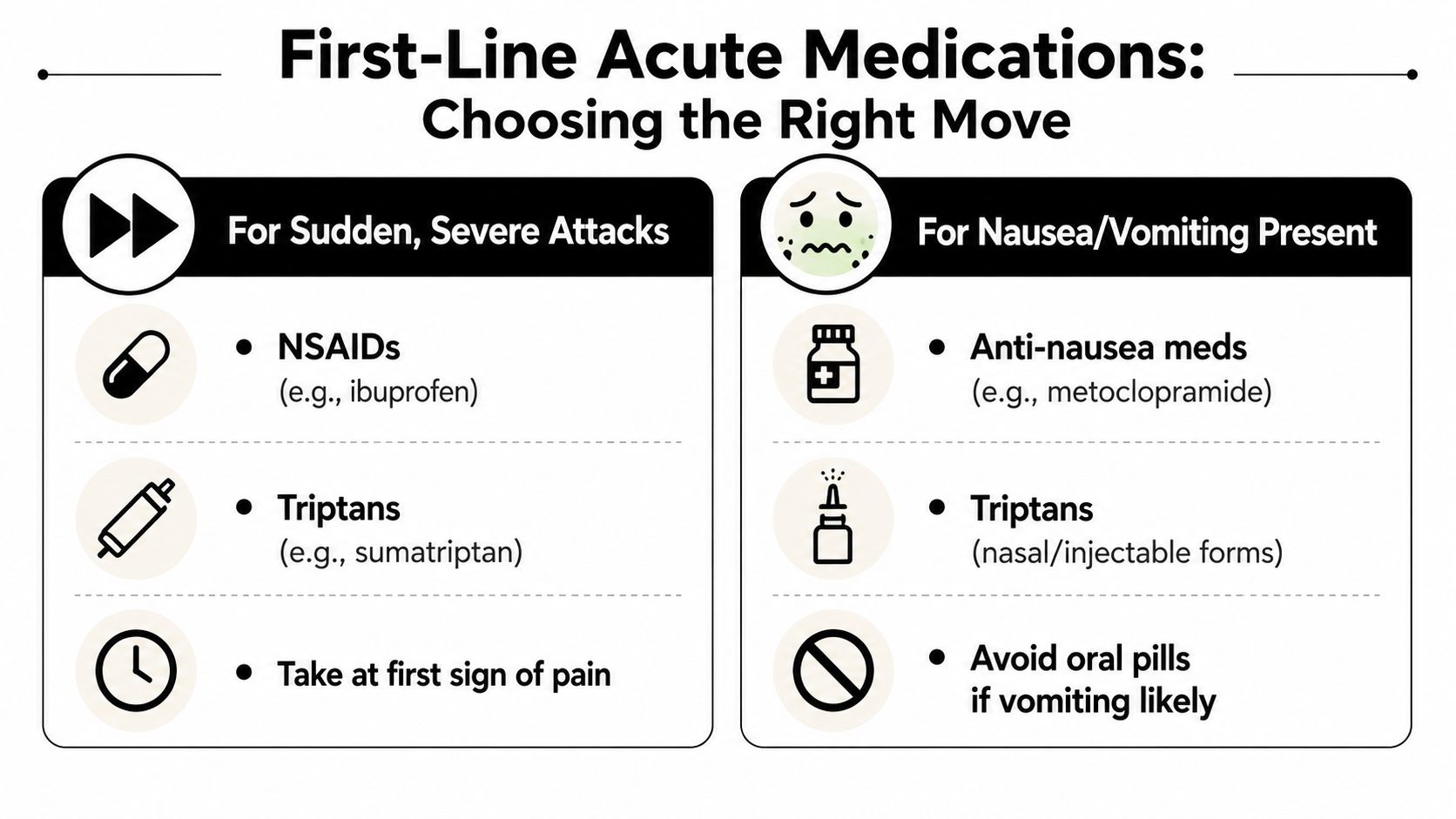
At a clinic level, acute treatment also has to fit into a longer plan. If a patient is reaching for rescue medicine often, the next conversation is usually not about squeezing more out of the same pill. It is about whether prevention should be part of the plan, and resources like how to prevent migraines help frame that next step.
Recent reviews also note that ditans and gepants fill an important gap when triptans are not tolerated or are not appropriate, especially for patients with cardiovascular contraindications (PMC). That is the practical takeaway in a pain and wellness clinic. If first-line rescue care keeps failing, the answer may be a different class, a different route, or a preventive strategy that changes the pattern instead of chasing each attack.
Daily Preventive Medications From Pills to CGRP Therapies
Prevention usually starts with a practical question, which daily option can this patient stick with? That question matters because migraine prevention is not just about whether a medicine can work. It also depends on adherence, side effects, and fit. A drug that looks ideal on paper can fail fast if it causes fatigue, brain fog, mood changes, or becomes too hard to take every day.
Oral preventives still have a clear place
Peer-reviewed reviews continue to place topiramate, amitriptyline, and propranolol among first-line preventive options, with candesartan also appearing in first-line preventive recommendations (PMC). These medicines still matter because they are familiar, widely used, and often the first real test of whether daily prevention is needed at all.
The trade-off is straightforward. Oral preventives can help, but they can also be limited by adverse effects or by a patient's inability to stay on them long enough to judge benefit. In an Illinois clinic, that usually means I spend as much time talking through tolerability and daily routine as I do talking through the medication itself.
CGRP therapies changed the preventive conversation
The first CGRP monoclonal antibodies, erenumab, fremanezumab, and galcanezumab, opened a new prevention pathway by targeting the calcitonin gene-related peptide pathway central to migraine biology (NCBI). Mayo Clinic notes that CGRP-pathway monoclonal antibodies are major evidence-based preventive options, and they are typically given monthly or quarterly depending on the agent (Mayo Clinic).
That schedule is part of the appeal. For patients who struggle with daily pill burden, these therapies can be easier to stay on. They also fit well when oral preventives have not helped enough or have not been tolerated. In practice, the decision often comes down to whether the patient wants a daily oral trial first or needs a treatment that reduces the burden of taking medicine every day.
For patients who are thinking through broader prevention options, a practical clinic guide can help frame the next step: how to prevent migraines.
Acute alternatives and daily prevention are not the same thing
Gepants can be used preventively or acutely, depending on the agent and the plan, while ditans like lasmiditan are acute options for patients who cannot use triptans safely. Reviews also describe these newer classes as useful when standard choices are a poor fit (PMC). That distinction matters because one patient may need one medicine for attacks and a different strategy for prevention. A separate medication may be needed again if side effects or cardiovascular issues narrow the usual choices.
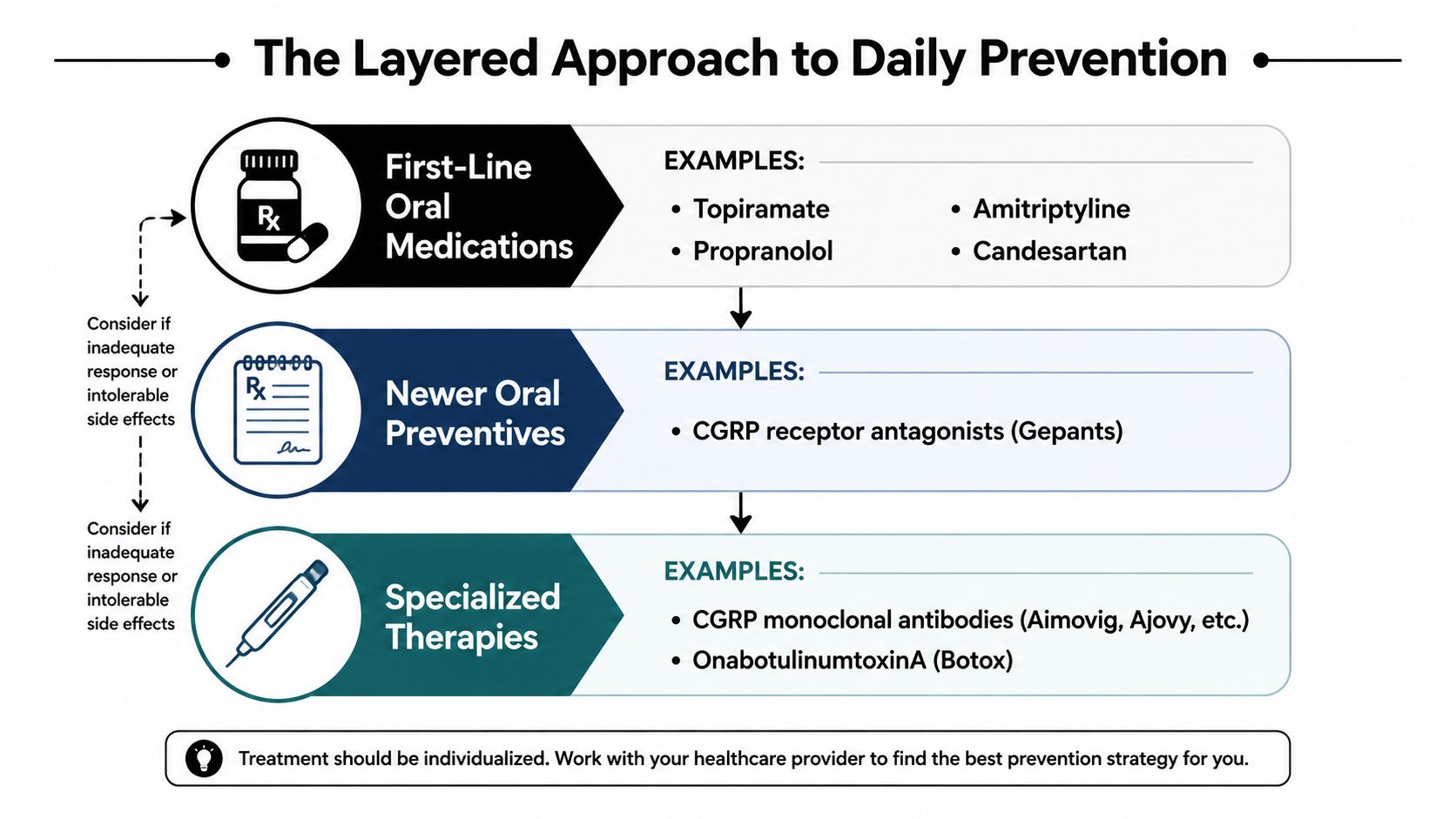
When I build a prevention plan, I usually think in layers. Start with the lowest-friction option that fits the patient's profile, then step up only if the headaches keep breaking through. That keeps the plan realistic, and that is what makes it durable.
Non-Drug and Neuromodulation Options That Count
A patient in the clinic may be tired of adding another pill, or may want to lower reliance on medication altogether. Both are valid reasons to build a migraine plan around non-drug care, and these approaches deserve real attention when they are chosen deliberately instead of saved for last.
Build the base with habits that reduce attack pressure
Migraine responds to routine. Sleep regularity, hydration, consistent meals, stress management, and behavioral therapy all belong in the plan, especially when attacks track with disrupted sleep, skipped meals, or a chaotic schedule. A migraine journal can also show patterns that are hard to see in the moment, which helps identify what is setting off attacks before the day gets away from the patient.
CBT for pain and stress can be useful when migraine overlaps with anxiety, sleep disruption, or fear of the next headache. The goal is not to suggest the pain is psychological. The goal is to lower the background strain that makes attacks easier to trigger.
Supplements and devices are legitimate tools
Select supplements such as magnesium and riboflavin have support in major reviews, and those same reviews describe neuromodulation devices as real options for carefully chosen patients (PMC). Other reviews also discuss noninvasive devices as a way to reduce migraine frequency or severity, and current guidance recognizes FDA-approved as-needed neuromodulation devices for migraine, including single-pulse transcranial magnetic stimulation, external trigeminal nerve stimulation, noninvasive vagus nerve stimulation, and remote electrical neuromodulation (Mayo Clinic Press).
The device name matters less than the role it plays. These options can fit patients who want a drug-light plan, who do not tolerate certain medicines, or who need another treatment to use during attacks. A clinic may also pair them with an explanation of how to use them correctly, because consistency matters more than novelty. For patients who want a real-world example of how this fits into a headache plan, this migraine Botox overview from Midwest Pain & Wellness shows how interventional care can sit alongside non-drug strategies without replacing the rest of the plan.
Bottom line: non-drug care is not “nothing.” For the right patient, it is the main plan.
The most useful approach is often combined care. A patient may use a device during an attack, keep a rescue medicine for more severe flares, and use sleep and trigger control to reduce the number of bad days in the first place.
Interventional Procedures for Chronic Migraine
A pain and wellness clinic can add something specific when migraine has become chronic. Some patients do not need another prescription. They need targeted procedures that reduce pain signaling, calm irritated nerves, or hold them over through a rough stretch while preventive care starts working. That matters most when headache days are frequent enough that the pattern has crossed into chronic migraine.
Botox has a defined chronic migraine protocol
OnabotulinumtoxinA (Botox) became a key milestone in migraine treatment after the FDA approved it for chronic migraine prevention in adults, based on the Phase III PREEMPT I and II trials, which remain the core studies behind the treatment protocol (PMC). In clinic, Botox is typically given about every 12 weeks, and the standard evidence-based approach uses 31 injections of 5 units each with an optional additional 45 units in a follow-the-pain pattern (PMC).
That protocol is structured for a reason. It treats the head and neck regions that commonly feed chronic migraine pain, rather than chasing each flare in isolation. The usual candidacy threshold is 15 or more headache days per month lasting 4 or more hours per day (NCBI Bookshelf).
For a practical example of how a Botox pathway is presented in clinic, see this Botox for migraine overview from Midwest Pain & Wellness.
Nerve blocks and localized injections have a role
Occipital nerve blocks can help with acute relief and bridge therapy, especially when the back of the head and neck are part of the pain pattern. Trigger point injections and other peripheral injections may help when a local muscle or nerve contribution sits on top of the migraine itself. These procedures do not replace preventive treatment, but they can lower the pressure enough to make the larger plan work.
Refractory cases sometimes need stimulation-based care
For patients who keep failing medication strategies, neuromodulation becomes a real discussion. Reviews of migraine care describe the role of peripheral nerve stimulation and spinal cord stimulation for refractory cases, alongside the broader category of noninvasive devices already mentioned (PMC). In practice, these options are for carefully selected patients, not first-step treatment.
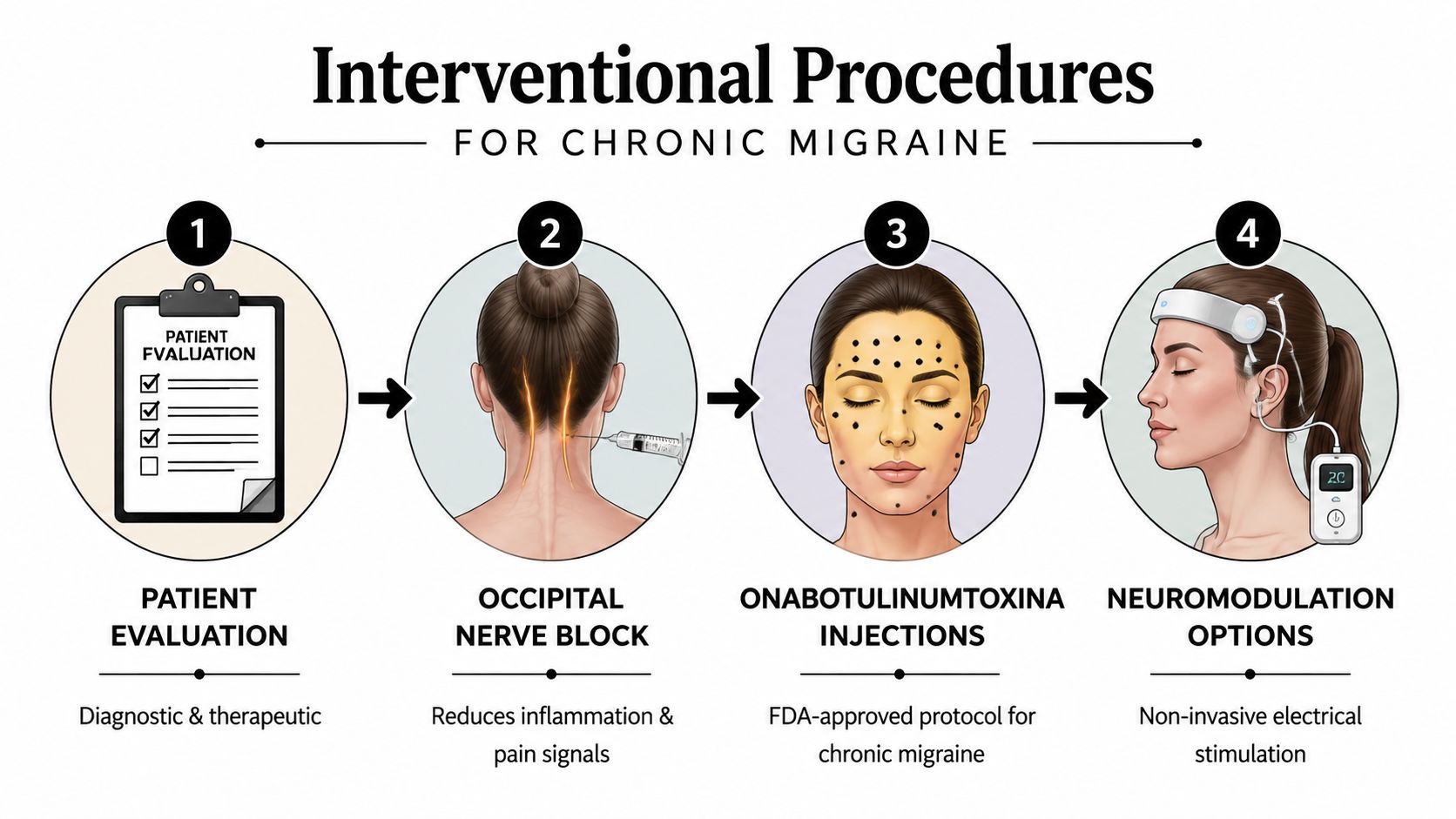
At Midwest Pain & Wellness, Botox for migraine is one of the procedural options used in this space. The office also uses image-guided, nerve-based approaches when the pattern suggests a procedural benefit. The key is matching the procedure to the headache pattern instead of treating every migraine the same way.
Building a Personalized Migraine Treatment Plan
Two people can carry the same diagnosis and need completely different treatment plans. One has occasional attacks that respond to a triptan if taken early. Another has chronic migraine with nausea, neck pain, and a history of failing oral preventives. The right plan starts by sorting those differences instead of assuming one algorithm fits everyone.
The decision points that matter
I look at headache diary data, because frequency and duration tell me whether the patient belongs in an acute-only strategy or needs prevention. I also want prior medication trials, because it makes no sense to repeat a drug that already failed or caused side effects the patient can't tolerate.
Comorbidities matter too. A patient with cardiovascular disease may not be a good triptan candidate, which pushes the plan toward other acute options. A patient with depression, sleep problems, or medication adherence issues may do better with one preventive over another. Pregnancy plans, work demands, and side effect tolerance all change the final decision.
Sequencing is the real art
The usual sequence is not complicated, but it has to be disciplined. Start with the right acute medicine for the attack phenotype, add prevention when headache days are frequent or disabling, then layer in procedures or devices if the pattern stays stubborn. Track progress at regular follow-up visits, because migraine treatment is iterative. A plan that looked fine at the first visit may need to be tightened once real-world response shows up.
A migraine plan should be adjusted with the patient, not handed to the patient and forgotten.
There's also a practical question patients should ask at every visit. What is this medicine or procedure supposed to do, and how will we know if it worked? If nobody can answer that clearly, the plan probably isn't specific enough.
When to Seek Specialized Headache Care in Chicago Ridge
Primary care can handle a lot of migraine care, but there's a point where specialized evaluation makes more sense. If headaches keep breaking through despite treatment, the problem is usually no longer just symptom control. It's a treatment design issue.
Signs it's time to step up care
The clearest triggers are simple. Four or more headache days per month despite acute treatment, increasing medication use, persistent nausea or aura, neck pain paired with migraine, or failed trials of two or more preventive medications all point toward a specialty visit. Those are the patterns that usually need a more structured look at medication choice, procedure options, and trigger management.
| Trigger | Why It Matters | Next Step |
|---|---|---|
| Four or more headache days each month | Suggests the pattern is recurring, not isolated | Review acute and preventive strategy |
| Increasing medication use | Raises concern for overreliance on rescue care | Tighten the acute plan and assess prevention |
| Persistent nausea or aura | Can change the best route and drug class | Consider non-oral and specialty options |
| Neck pain with migraine | May signal a procedural target | Evaluate for nerve-based or injection options |
| Two or more failed preventives | Suggests the current strategy is not sufficient | Escalate to a specialist plan |
What a pain and wellness visit usually looks like
A visit at Midwest Pain & Wellness starts with a focused history, then a review of records or imaging when needed. The plan is usually conservative at first, then expanded if the headache pattern justifies procedures, preventive injections, or device-based care. For adults in Chicago Ridge and nearby Illinois communities like Oak Lawn, Palos Hills, Palos Heights, Worth, Bridgeview, Hickory Hills, Alsip, Burbank, Evergreen Park, and Orland Park, that kind of targeted visit can turn a frustrating cycle into a plan with actual next steps.
If you want a headache-focused evaluation, you can review the clinic's specialty headache information here, headache specialist in Chicago Ridge.
Midwest Pain & Wellness treats migraine as a real pain condition, not an inconvenience to push through. If your attacks are frequent, your rescue medicines aren't holding, or you want a plan that includes Botox, nerve-based procedures, and practical prevention, visit Midwest Pain & Wellness and ask for a migraine evaluation.