Why Most Spinal Pain Can Be Treated Without Surgery
What is conservative treatment is one of the most important questions anyone dealing with back or neck pain can ask. Here’s the short answer:
Conservative treatment is medical care that avoids surgery and other invasive procedures. The goal is to relieve pain, restore function, and preserve your body’s natural structures using non-surgical methods.
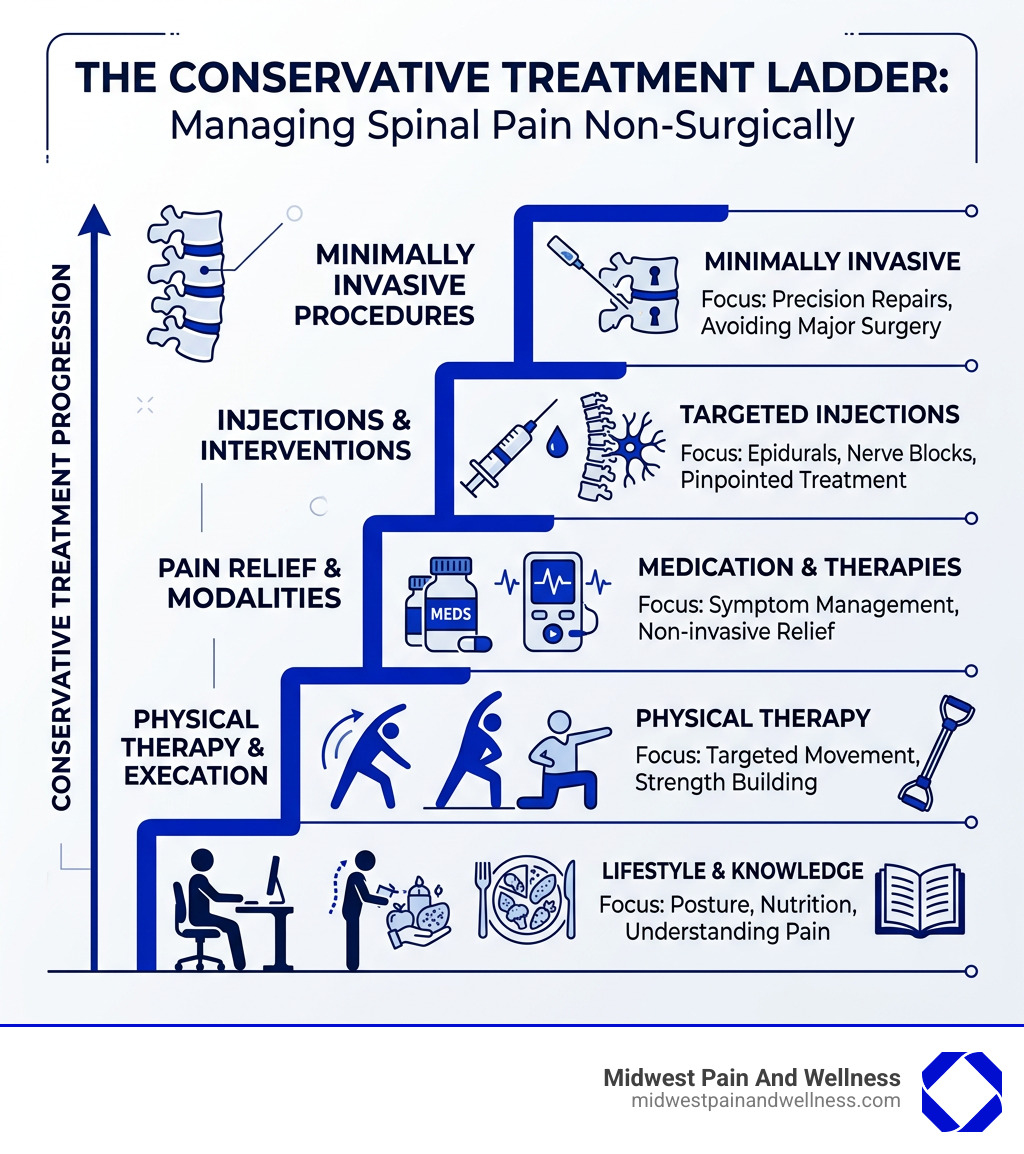
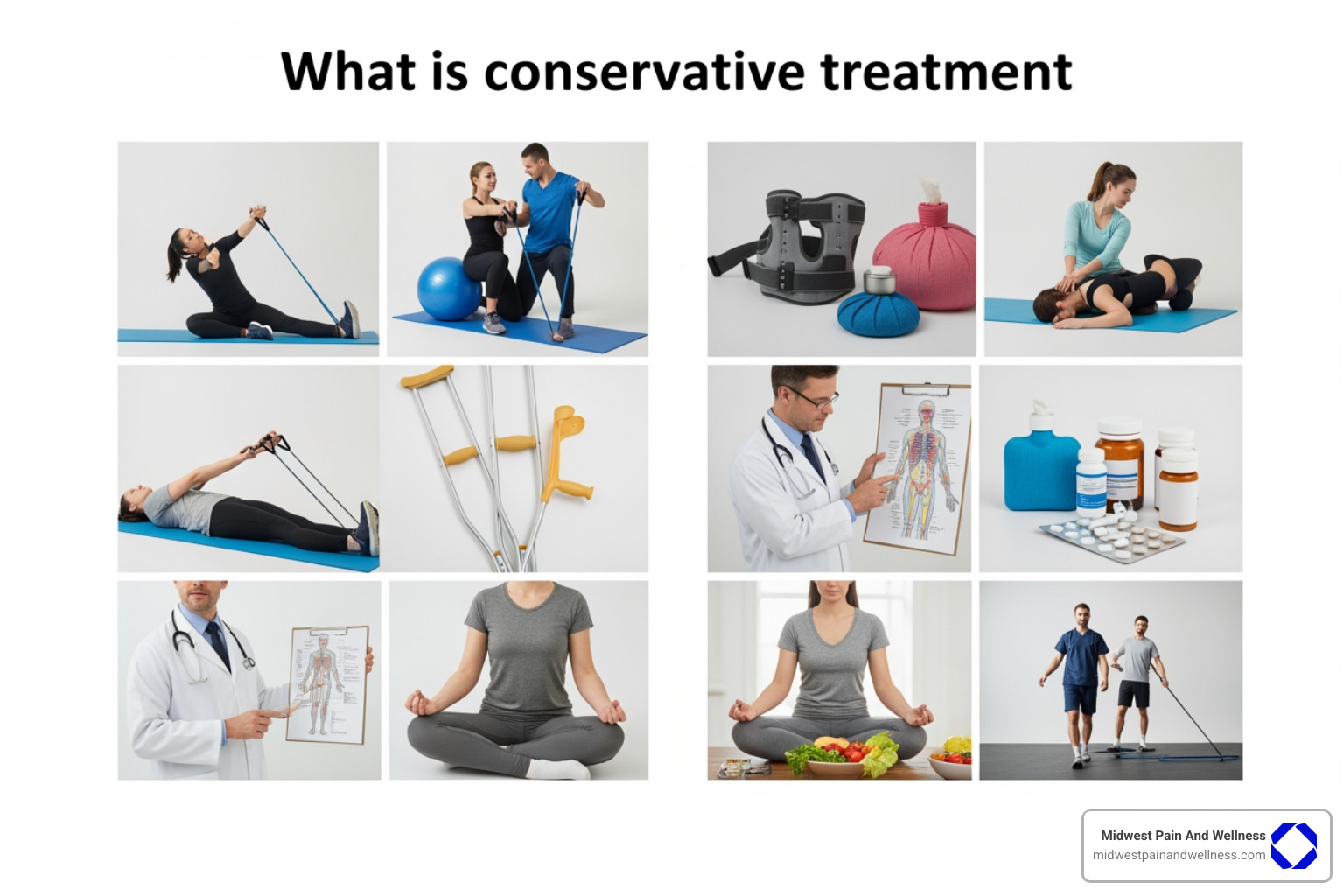
Common conservative treatment methods include:
- Rest, activity modification, and lifestyle changes
- Medications (NSAIDs, muscle relaxants, nerve pain drugs)
- Physical therapy and targeted exercise
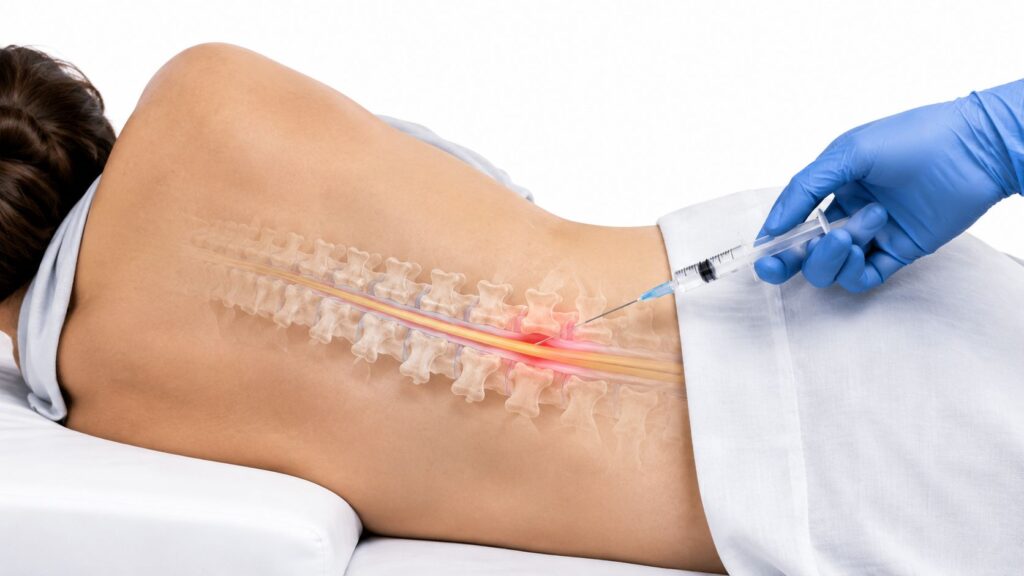
- Injections (epidural steroids, nerve blocks)
- Chiropractic care, manual therapy, and TENS
- Patient education and psychological support (such as CBT)
Back pain is extraordinarily common. Research shows it affects up to 80% of people at some point in their lives, and it’s the leading cause of work disability in adults under 45. Yet the vast majority of cases — including most disc herniations — can be managed successfully without ever going to the operating room.
That’s not a minor point. It changes everything about how you approach your care.
I’m Dr. Yaw Donkoh, a double board-certified physician in anesthesiology and interventional pain management, and answering what is conservative treatment — and applying it effectively — sits at the core of my daily practice at Midwest Pain and Wellness. In the guide below, I’ll walk you through every key aspect of non-surgical spinal care so you can make confident, informed decisions about your health.
Key What is conservative treatment vocabulary:
Defining the Approach: What is Conservative Treatment?
When we talk about medical care, the word “conservative” doesn’t have anything to do with politics. In a clinical setting, the Medical Definition of CONSERVATIVE refers to a philosophy of treatment that prioritizes the preservation of function and body parts by avoiding aggressive or invasive measures.
In simpler terms, What is conservative treatment? It is the “let’s try the least invasive thing that works” approach. According to Non-Surgical Pain Relief principles, this involves a spectrum of care that ranges from “watchful waiting” (monitoring a condition to see if it resolves on its own) to highly targeted interventional procedures like injections.
The core pillars of this approach are:
- Avoidance of Surgery: We only consider the operating room when non-surgical options have been exhausted or if there is an emergency.
- Preservation of Anatomy: Surgery often involves removing or altering bone and tissue. Conservative care seeks to keep your natural structures intact.
- Symptom Management: We focus on reducing inflammation and “turning down the volume” on pain signals so your body can heal itself.
At Midwest Pain and Wellness, we see this as a journey. Most spinal issues have a favorable natural history, meaning they tend to get better over time if given the right environment. Our job is to create that environment.
Core Components of Non-Invasive Care
Effective conservative management isn’t just one thing; it’s a “team effort” involving different therapies working together. This is known as a multidisciplinary or multi-modal approach. By attacking pain from several angles, we can often achieve better results than any single treatment could provide on its own.
A major focus of our work in Chicago Ridge is Opioid-Free Pain Management. While strong painkillers were once the norm, we now know that long-term opioid use can actually make pain worse and carries significant risks. Instead, we use modern interventional therapies that target the source of the pain directly.
Patient education and lifestyle modifications are also vital. If we can help you understand why your back hurts and how to move differently, you become an active participant in your recovery. We even utilize tools like the Biofeedback Pain Management Complete Guide to help patients gain control over physiological functions that contribute to pain, such as muscle tension and stress responses.
Pharmacological Management and What is Conservative Treatment for Pain?
When patients ask, “What is conservative treatment for my specific pain level?” the conversation often starts with medication. However, we don’t just hand out a prescription and send you on your way. We use a strategic ladder of pharmacological options:
- NSAIDs (Non-Steroidal Anti-Inflammatory Drugs): Medications like ibuprofen or naproxen are often the first line of defense. They are highly effective for acute low back pain and sciatica caused by disc herniation because they reduce the chemical inflammation irritating the nerves.
- Muscle Relaxants: These can be helpful for short-term use (usually less than two weeks) to break the cycle of painful muscle spasms that often accompany a back injury.
- Neuromodulators and Antidepressants: Drugs like gabapentin or duloxetine are used for “neuropathic” pain—pain that comes from damaged or irritated nerves rather than muscle strain.
- Topical Analgesics: Creams and patches can provide localized relief with fewer systemic side effects than oral pills.
- Alternative Options: We also integrate Acupuncture Pain Relief into our plans, which can stimulate the body’s natural pain-killing chemicals without the need for synthetic drugs.
Physical Therapy and Rehabilitation
Physical therapy (PT) is perhaps the most critical “active” component of conservative care. It is generally divided into two categories:
- Passive Modalities: These are treatments done to you while you relax. Examples include manual manipulation, heat/cold therapy, ultrasound, and TENS (Transcutaneous Electrical Nerve Stimulation). These are great for immediate relief but are rarely a permanent fix.
- Active Therapy: This is where the real magic happens. Through Rehabilitation Pain Management, we focus on strengthening the “inner corset” of muscles that support your spine.
We pay close attention to biomechanics—the way you sit, stand, and lift. Correcting posture and movement patterns can take the mechanical pressure off a sensitive disc or joint, allowing it to settle down. Research consistently shows that for chronic conditions, active exercise is superior to passive treatments alone.
When to Choose Conservative Management Over Surgery
Deciding between a non-surgical path and a surgical one is a major milestone in your care. For most people, the choice is clear: conservative care should almost always come first.
Guidelines from major medical organizations suggest that for conditions like a herniated disc, What is conservative treatment success looks like a 60% to 90% recovery rate without surgery.
| Factor | Conservative Treatment | Surgical Treatment |
|---|---|---|
| First-Line Recommended? | Yes, for almost all cases | No, usually a last resort |
| Recovery Time | Variable, but allows for activity | Weeks to months of restriction |
| Risk of Complications | Very Low (0% major complications) | Moderate (10-24% side effect rate) |
| Long-Term Outcome | Often equal to surgery at 1-2 years | May provide faster initial relief |
| Anatomy | Preserved | Altered or removed |
As noted in the Conservative Management of Low Back Pain literature, early surgery doesn’t always lead to better long-term results. In many cases, patients who choose the non-surgical route end up just as healthy two years later as those who went under the knife—without the risks of anesthesia or infection.
We specialize in identifying the Conditions We Treat that are most likely to respond to our interventional techniques, ensuring you don’t spend time on treatments that aren’t right for you.
Identifying Red Flags and What is Conservative Treatment Failure?
While we are huge advocates for non-surgical care, we are also highly trained to know when it is not the right choice. Safety is our number one priority. During your evaluation at Midwest Pain and Wellness, we look for “Red Flags” that might indicate a serious underlying problem requiring urgent surgical intervention:
- Neurological Deficits: Sudden weakness in a leg, “foot drop,” or numbness in the groin area (saddle anesthesia).
- Loss of Bowel or Bladder Control: This is a medical emergency known as Cauda Equina Syndrome.
- Unrelenting Night Pain: Pain that doesn’t get better when you lie down or that wakes you up from a deep sleep.
- Trauma: Pain following a significant fall or car accident.
- Systemic Symptoms: Unexplained weight loss, fever, or a history of cancer.
We also look for “Yellow Flags.” These aren’t physical emergencies, but psychological factors like fear-avoidance (being afraid to move) or catastrophizing (believing the pain will never end). These factors are strong predictors of whether pain will become chronic, and we address them early through education and support.
What is conservative treatment failure? It’s generally defined as a lack of significant improvement after 6 to 12 weeks of dedicated non-surgical care. If we reach that point and your quality of life is still severely impacted, we will discuss escalating to more advanced Procedures We Use for Treatment or referring you to a surgical colleague.
Common Conditions Managed Without Surgery
You might be surprised by the range of conditions that fall under the umbrella of conservative care. It’s not just for “sore backs.”
- Low Back Pain (LBP): Since LBP affects up to 85% of the Western world, it is the primary target for conservative care. Most LBP is “non-specific,” meaning it comes from muscles, ligaments, or small joints rather than a single broken part.
- Lumbar Disc Herniation (LDH): This is the classic “slipped disc.” While it sounds scary, most herniated discs actually shrink or “resorb” on their own over several months.
- Sciatica: This is nerve pain that travels down the leg. By using epidural steroid injections to reduce inflammation around the nerve root, we can often stop the leg pain without surgery.
- Osteoarthritis: Wear and tear in the spinal joints (facet joints) can be managed with weight loss, specialized PT, and joint injections.
- Spinal Stenosis: This is a narrowing of the spaces within your spine. While the narrowing is structural, the symptoms are often caused by inflammation, which we can treat.
- Vertebral Compression Fractures: Often caused by osteoporosis, these can frequently be managed with bracing and medication, though we also offer minimally invasive stabilization if needed.
Interestingly, the conservative philosophy extends beyond the spine. For example, medical debates continue regarding Should conservative treatment of appendicitis be first line?, with some studies suggesting antibiotics can replace surgery in stable cases. Similarly, conservative management is used in end-stage kidney disease to prioritize quality of life, and in orthopedics for conditions like clubfoot (the Ponseti method) or mild scoliosis.
Frequently Asked Questions about Non-Surgical Care
How long does conservative treatment usually last?
Most acute spinal pain episodes show significant improvement within 4 to 6 weeks. However, for chronic conditions, we may work together for 3 months or more to build strength and establish a long-term maintenance routine. We typically re-evaluate your progress every few weeks to ensure we are on the right track.
Is conservative treatment as effective as surgery for back pain?
In the long run, yes. For many conditions like disc herniation or spinal stenosis, large-scale studies have shown that at the one and two-year marks, patients who had surgery and those who had conservative care reported similar levels of pain and function. Surgery often provides faster relief in the first few weeks, but conservative care catches up without the surgical risks.
What are the risks of avoiding surgery?
In the absence of “Red Flags” (like nerve damage or bowel/bladder issues), there is very little risk in trying conservative care first. In fact, research shows that a period of non-surgical treatment does not make a future surgery less effective if you eventually need one. The biggest risk is usually “somatic amplification”—where pain becomes a chronic cycle of stress and inactivity—which is why we stay so proactive with our therapy plans.
Conclusion
At Midwest Pain and Wellness, we believe that your body has an incredible capacity to heal if given the right support. Answering “What is conservative treatment?” is the first step toward a recovery that respects your natural anatomy and avoids the risks of unnecessary surgery.
Our double board-certified doctors in Chicago Ridge, Illinois, are experts in creating custom, interventional care plans that prioritize long-term relief and functional improvement. Whether you are dealing with a new injury or a chronic condition, we are here to help you find an opioid-free path back to the life you love.
If you are struggling with spinal pain, don’t wait for it to become a permanent disability. Schedule a consultation for Vertebral Compression Fracture Treatment or any other spinal concern today, and let’s explore the non-surgical options that are right for you.