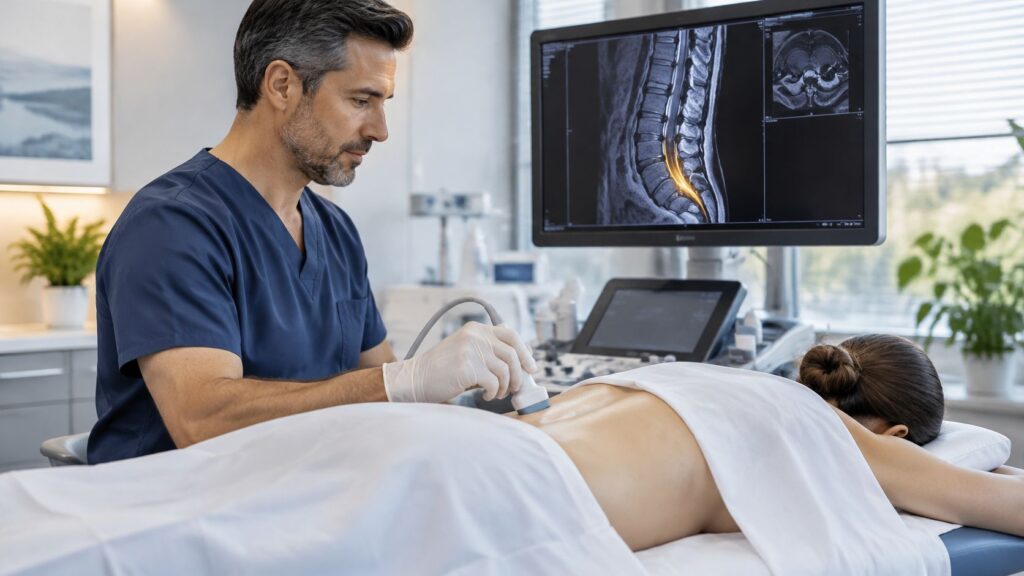
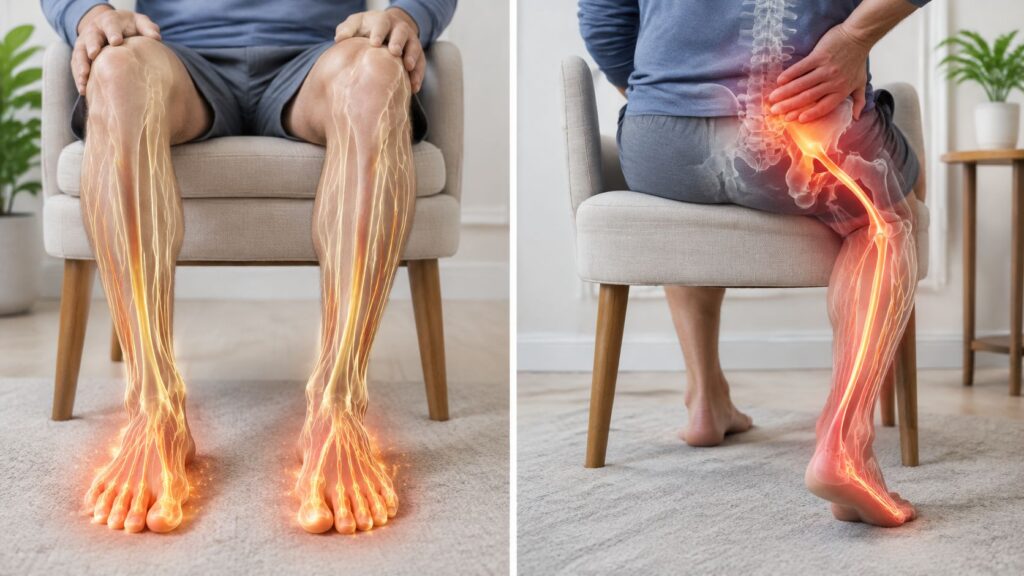
You've likely reached the point where pain has already taken too much from you. Maybe you've tried medications, injections, therapy, or even prior surgery, and now you're wondering what life will look like after a spinal cord stimulator. That question matters. Relief is important, but so is knowing when you can sleep more comfortably, move safely, drive again, and get back to normal routines without undoing the work of the procedure.
Spinal cord stimulator recovery is usually steady rather than dramatic. Patients often achieve optimal results by treating recovery as a protected healing window, not a test of toughness. If you live around Chicago Ridge, including Oak Lawn, Palos Hills, Palos Heights, Worth, Bridgeview, Hickory Hills, Alsip, Burbank, Evergreen Park, or Orland Park, the same practical rules apply. Protect the leads early, keep the incision clean, move in a controlled way, and let programming do its job once healing is far enough along.
Your Partner in Spinal Cord Stimulator Recovery
A spinal cord stimulator can be a meaningful step forward when chronic nerve-related pain hasn't responded to more conservative treatment. It's also normal to feel uneasy once the procedure is scheduled. Many patients are less worried about the procedure itself than about the days afterward. They want to know what's normal, what could go wrong, and how careful they really need to be.
The answer is straightforward. Recovery works best when it's structured. Most patients experience a recovery period of about 6 to 8 weeks before resuming regular activities after spinal cord stimulator implantation, though full adaptation may take longer depending on overall health and how closely post-operative instructions are followed, according to this spinal cord stimulator recovery overview.
What recovery usually demands from you
During this period, your job is simple but important:
- Protect the implant area: Sudden reaching, twisting, and lifting too soon can shift leads before your body secures them.
- Stay engaged with your care plan: Recovery isn't passive. You'll need to monitor the incision, pace activity, and report concerns early.
- Use comfort strategies that don't depend on opioids: Good positioning, ice, rest, and steady movement often help more than patients expect.
Practical rule: The first phase of healing is about protecting placement, not testing pain tolerance.
Why a week-by-week mindset helps
Patients who do well usually stop asking, “Can I get back to everything yet?” and start asking, “What's appropriate this week?” That shift matters. It keeps you from doing too much on a good day and paying for it later.
This guide is written for patients in Illinois, especially those in and around Chicago Ridge, Oak Lawn, Palos Hills, and Orland Park, who want clear instructions instead of vague reassurance. Recovery is manageable when you know the timeline, respect the restrictions, and ask for help early.
Understanding Your Trial vs Permanent Implant
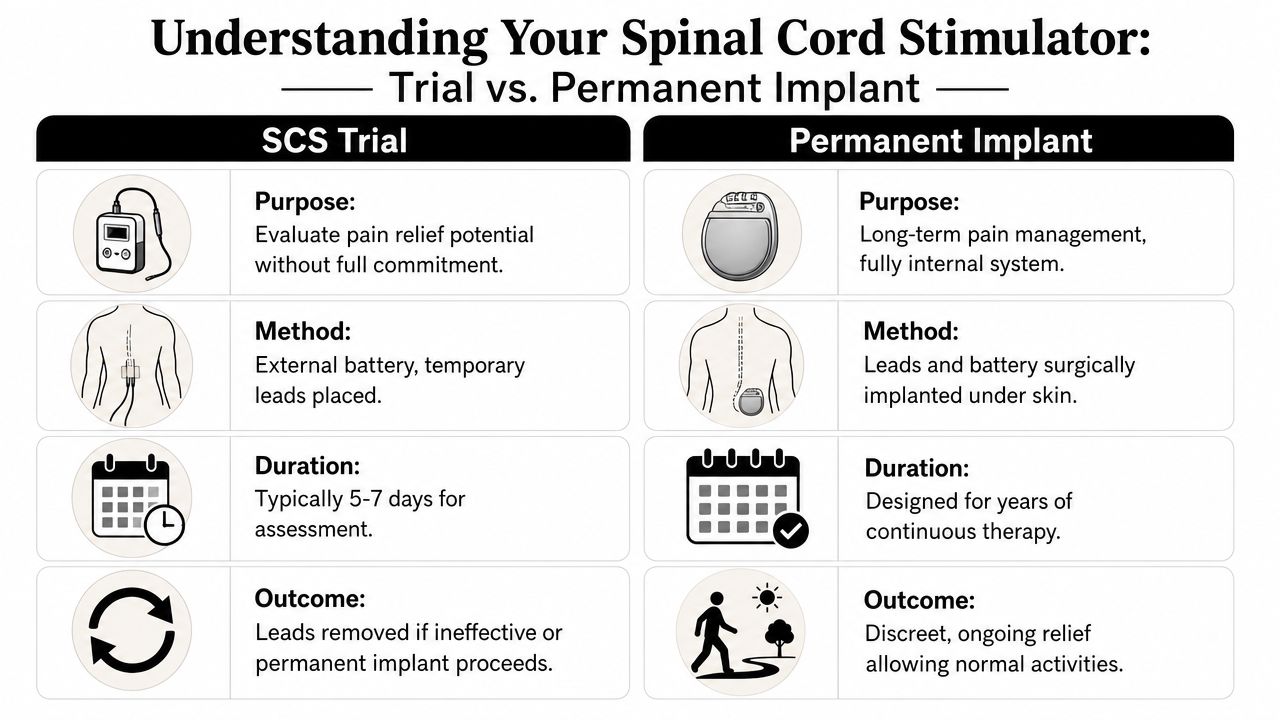
A patient from Oak Lawn recently asked me a smart question before her procedure: “If the trial helps, why isn't recovery basically the same as the permanent implant?” The short answer is that these are two different stages with two different goals. The trial helps us decide whether spinal cord stimulation fits your pain pattern. The permanent implant is the step where we protect the hardware, allow tissue healing, and start building treatment around your day-to-day function.
What happens during the trial
The trial uses temporary leads connected to an external power source. It is brief by design. Our job during that window is to learn whether stimulation gives meaningful relief and whether it helps you function better, such as sitting longer, walking farther, or sleeping with less interruption.
A trial can go well without being perfect. Many patients feel enough improvement to justify the next step, but the trial is still a screening period, not a finished treatment plan. If you want a plain-language explanation of the therapy itself, how spinal cord stimulation works explains the basics clearly.
How the permanent implant differs
The permanent implant places the leads and battery under the skin for longer-term treatment. That changes your recovery priorities. During a trial, we are mainly measuring benefit. After a permanent implant, we are protecting lead position, letting the pocket heal, and preparing for device programming that matches your pain pattern, posture, and routine.
This is the trade-off I want patients in Chicago Ridge, Palos Hills, and Orland Park to understand. The permanent system offers longer-term treatment potential, but it also asks more from you in the early healing phase. Better results usually come from patience, activity control, and close follow-up, not from trying to “push through” too soon.
| Stage | Main purpose | What matters most |
|---|---|---|
| Trial | See whether stimulation improves pain and daily function | Clear feedback about relief, comfort, and activity changes |
| Permanent implant | Build a durable pain management plan | Healing well, following restrictions, and fine-tuning the device |
A successful trial tells us the therapy deserves a longer-term place in your treatment plan. It does not guarantee that every pain flare disappears.
Why the two-step process matters
Patients who have lived with chronic pain for years often want to skip straight to the answer. I understand that. The trial protects you from committing to an implanted device before we know whether the therapy is likely to help.
That step matters because success is not only about pain scores. It is also about function, sleep, tolerance of the stimulation, and whether the recovery demands fit your life. Even practical details at home can make a difference during this period. Some patients rest more comfortably with head and leg support, similar to the positioning described in Gorins Furniture adjustable base benefits, especially when getting in and out of bed is sore at first.
The two-step process gives us better information and helps us make a better decision. That is good medicine, and it usually leads to fewer regrets later.
The First 48 Hours After Your Procedure
The first night home often goes like this: you stand up from the couch, feel a sharp pull near the incision, and wonder whether that soreness means something went wrong. In most cases, it does not. During these first 48 hours, soreness, stiffness, and fatigue are expected. The goal is not to test the device or gauge your final pain relief yet. The goal is to protect the leads, keep swelling down, and get through these two days without irritating the surgical area.
For many Midwest Pain & Wellness patients in Chicago Ridge, Oak Lawn, Palos Hills, and Orland Park, the hardest part is how quiet recovery feels at first. You may have expected a dramatic change right away. Early recovery is usually more ordinary than that. You rest, change positions carefully, walk short distances, and keep your routine small.
Your priorities right away
Focus on three things.
- Protect your incisions and leads: Avoid bending, twisting, reaching overhead, or lifting anything heavier than your care team allowed. Small movements done carelessly are what create problems early.
- Stay ahead of soreness without overusing opioids: Use the comfort plan we gave you, which may include ice near the painful area if approved, scheduled non-opioid medication if medically appropriate, and short walks around the house.
- Keep an eye on the basics: Drink fluids, eat simple meals, and notice how the dressing looks without removing it or adjusting it.
This should feel uneventful. That is what we want.
Best positions for comfort
Positioning matters more than many patients expect. Getting comfortable without twisting your spine can reduce strain and lower the urge to keep shifting around.
- Use log-rolling to get in and out of bed: Move your shoulders and hips together.
- Support the knees or hips with pillows: A pillow under the knees on your back, or between the knees on your side, often reduces tension.
- Change positions before stiffness builds: Lying or sitting too long can make the next movement more painful.
If your bed setup is making it hard to rest, some patients find it helpful to review Gorins Furniture adjustable base benefits for ideas on positioning the upper body and legs more comfortably during recovery.
What patients ask us most in this window
Should I feel relief yet? Sometimes patients notice a difference early, but full assessment comes later after healing and programming. Do not judge the long-term result by day one or two.
Is incision pain normal? Mild to moderate soreness at the incision sites is common. Pain that keeps escalating, significant drainage, fever, or spreading redness deserves a call to our office.
How active should I be? Walk to the bathroom, kitchen, or down the hallway. That is enough for now. If you are trying to catch up on housework, errands, or missed responsibilities, you are doing too much.
What not to do
Do not test your range of motion. Do not reach for items on high shelves. Do not bend to pick laundry up off the floor. Do not carry a bag because it seems light enough in the moment. The first 48 hours should feel controlled and boring. If you are trying to “catch up” on normal life, you are doing too much.
Your Week by Week Spinal Cord Stimulator Recovery Timeline
The recovery timeline usually feels longest around day 4 or 5. You are still sore, your activity is limited, and it can seem like progress is too slow. That is normal. For many of our Midwest Pain & Wellness patients in Chicago Ridge, Oak Lawn, Palos Hills, and Orland Park, recovery gets easier once they know what each week is supposed to look like and what problems they are trying to avoid.
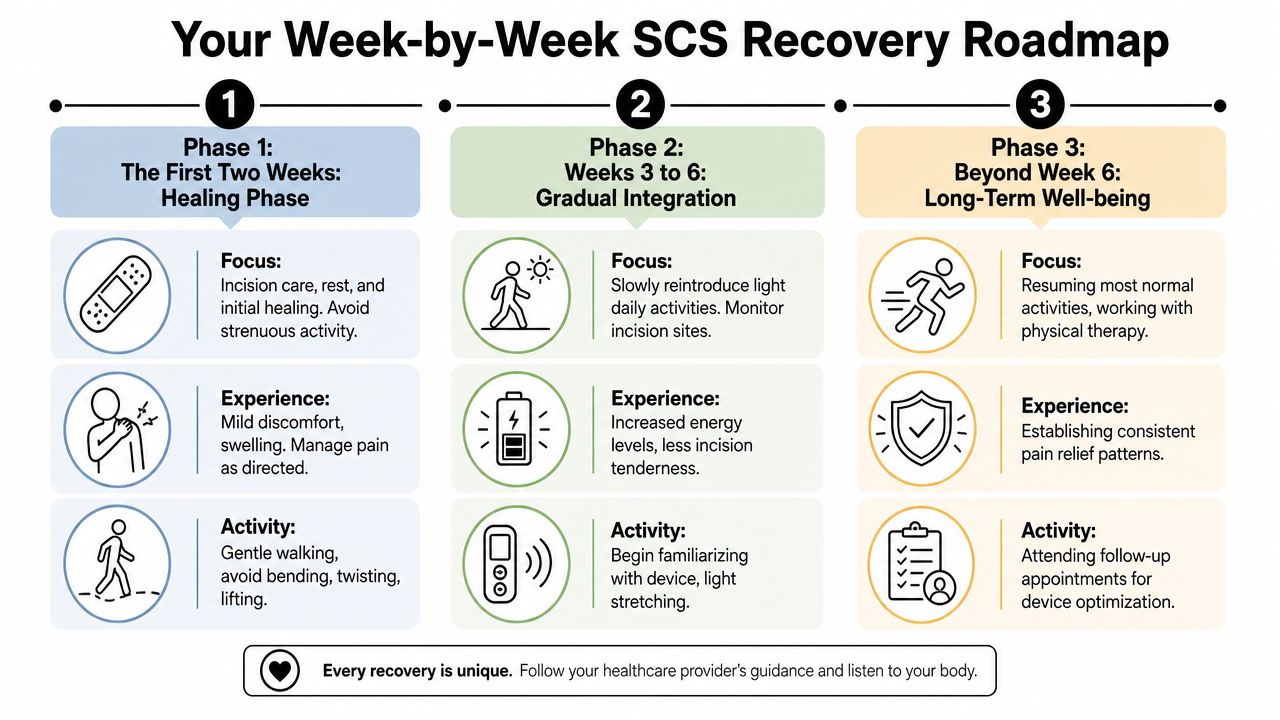
The first two weeks
This is the protection phase. The job is simple. Keep the leads and incision area quiet enough to heal.
Patients often ask me if they should push through stiffness to loosen up. Early on, that approach usually causes trouble. Short walks inside the house are helpful. Sudden bending, twisting, overhead reaching, lifting, and repeated position changes are not.
What usually helps during this phase:
- Gentle walking: A few short walks each day are better than one long walk that leaves you sore later.
- Careful transitions: Roll, sit, pause, then stand. Give your body a second to settle before the next movement.
- Low-demand routines: Bathroom trips, simple meals, and brief periods out of bed are enough.
What tends to set patients back:
- Trying to “stretch out” stiffness with aggressive movement
- Lifting groceries, laundry baskets, or pets
- Reaching overhead or twisting to get comfortable in bed
If you want broader practical reading on keeping the surgical area protected while you heal, mastering surgical site infection prevention offers useful general guidance.
Weeks three through six
This is the phase where confidence often rises faster than healing. Incision pain usually starts to settle. Energy may improve. That can tempt people to do a full day of errands, housework, or yard work because they finally feel more like themselves.
That is the wrong test.
A better plan is to build activity in layers:
- Walk a little more.
- Stay upright a little longer.
- Add light tasks that do not involve bending, carrying, or repetitive trunk motion.
- Stop before soreness spikes, not after.
Patience is key during this time. One steady week is better than one productive day followed by two days of increased pain. If you have a physically demanding job, this stretch often determines whether your return goes smoothly or turns into a setback.
Beyond six weeks
Now the focus shifts from protection to function. The question is no longer just, "Is the incision healing?" It becomes, "Can I move through daily life with better control and fewer pain flares?"
Progress is not identical for every patient. A desk worker may be ready for more routine activity sooner than someone who drives all day, climbs, lifts, or spends long hours on their feet. Patients who had limited mobility for months or years before implantation also tend to need a slower rebuild.
Use this simple check-in to judge whether recovery is moving in the right direction:
| Question | Good sign |
|---|---|
| Can you walk longer without a pain flare later that day? | Endurance is improving |
| Can you handle basic chores without guarding every movement? | Daily function is improving |
| Can you increase activity without returning to the sharp soreness of early recovery? | Healing is staying on track |
The goal is not to rush back to normal. The goal is to return safely, protect the result, and give the device enough time and programming support to do its job well.
Wound Care and Preventing Infection
Incision care is not complicated, but it does require discipline. Most wound problems happen when patients either do too much with the incision or ignore early warning signs because they hope the issue will settle on its own. Clean, dry, and mostly left alone is the right approach.
Here's the visual checklist many patients find helpful.
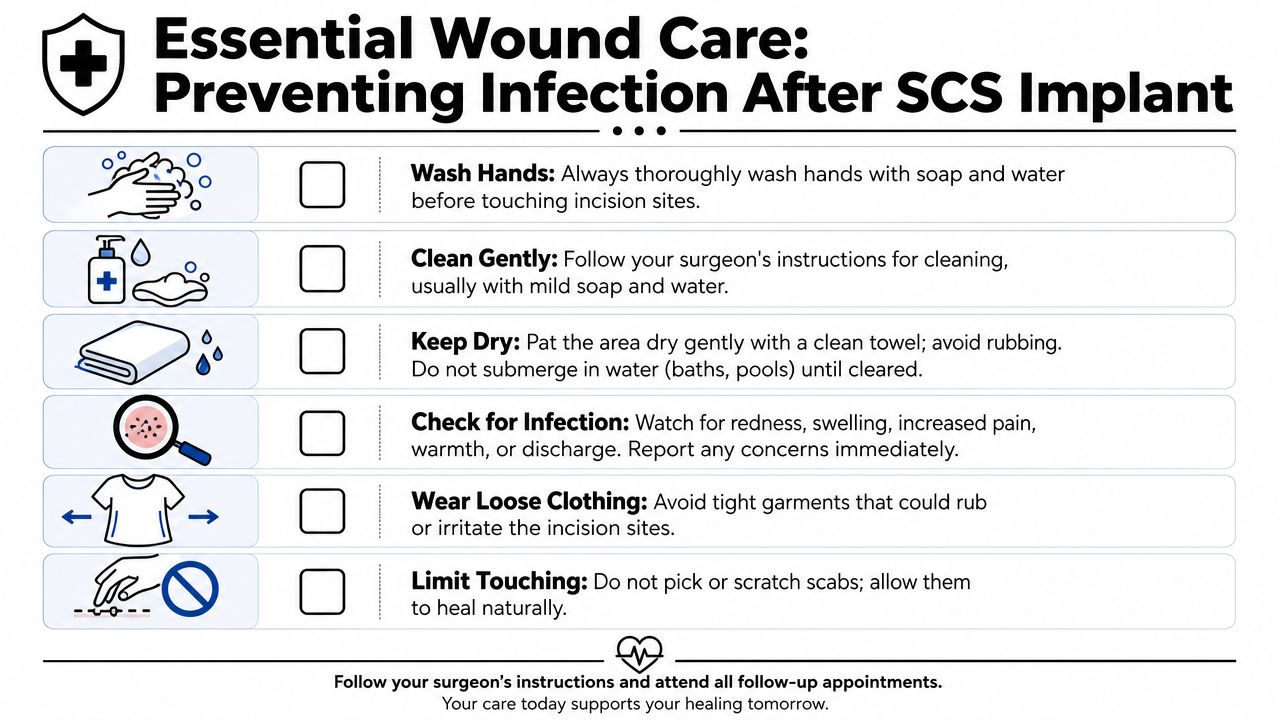
Daily wound care basics
Use a simple routine and repeat it the same way every day.
- Wash your hands first: Touching the incision with unclean hands is an easy way to create trouble.
- Keep the site dry unless you've been told otherwise: If you've been given specific shower instructions, follow those exactly.
- Wear loose clothing: Friction from waistbands or tight garments can irritate the area and make healing more uncomfortable.
If you want broader practical reading on infection prevention principles, mastering surgical site infection prevention offers a useful general overview.
What should prompt a call
Don't wait and see if these signs “work themselves out”:
- Increasing redness
- Warmth spreading around the incision
- New or worsening drainage
- Swelling that keeps increasing instead of settling
- Fever
- Pain at the wound that is getting sharper, not better
If the incision looks worse from one day to the next, that deserves attention.
Showering and water exposure
Patients often focus on when they can shower, but the bigger issue is avoiding prolonged moisture and contamination. A quick shower after you've been cleared is very different from soaking in a bath, hot tub, or pool. Submerging the incision too early is one of the easiest ways to create a setback.
When in doubt, ask before exposing the area to water. That's a much better choice than assuming the skin is “basically closed” and moving ahead.
Opioid-Sparing Pain Control Strategies
The soreness after a spinal cord stimulator implant is usually different from the chronic pain that led you to this treatment in the first place. It's often more mechanical and local. Incision tenderness, pressure at the battery site, muscle guarding, and sleep disruption are common. That pattern responds well to a layered plan. It doesn't automatically require opioids.
At a pain clinic, the goal is not to ignore pain. It's to treat it in a way that supports healing, protects function, and reduces unnecessary medication burden.
The methods that tend to help most
Start with the basics and do them consistently.
- Ice with intention: Short sessions can calm soreness and swelling around the implant area. Wrap the cold pack so you protect the skin.
- Change positions before pain builds: Don't stay in one chair or one bed position until you're miserable.
- Use approved non-opioid medication if your doctor says it's appropriate: Your medical history and procedure details matter here, so follow your own instructions.
What patients often underestimate
Many people think rest means being motionless. It doesn't. Controlled movement usually helps more than total inactivity. Gentle walking often reduces stiffness, improves circulation, and makes it easier to tolerate sitting and sleeping later in the day.
Another overlooked tool is pacing. If you feel decent in the morning, it's tempting to clean, organize, and make up for lost time. That approach often causes more soreness by evening. Recovery responds better to smaller, repeatable efforts.
For some patients with focal nerve pain patterns, related therapies may also be part of the bigger pain-management conversation. Learn about dorsal root ganglion stimulation if your physician has discussed targeted neuromodulation options with you.
What usually doesn't work
| Common mistake | Why it backfires |
|---|---|
| Staying in bed all day | Increases stiffness and makes movement harder |
| Waiting until pain is severe to reposition | Harder to calm muscle guarding once it builds |
| Doing too much on a “good” day | Creates an avoidable flare afterward |
Comfort after implantation should feel manageable, not ignored. If pain is escalating instead of gradually improving, that's not a sign to continue enduring it.
Your Device Programming and Follow Up Visits
A common recovery moment happens a week or two after surgery. The incision is healing, the device is in place, and a patient tells us, "I thought I'd feel the full benefit by now." That expectation is understandable. The procedure places the system, but programming is what turns it into a treatment that fits your pain pattern, daily routine, and comfort level.
At Midwest Pain & Wellness, we prepare patients in Chicago Ridge, Oak Lawn, Palos Hills, and Orland Park for this part of recovery early. The first settings are a starting point. Good results usually come from careful adjustment over time, not from one perfect visit.
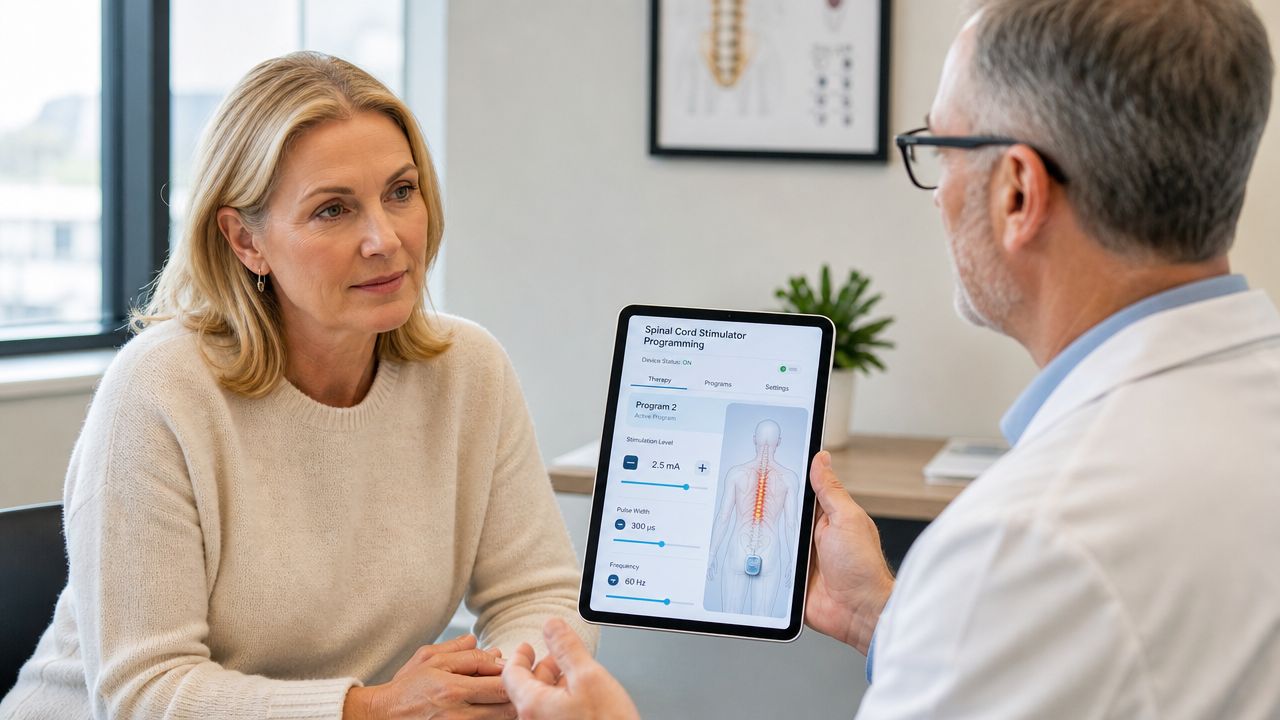
When the device starts working for you
Programming often begins after the early healing period, once your team feels the leads are stable enough to adjust settings more confidently. At that visit, you may meet with both your pain specialist and a device representative. The goal is simple. Reduce pain coverage gaps and avoid settings that feel irritating, distracting, or too strong in certain positions.
Relief is rarely identical all day. A program that feels good while walking may feel different when you sit, recline, or roll in bed. That is one reason follow-up matters so much after spinal cord stimulator placement.
Clinical reviews have found that spinal cord stimulation can provide meaningful pain relief for appropriately selected patients, though outcomes vary by diagnosis, lead placement, and follow-up care, as described in a review published by the National Center for Biotechnology Information: Spinal Cord Stimulation for Chronic Pain.
What to expect at the first programming visit
Specific feedback helps us make better changes. "It sort of helps" gives us less to work with than, "My calf pain eases when I stand, but the low back coverage drops off when I sit in the car."
Your first programming session may include:
- Trying different programs: We test changes in coverage, intensity, and comfort.
- Learning your controller: You need to know how to switch between approved settings and when not to adjust the device on your own.
- Matching programs to activity: Some patients do better with one setting for daytime movement and another for rest.
- Reviewing limits and precautions: If certain motions, charging routines, or body positions affect the way stimulation feels, we address that during the visit.
Bring notes if you can. A short list of what hurts, where it hurts, and which positions change the sensation often saves time and leads to better programming decisions.
Why follow-up matters
Spinal cord stimulation needs maintenance and communication. Pain can shift as swelling settles. Your activity level changes. Even posture can affect how coverage feels from morning to evening.
We tell patients not to wait until frustration builds. If the coverage drifts, the battery site becomes more noticeable, or the stimulation feels unpleasant, call us. Small changes are often easier to fix early.
The trade-off is straightforward. More adjustment visits can feel inconvenient, especially if you are arranging rides or missing work, but skipping follow-up often delays relief. In our practice, the patients who stay engaged with programming usually have a smoother recovery and a clearer path toward lower reliance on pain medication.
Returning to Work Driving and Daily Activities
A common moment in recovery happens around the second or third week. Pain is starting to settle, the incision looks better, and you feel tempted to drive yourself to Oak Lawn, head back to the office, or catch up on chores at home. That instinct is understandable. It is also where patients can lose ground if they test too much, too soon.
At Midwest Pain & Wellness, we ask a simple question. Can you do the activity without twisting, bracing, flaring your pain, or putting stress on the implant area later that day?
Driving and getting back to work
There is no single calendar that fits every patient. Return to driving and work depends on incision healing, body mechanics, your pain level, and whether you are still using medication that can slow reaction time. The U.S. National Library of Medicine's MedlinePlus notes that patients should avoid driving while taking prescription pain medicine and should follow procedure-specific restrictions during recovery.
For driving, clearance usually depends on function more than motivation. You should be able to:
- Sit comfortably for the length of the trip
- Turn your body carefully without sharp pulling at the incision
- Brake quickly without hesitation
- Stay fully alert, without medication-related impairment
If you are asking yourself, "I feel mostly fine, so why wait?" the answer is practical. Driving combines sitting, vibration, sudden movement, and reaction time. Those demands matter more than a short trip to the store.
Work follows the same logic.
A desk job may come back sooner if you can change positions often, avoid long car rides, and keep your day predictable. Jobs that involve lifting, stocking, climbing, repetitive bending, or whole-body vibration usually require more healing time and a more cautious release plan. I often tell patients in Chicago Ridge, Palos Hills, and Orland Park to plan for a phased return when possible. Half days, more walking breaks, and temporary lifting limits often work better than trying to prove you can handle a full schedule immediately.
Daily activities should come back in layers
Recovery goes more smoothly when you group activities by physical demand instead of trying to return to normal all at once.
| Activity | Safer approach |
|---|---|
| Household chores | Start with light tasks such as meal prep, folding laundry on a table, or wiping counters. Avoid vacuuming, heavy baskets, and deep bending until cleared. |
| Exercise | Walking is the usual starting point. Add distance first, then pace. Save gym routines, core work, and higher-impact movement for later review. |
| Hobbies | Bring back one hobby at a time so you can tell what your body tolerates. Gardening, golf, and workshop tasks often need more caution than patients expect. |
| Community errands | Keep early trips short. Build in time to stand, stretch, or sit differently before pain builds. |
If you still need mobility support during recovery, that does not mean the implant is failing. It may mean your walking tolerance has not caught up yet. For a general overview of different kinds of wheelchairs, this guide can help you understand the categories.
Practical rules that prevent setbacks
These habits protect the implant area during the weeks when leads and tissue are still settling:
- Avoid sudden twisting to reach behind you in the car or at your desk
- Keep items you use often between shoulder and waist height
- Use a grabber tool if bending is still restricted
- Break up sitting time with short standing or walking intervals
- Ask for help with pet care, groceries, trash, or anything awkward to carry
This can feel limiting. It is still the better trade-off than aggravating the surgical area and extending your recovery.
When to call us
Some problems are not routine soreness or normal healing. Contact our office promptly if you notice:
- A sudden drop in pain relief
- A major change in the way stimulation feels
- New weakness, numbness, or poor balance
- Loss of bowel or bladder control
- Increasing redness, drainage, swelling, or wound pain
If you are unsure whether a symptom is expected, our page on spinal cord stimulation side effects can help you recognize concerns that deserve a call.
The goal is not to rush back to every activity. The goal is to return safely, keep the device stable, and build enough consistency that work, driving, and daily life stay manageable once you resume them.
Frequently Asked Questions About SCS Recovery
Patients often think the hardest questions happen before the procedure. In practice, many practical questions show up after the incision is healing and real life starts again.
SCS Recovery FAQ
| Question | Answer |
|---|---|
| Can I go through airport security with an implanted stimulator? | Yes, but carry your device identification information and tell security personnel you have an implanted device. |
| When can I swim or use a hot tub? | Wait until your incision is fully healed and you've been cleared. Water exposure too early can create wound problems. |
| Will my settings stay the same forever? | Usually not. Programming often needs adjustment over time as your activity, pain pattern, and comfort needs change. |
| What if I still need mobility support during recovery? | That can be appropriate for some patients, especially if walking tolerance is limited. If you're comparing mobility options for daily use, this guide to different kinds of wheelchairs may help you understand the general categories. |
| What if I notice unusual sensations or device-related concerns later on? | Report them rather than guessing. This overview of spinal cord stimulation side effects can help you understand what kinds of issues deserve a conversation. |
A final point matters. A spinal cord stimulator is not meant to replace communication with your pain physician. It works best when the device, your activity level, and your follow-up care all stay connected. If something feels off, ask. If relief is improving but not where it should be, ask. Good long-term results usually come from ongoing adjustment, not silence.
If you're considering spinal cord stimulation or need expert guidance during recovery, Midwest Pain & Wellness provides compassionate, opioid-sparing pain care for patients in Chicago Ridge and surrounding Illinois communities, including Oak Lawn, Palos Hills, Palos Heights, Worth, Bridgeview, Hickory Hills, Alsip, Burbank, Evergreen Park, and Orland Park. Dr. Yaw Donkoh and the team focus on practical next steps, careful follow-up, and treatment plans built around function, safety, and durable relief.