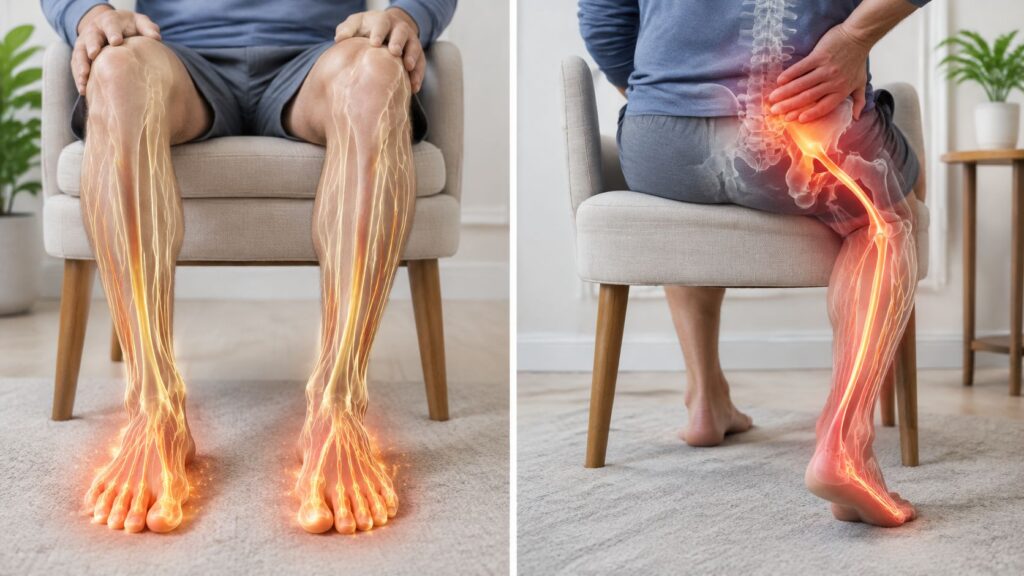
The most popular advice about medial branch block vs facet injection is that they're basically the same procedure with a different needle position. That shortcut can send your treatment plan in the wrong direction. One procedure primarily tests whether the facet joint is generating pain, while the other places medication into the joint itself, often with the aim of calming a painful flare.
The more important question isn't which injection sounds simpler. It's which procedure gives your pain specialist the information needed to choose the next step, particularly if radiofrequency ablation may be appropriate and your insurer requires a specific diagnostic pathway. The right choice depends on your symptoms, spinal region, examination, prior conservative care, anatomy, and coverage criteria.
| Decision point | Medial branch block | Facet joint injection |
|---|---|---|
| Primary target | Medial branch nerves supplying the facet joints | The facet joint space |
| Main purpose | Diagnostic and sometimes therapeutic | Primarily therapeutic, with possible diagnostic value |
| Typical medication role | Local anesthetic to temporarily block nerve signals | Local anesthetic, often combined with an anti-inflammatory medication |
| Value before radiofrequency ablation | Usually preferred for prognostic selection | Generally less predictive for selecting patients |
| Key technical consideration | Very low injectate volume helps limit spread | Larger, but still limited, volume helps avoid capsular rupture |
| Best fit | Suspected facet-mediated axial pain requiring diagnostic confirmation | Selected joint-centered pain or a short-term therapeutic goal |
Table of Contents
- Why the Choice Between These Procedures Matters More Than You Think
- Understanding the Anatomical and Procedural Differences
- Comparing Diagnostic Value and Therapeutic Outcomes
- How Results Guide Your Next Treatment Steps
- When Spinal Region and Symptom Pattern Change the Decision
- Making the Right Choice for Your Pain Management Plan
- Your Next Steps Toward Lasting Pain Relief
Why the Choice Between These Procedures Matters More Than You Think
Patients are often told that a facet injection and a medial branch block are interchangeable because both involve the small joints at the back of the spine. That description misses the clinical purpose. A medial branch block targets the nerves that carry sensation from the facet joints, while an intra-articular facet injection delivers medication into the joint space. Those targets produce different information.
The distinction matters most when the treatment plan may progress to radiofrequency ablation. Radiofrequency ablation is designed to interrupt pain transmission through selected medial branch nerves. Before considering it, the clinician needs reasonable evidence that those nerves are carrying pain from the suspected facet joints. A nerve block can test that pathway more directly than medication placed inside the joint.
A major evidence summary published in 2008 gave diagnostic and therapeutic medial branch blocks strong recommendations, classified as IA or 1B (the PubMed evidence summary). A later evidence appraisal found that the prevalence of facet joint pain among patients evaluated with diagnostic blocks ranged from 36% to 67% when an 80% pain-relief threshold was used, also described in that same evidence record. These findings don't mean every patient with back or neck pain should receive a block. They show why controlled diagnostic testing became central to identifying facet-mediated pain.
The real decision is downstream
A procedure can provide temporary relief and still fail to answer the question that matters. If the goal is to settle inflammation during a painful episode, an intra-articular injection may earn its place. If the goal is to determine whether radiofrequency ablation is likely to help, the diagnostic value of the procedure becomes more important than the immediate sensation of relief.
Coverage rules reinforce that distinction. Policies commonly ask for documented axial, non-radicular pain, prior conservative treatment, image guidance, and diagnostic results that meet specified thresholds. The procedure therefore becomes part of a documented pathway, not an isolated event.
Practical rule: Choose the injection based on the decision it needs to support, not just the location of the pain.
Communication also matters, particularly when patients discuss symptoms, consent, and prior treatment across language barriers. Clear communication resources, including interpretation training for hospitals, can help clinical teams preserve important details during complex consultations. In pain medicine, a missed description of radiating pain, numbness, or the timing of relief can alter the diagnostic interpretation.
Understanding the Anatomical and Procedural Differences
The anatomy drives the different clinical roles these procedures play, but the downstream decision matters more: which test can support a defensible path toward radiofrequency ablation?
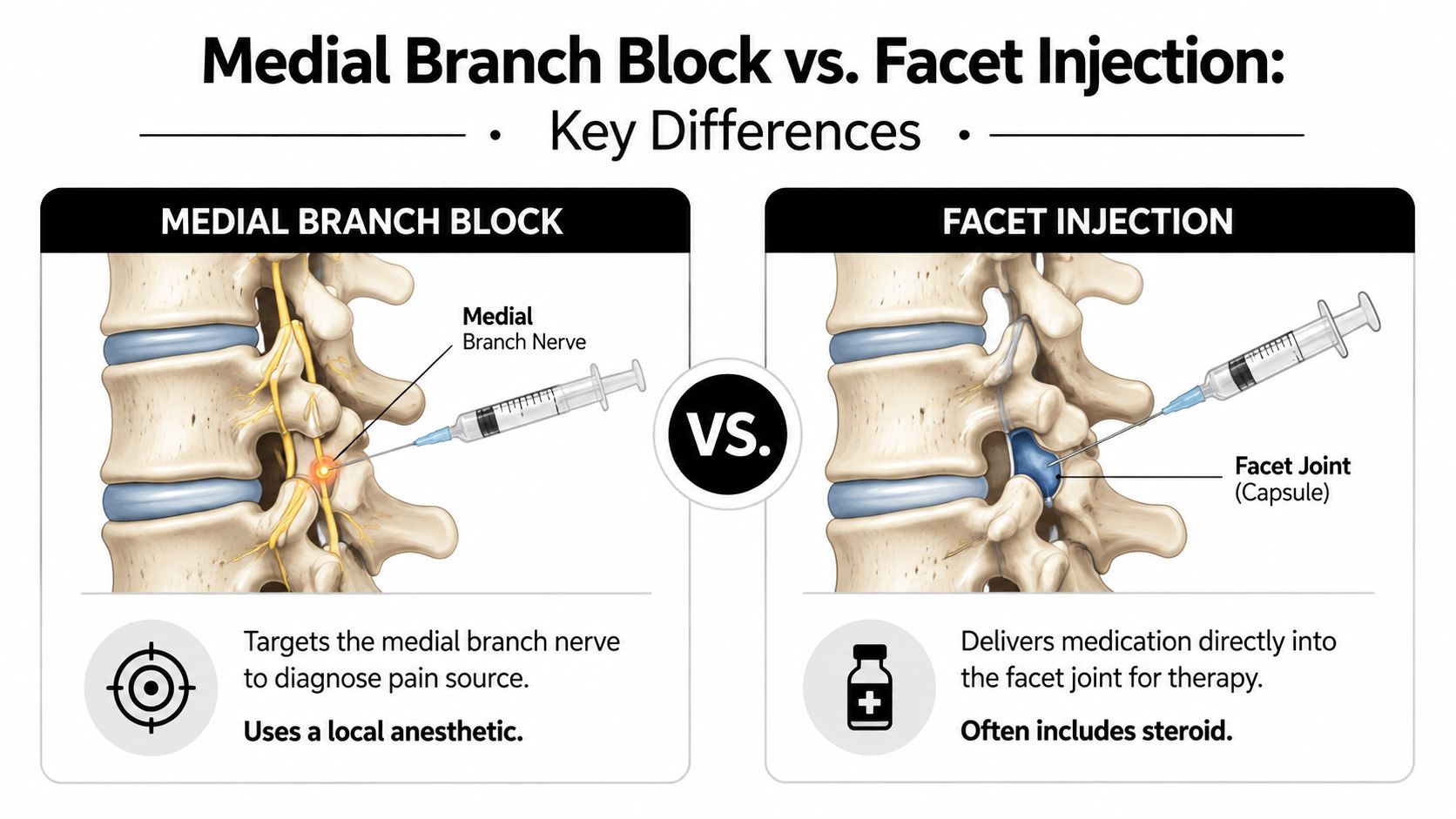
Facet joints connect the back portions of adjacent vertebrae. Each joint has a capsule and receives sensory supply from small medial branch nerves. A medial branch block places local anesthetic near those nerves, temporarily reducing their ability to transmit pain signals. The clinician then compares the patient's familiar pain and function before and after the block. Because radiofrequency ablation also targets these nerves, the block can provide prognostic information when performed and interpreted within an appropriate diagnostic pathway.
An intra-articular facet injection places medication into the joint space. The medication may include local anesthetic and an anti-inflammatory agent, often a steroid. Its intended role is to calm irritation within the joint and potentially provide symptom relief. Relief after the injection does not isolate the medial branch pathway as directly, so it may be less useful when the next decision is whether to proceed with nerve ablation.
Why injectate volume matters
Needle placement alone does not determine diagnostic precision. The amount injected affects how far medication can travel. For lumbar medial branch blocks, multispecialty guidelines recommend less than 0.5 mL total injectate to reduce spread to adjacent structures (the lumbar facet intervention guideline). A smaller volume helps test the intended nerve rather than nearby nerves or tissues.
For lumbar intra-articular facet injections, the same guidance recommends less than 1.5 mL. The goal is to reduce capsular rupture and unintended spread. The joint needs enough medication to be accessed, while excessive volume can make the response harder to interpret.
The technical approach also reflects facet-joint anatomy. One joint may receive sensory supply from more than one medial branch, so complete sensory blockade of one lumbar facet joint requires two injections, one at the joint level and another immediately above. Bilateral targeting of the L3 and L4 medial branches plus the L5 dorsal ramus can require six injections in total, as described in this anatomical review of lumbar medial branch blocks.
What the medications tell us
Local anesthetics such as bupivacaine provide temporary numbness that can be compared with the patient's familiar pain and activity tolerance. A plain-language explanation appears in the FindMyScript guide to bupivacaine. Timing, functional testing, and whether relief matches the expected anesthetic duration determine the diagnostic value.
Patients may review what a medial branch block involves before consulting a pain specialist. The practical distinction is direct: a medial branch block tests a nerve pathway, while a facet injection treats the joint space.
Comparing Diagnostic Value and Therapeutic Outcomes
The strongest reason clinicians often favor medial branch blocks before radiofrequency ablation is prognostic relevance. Radiofrequency treatment acts on the medial branch nerves, so a block that temporarily interrupts those nerves can provide information about whether the patient's pain is likely to respond when the nerves are treated more durably.
Intra-articular injections can still be useful. A patient with pain that appears centered in a particular facet joint may benefit from medication placed directly into that joint, especially when the immediate goal is short-term symptom control. But relief after an intra-articular injection can reflect several effects, including anesthetic action, anti-inflammatory action, or spread beyond the intended joint. That makes it less reliable as a stand-alone test for radiofrequency selection.
A practical side-by-side comparison
| Criteria | Medial Branch Block | Facet Joint Injection |
|---|---|---|
| Diagnostic accuracy | Generally more predictive for identifying facet-mediated pain before radiofrequency ablation | Can contribute diagnostic information, but is generally less predictive for radiofrequency selection |
| Main therapeutic effect | Temporary interruption of pain signaling, with therapeutic use in selected pathways | Medication delivered into the joint to address joint-centered irritation and pain |
| False-positive concern | Controlled comparative blocks can reduce uncertainty, although no block eliminates it | Intra-articular response may not isolate the medial branch pain pathway |
| Relief threshold | Diagnostic protocols may require substantial relief, often 80% to 100% for an appropriate duration | A positive response may be harder to interpret as proof that medial branch nerves are the pain source |
| Coverage role | Commonly used as a required prognostic step before radiofrequency ablation | Coverage may be narrower when the request is for long-term or repeated treatment |
| Technical focus | Fluoroscopic targeting of the medial branch nerves with very low volume | Image-guided entry into the facet joint with controlled volume |
| Most defensible purpose | Confirming the pain generator and selecting patients for a later nerve-targeting procedure | Selected therapeutic relief, particularly when joint-centered treatment is the immediate objective |
Diagnostic facet blocks have reported false-positive rates of 27% to 63% even when an 80% pain-relief criterion was used, according to a coverage evidence summary on facet joint injections. That range explains why a single injection can't automatically establish the diagnosis. It also explains the emphasis on controlled comparative blocks, in which responses to different local anesthetics are assessed against the patient's familiar pain.
Where facet injections still fit
The policy trend favors medial branch blocks for RFA selection, but that doesn't make intra-articular injections useless. They may be considered when the suspected pain is localized to the joint, when short-term relief is the priority, or when a patient's anatomy and access limitations make another pathway less practical. A recent comparative review identified a tension in the literature, with both approaches described as effective for chronic spinal pain and facet joint block potentially favored for faster relief and fewer complications.
That finding doesn't erase the diagnostic advantage of medial branch blocks. It means the clinician must separate two questions: Which procedure may relieve symptoms now, and which procedure best predicts a durable nerve-targeting treatment? Patients can review the clinical details of a facet joint injection procedure while discussing which question their physician is trying to answer.
How Results Guide Your Next Treatment Steps
A block isn't the finish line. It's a decision point.
Before the procedure, the clinician should identify the patient's index pain, meaning the familiar pain being investigated. After the injection, the patient should assess meaningful activities that normally reproduce symptoms, such as standing, walking, extending the back, turning the neck, or transitioning from sitting to standing. A vague feeling of improvement isn't enough for a high-confidence interpretation.
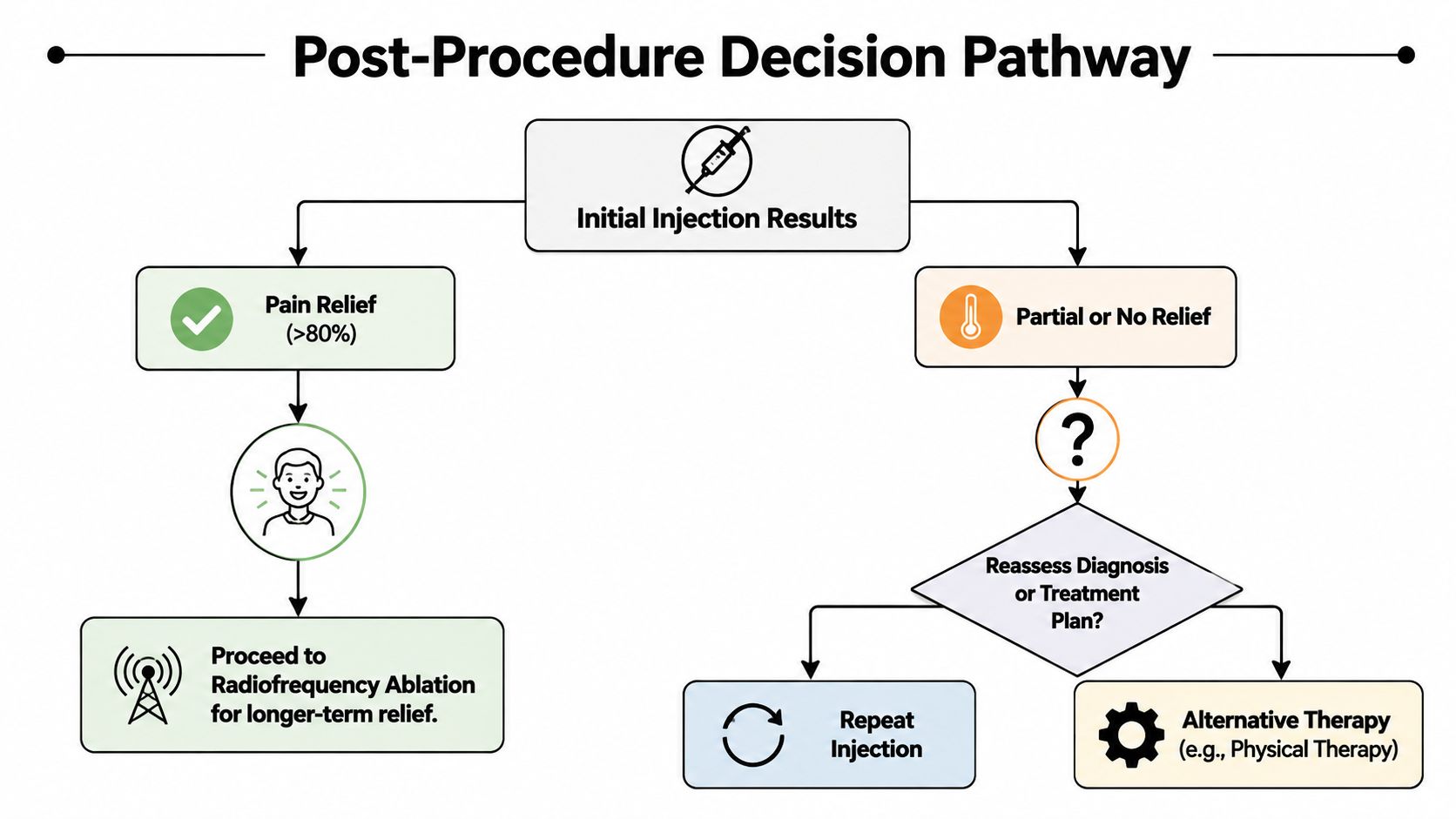
A peer-reviewed review states that an appropriate positive medial branch block requires substantial 80% to 100% pain relief for an appropriate duration with each anesthetic agent (the review of diagnostic medial branch blocks). The duration matters because relief should correspond reasonably with the expected action of the anesthetic used. The patient's report should also describe improved function, not merely a lower pain score while resting.
Why comparative blocks may be requested
A controlled comparative pathway uses two different anesthetic agents on separate diagnostic occasions. If both blocks produce a similar, substantial reduction in the patient's familiar pain for the expected duration, the result is more persuasive than relief after one injection. The logic is straightforward. Reproducible relief supports the idea that the targeted medial branch nerves are involved, while inconsistent relief prompts a closer review of the diagnosis.
Coverage standards aren't uniform. The 2020 consensus guidelines cited in a CMS policy discussion advocate a 50% cutoff for single blocks, while other guidelines support dual diagnostic medial branch blocks with at least 80% relief of index pain. Your physician and insurance policy may therefore use different requirements, and authorization should be checked before treatment begins.
What happens after a positive result
If the blocks confirm the suspected pain pathway, radiofrequency ablation may become an option for longer-lasting relief. The procedure still requires a discussion of risks, alternatives, functional goals, and whether the expected benefit justifies proceeding.
Some patients instead receive repeated therapeutic medial branch blocks when ablation isn't appropriate, isn't authorized, or isn't aligned with their preferences. One outcomes study described patients who met controlled comparative block criteria with 80% concordant pain relief and then received repeated therapeutic cervical medial branch blocks, about 6 times over 2 years, with significant improvement over that period (the applicable coverage and outcomes policy).
A partial or absent response should trigger reassessment, not automatic repetition. The pain may arise from a disc, sacroiliac joint, muscle, nerve root, hip, fracture, or another source that requires a different treatment pathway. Patients considering radiofrequency ablation can also review the practical discussion of radiofrequency ablation cost and confirm coverage details with their care team.
When Spinal Region and Symptom Pattern Change the Decision
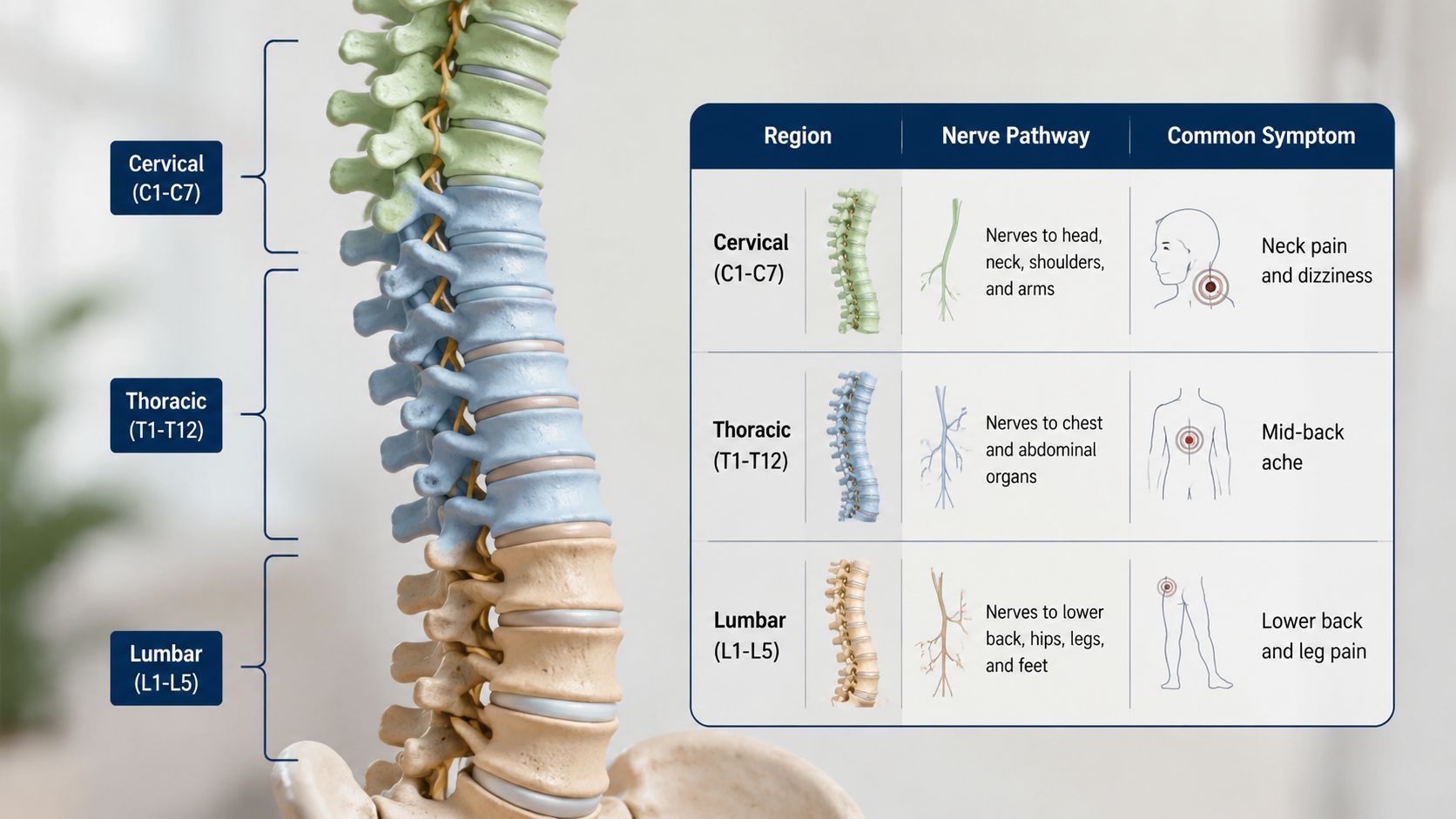
A neck problem is not a smaller version of low-back pain. The spinal region, symptom pattern, neurological examination, prior surgery, and suspected pain generator determine whether a medial branch block or facet injection has a defensible role. The more important question is often which procedure can provide reliable diagnostic evidence for durable treatment and meet current payer criteria for radiofrequency ablation.
Coverage policies generally address facet procedures from C2–3 through L5–S1 and emphasize non-radicular neck or low-back pain consistent with facet involvement. They commonly require documented conservative treatment and image guidance, such as fluoroscopy or CT. Requirements may differ by policy: one 2024 update described pain lasting at least 4 weeks and 6 weeks of conservative therapy within the prior 6 months, while another guideline version used 3 months of pain duration and a 6-week conservative-care minimum. Confirm the applicable requirements before scheduling, because documentation can determine whether a diagnostic block supports later ablation.
Axial pain is different from radicular pain
Facet-mediated pain is usually considered when axial neck or low-back pain is centered in the spine or adjacent tissues without untreated nerve-root symptoms. Shooting pain, numbness, tingling, weakness, or a clearly dermatomal pattern may indicate radiculopathy. A facet procedure may then miss the structure producing the complaint.
Upper-neck symptoms require further distinction. Headache-associated pain can involve nerves and joints outside the standard facet category, including situations in which a third occipital nerve block is considered separately from an ordinary facet procedure. The clinician must determine whether the presentation is axial neck pain, cervicogenic headache, nerve pain, or a combination.
Exceptions deserve a separate conversation
Facet synovial cysts, altered post-surgical anatomy, and unusual imaging findings can change the goal. A direct joint injection may fit a selected joint-centered problem. A medial branch block is more informative when the central question is whether facet nerves drive persistent axial pain and whether the response is strong and reproducible enough to justify radiofrequency ablation.
Coverage guidance is not completely consistent. Some policies regard therapeutic facet injections or medial branch blocks as low-value or unproven for long-term treatment, while 2026 summaries still include moderate recommendations for facet nerve blocks in some settings. Region-specific documentation, functional pain measures, and prior authorization therefore belong in the treatment plan, not at the end of it.
Making the Right Choice for Your Pain Management Plan
The safest decision framework starts with the diagnosis, not the procedure menu. A patient with localized axial pain, no untreated radiculopathy, and a possible future need for radiofrequency ablation may need a carefully planned medial branch block. A patient with a suspected inflamed facet joint and a short-term therapeutic goal may have a different rationale for an intra-articular injection.
Fluoroscopy is often preferred over CT for lower cost, faster procedure time, and less radiation in lumbar medial branch block guidance, according to multispecialty consensus guidelines. The choice of imaging still depends on anatomy, prior surgery, body habitus, and the physician's judgment.
Questions that improve the consultation
Ask your pain specialist:
- What pain generator are we testing? Clarify whether the concern is a facet joint, medial branch nerve, nerve root, disc, sacroiliac joint, or another structure.
- Is this injection diagnostic, therapeutic, or both? The answer affects how you should measure relief and what the next step may be.
- What result would qualify me for radiofrequency ablation? Ask about the required percentage of relief, duration, number of blocks, and functional improvements.
- How does my insurance policy affect the plan? Coverage may require conservative care, image guidance, specific spinal levels, or dual diagnostic blocks.
- What will we do if the result is negative? A negative block can be useful when it prevents an ineffective treatment and redirects the workup.
Midwest Pain & Wellness is a pain and wellness clinic in Chicago Ridge led by Dr. Yaw Donkoh, a double board-certified interventional pain specialist. The practice uses coordinated, opioid-sparing care that may include conservative treatment, image-guided injections, medial branch blocks, radiofrequency ablation, and collaboration with referring providers. Patients from Chicago Ridge, Palos Heights, Palos Hills, Evergreen Park, Hickory Hills, and nearby Illinois communities can receive an assessment that considers symptoms, examination findings, imaging, treatment history, and coverage requirements together.
Your Next Steps Toward Lasting Pain Relief
Prepare for your consultation by writing down where the pain starts, where it travels, and which movements reproduce it. Bring prior imaging reports, procedure records, medication lists, therapy records, and insurance information. If you've had an earlier injection, record the timing of relief, the activities you could perform afterward, and when the familiar pain returned.
Use the appointment to clarify the purpose of the proposed procedure:
- Identify the target. Ask which nerve or joint the clinician plans to treat and why it matches your symptoms.
- Define success. Ask how much relief matters, how long it should last, and which functional improvements you should track.
- Confirm the pathway. Find out whether the result could lead to radiofrequency ablation, a repeat block, an intra-articular injection, rehabilitation, or another diagnostic evaluation.
- Review safety and logistics. Discuss image guidance, medication choices, activity restrictions, transportation, and warning signs that require prompt medical attention.
- Verify authorization. Confirm whether your policy requires documented conservative therapy or more than one diagnostic block.
For residents of Chicago Ridge, Palos Heights, Palos Hills, Evergreen Park, Hickory Hills, and surrounding Illinois communities, an individualized assessment is more useful than a generic answer to the medial branch block vs facet injection question. The aim is to match the procedure to the pain generator, preserve future treatment options, and support movement without making an injection the entire treatment plan.
Midwest Pain & Wellness offers personalized evaluation for suspected facet-mediated neck and back pain, including image-guided medial branch blocks, facet interventions, and radiofrequency ablation when clinically appropriate. Visit Midwest Pain & Wellness to request an assessment and discuss a coordinated pain management plan in Illinois.