A radiofrequency ablation success rate can look excellent at one follow-up point and much less impressive at another. In a real-world prospective study, 77% of patients achieved at least 50% pain relief at one month, while the average pain reduction across all patients was 64.9% at three, six, and twelve months and 69.8% at twenty-four months. Another study found the proportion reaching that same threshold declined from 73% at one month to 53% at six months. These findings aren't contradictory. They show why the meaningful question isn't whether RFA works, but what counts as success, for whom, and how long the benefit lasts. Real-world prospective RFA data
Table of Contents
- What Radiofrequency Ablation Success Rate Actually Means
- How Radiofrequency Ablation Works and Where It Is Used
- Success Rates by Indication and Time Horizon
- Why the Same Procedure Yields Different Results
- Setting Realistic Expectations for Pain Relief
- How RFA Compares With Other Pain Treatments
- The Midwest Pain & Wellness Approach in Chicago Ridge
- Your Next Steps Toward Lasting Relief
What Radiofrequency Ablation Success Rate Actually Means
A headline responder rate is only useful when you know its definition. In RFA research, success commonly means a patient reaches a predetermined level of pain reduction, often at least 50%, during a specified follow-up period. Researchers may measure pain with a numerical rating scale or visual analog scale, then classify each person as a responder or nonresponder.
That binary approach helps researchers compare groups, but it can hide meaningful differences between patients. Someone whose pain falls from 8 to 4 has reached the 50% threshold, yet that person hasn't been cured. The improvement may still be clinically valuable if sleep, walking, work, or medication use improves.
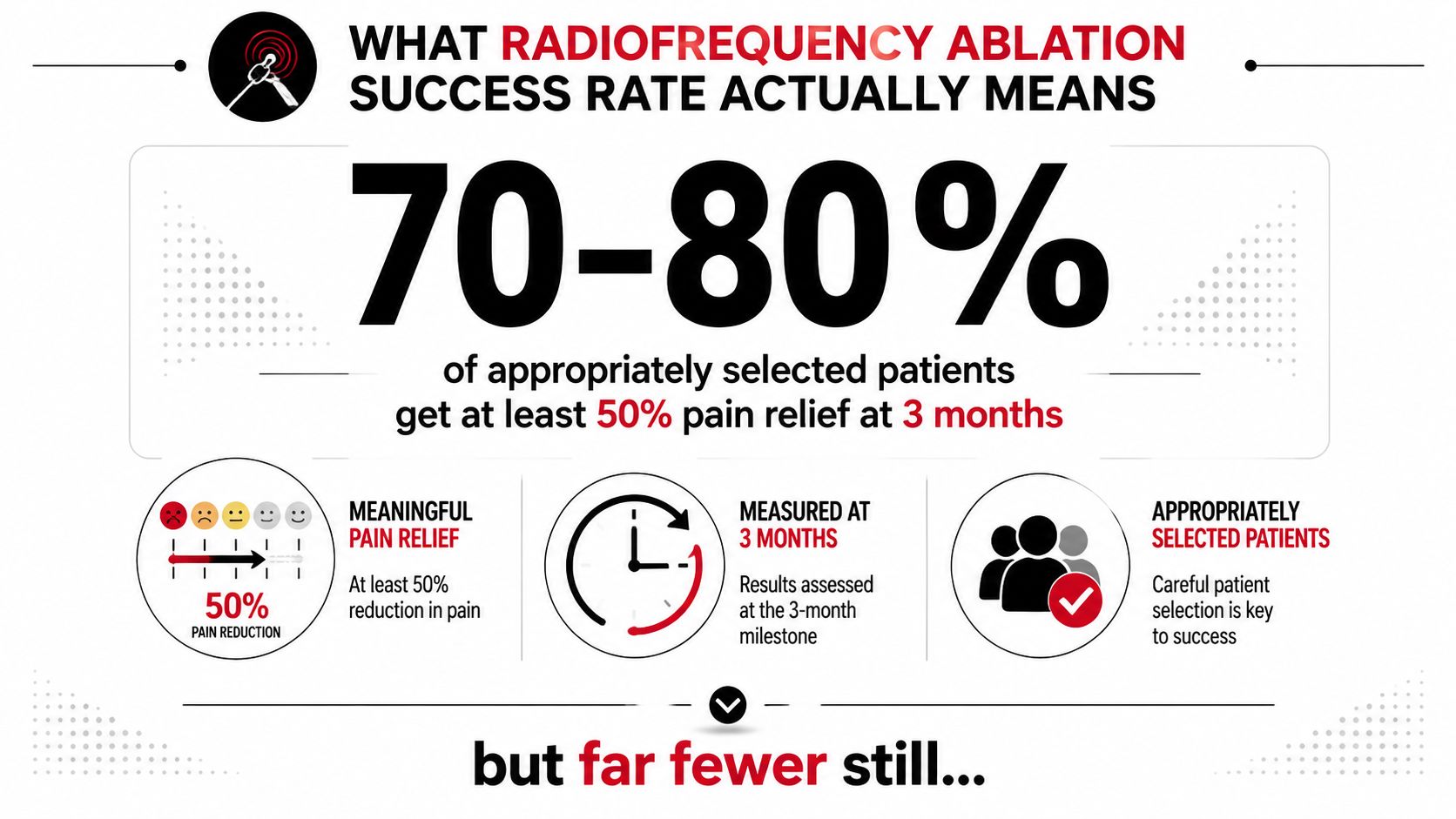
Read the time point before the percentage
A three-month responder rate measures early treatment performance. A twelve-month responder rate asks a harder question, whether the benefit remained durable after nerves had time to recover. Comparing those figures directly without considering follow-up is like comparing a new medication's first week with its long-term effect.
The definition can change the answer dramatically. A 2017 multicenter study of cooled RFA for chronic knee osteoarthritis reported a 35% success rate when success required at least 50% pain reduction, improved global impression of change, and no total knee replacement at six months. In the same study, 19% of procedures produced complete pain relief at minimum six-month follow-up. The multicenter cooled RFA study
Practical rule: Ask whether a reported success rate means partial pain relief, complete relief, functional improvement, or a composite of several outcomes.
The most honest interpretation is that RFA can provide meaningful relief to an appropriately selected subset of patients. It usually represents symptom control and functional recovery, not correction of the underlying arthritis, degeneration, or structural problem.
How Radiofrequency Ablation Works and Where It Is Used
RFA is a precision procedure. After numbing the skin, the physician advances a specialized needle under fluoroscopic image guidance until its tip sits beside a targeted sensory nerve. The electrode then delivers radiofrequency energy, creating controlled heat that disrupts the nerve's ability to transmit pain signals.
Conventional thermal RFA commonly uses a controlled temperature in the range of 60 to 80°C for 60 to 90 seconds. The treatment doesn't remove a joint, repair cartilage, or stabilize a spine. It interrupts the signal coming from a selected pain generator, which is why confirming the target matters so much.
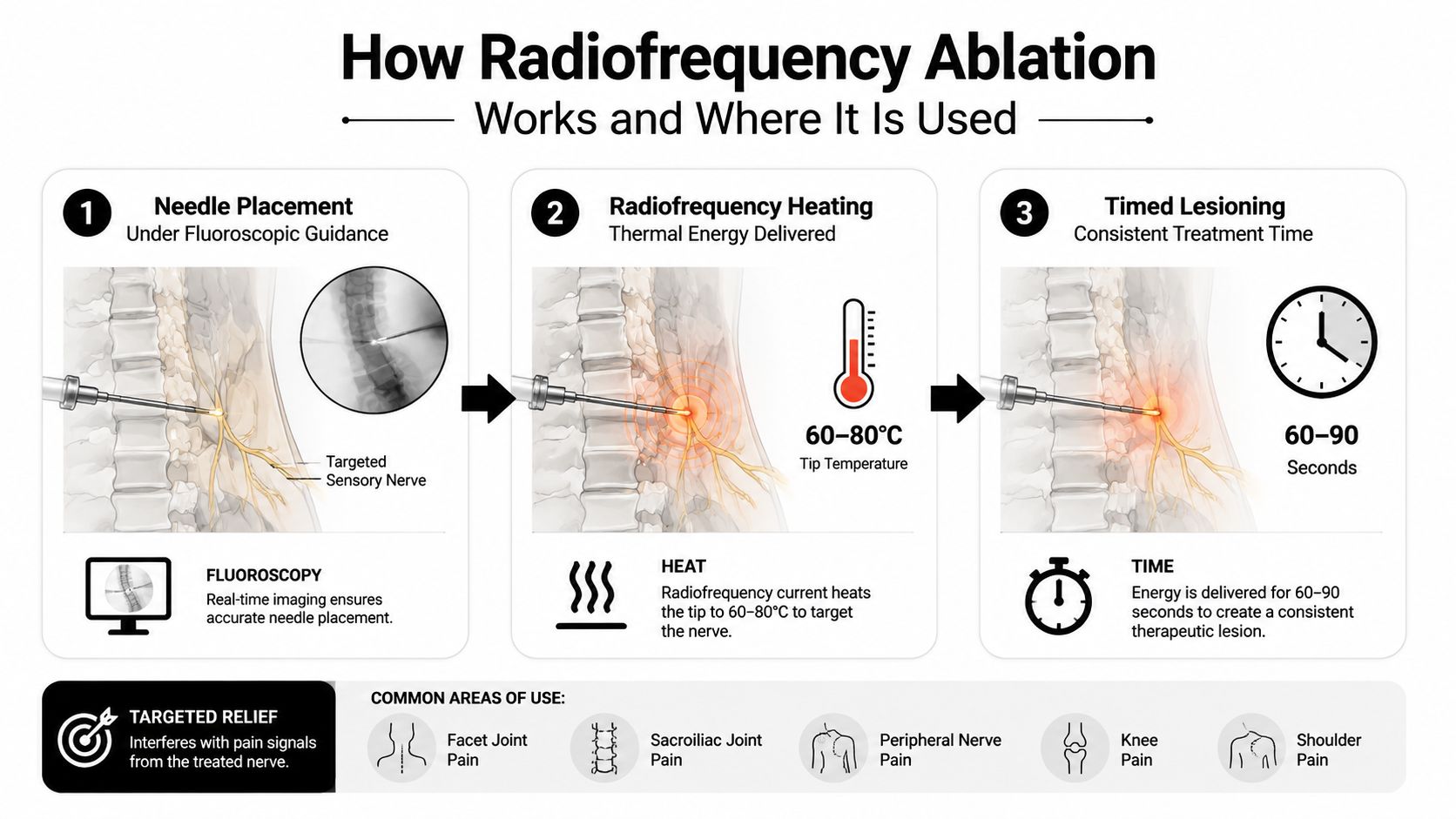
Different RFA methods serve different targets
Conventional thermal RFA creates a focused lesion around the electrode. Cooled RFA circulates fluid through the probe, allowing a larger treatment zone. Larger lesions may help cover small variations in nerve anatomy, particularly when the nerve's exact position is difficult to predict.
Pulsed RFA delivers shorter bursts at lower temperatures. Physicians may consider it when a motor nerve is nearby and the clinical objective is neuromodulation rather than a conventional destructive thermal lesion. The right modality depends on anatomy, the nerve's function, and the balance between coverage and safety.
Common treatment targets include:
- Medial branch nerves, which carry pain from selected cervical and lumbar facet joints.
- Genicular nerves, which transmit pain from an arthritic knee.
- Occipital nerves, involved in some occipital neuralgia and cervicogenic headache patterns.
- Sacroiliac lateral branch nerves, used in carefully selected sacroiliac joint pain.
Image guidance improves targeting. One clinical series reported 100% technical success, 107 out of 107 procedures, when the target could be visualized and fully covered by the ablation zone. Image-guided percutaneous RFA series
Success Rates by Indication and Time Horizon
There is no single radiofrequency ablation success rate. A useful estimate must identify the pain generator, diagnostic standard, lesion design, and follow-up period. Short-term responder rates also differ from durable relief at twelve months, so these outcomes should not be combined.
| Indication | 1–3 Month Response | 6-Month Response | 12-Month Response | Key References |
|---|---|---|---|---|
| Lumbar facet-mediated pain | Early response can be strong in carefully selected patients | Relief may become less consistent over time | Durability varies with patient selection and lesion technique | Real-world prospective data |
| Cervical facet-mediated pain | Improvement is possible when diagnostic testing supports the diagnosis | Results depend on the treated level and lesion coverage | Long-term relief is less predictable when the pain source is unclear | 2025 guideline review |
| Genicular nerve pain from knee osteoarthritis | Selected patients may experience meaningful early relief | 51% achieved at least 50% pain reduction at six months in a pooled review | 43% met that threshold at twelve months overall. Large-lesion techniques reached 55%, compared with 34% for small-lesion techniques | 2025 systematic review, genicular nerve ablation information |
| Chronic pain syndromes treated with cooled RFA | Early response varies by the pain syndrome being treated | 35% met a strict composite success endpoint at six months, while 19% achieved complete pain relief | Durability depends on the condition and the outcome definition | Cooled RFA chronic pain study |
| Other targets, including occipital and sacroiliac nerves | Response depends heavily on the diagnosis | Longer-term results cannot be directly compared across different studies | The expected outcome should be defined for the specific nerve and pain generator | Technical success review |
A prospective multicenter study found 77% of participants had at least 50% relief at one month, and 75% reported similar relief at three months. These figures describe responders, not complete pain elimination or guaranteed long-term benefit. They also should not be treated as a universal estimate for every RFA target. Prospective multicenter responder data
The practical interpretation is straightforward: early improvement can confirm that the treated pain pathway was relevant, while twelve-month results better reflect durability. Lesion size and placement can affect coverage, particularly for genicular nerve procedures. A patient considering genicular nerve ablation for knee pain should therefore ask which outcome is being quoted, how success was measured, and whether the technique matches the target anatomy.
Why the Same Procedure Yields Different Results
Two RFA studies can evaluate the same anatomic target and report different outcomes because their patients, diagnostic standards, and procedural methods differ. Diagnosis comes first. A single uncontrolled medial branch block may include a broader patient group than two separate positive blocks that produce consistent relief. Lumbar selection criteria commonly call for two positive blocks, each producing more than 50% to 80% pain relief, after conservative treatment has failed for six weeks to three months. Those criteria help match the ablated nerve to the patient's actual pain generator.
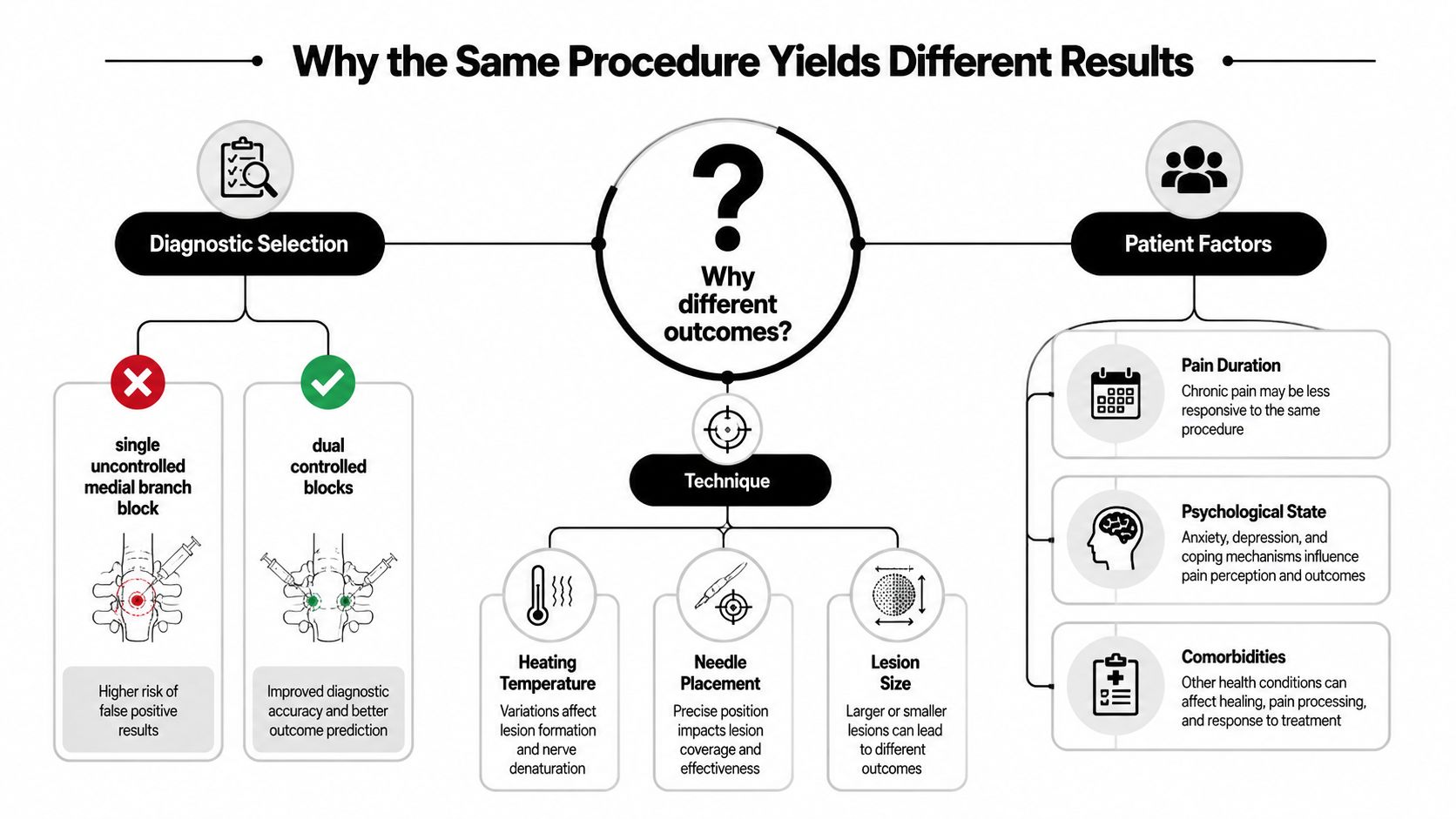
Selection and technique work together
A useful diagnostic block should reproduce the patient's familiar pain and provide meaningful, temporary relief. If the primary source is a disc, nerve root, hip, myofascial tissue, or generalized sensitization, treating a medial branch may offer little benefit even when the needle reaches the intended location. Patients can review the diagnostic purpose of medial branch blocks before deciding whether RFA is appropriate.
Technique creates another source of variation. Electrode orientation, parallel or perpendicular placement, sensory and motor testing, lesion size, and consistent thermal coverage all influence whether the target nerve is captured. A technically accurate procedure can still miss part of the nerve if placement or lesion coverage is inadequate. Electrode positioning and lesion creation therefore matter as much as reaching the general target region.
Patient factors further change the result:
- Prior surgery or hardware can alter anatomy and the procedural path.
- Opioid use and medication expectations may influence how improvement is judged.
- Psychological distress and sleep disruption can increase pain-related disability.
- Sedation depth may obscure the patient's response during diagnostic procedures.
- Pain mechanism determines whether the selected nerve is relevant.
Study endpoints also shape reported success. One trial may require at least 50% pain reduction, another may accept at least 30%, while a third may require functional improvement or measure the time until symptoms return. These definitions can produce very different responder rates before lesion technology, operator experience, or anatomy enters the comparison. Ask which endpoint a quoted success rate uses, and whether it describes early response or durable benefit.
Setting Realistic Expectations for Pain Relief
RFA shouldn't be sold as a permanent fix. A nerve can recover over time, and the pain generator may continue to progress. The practical goal is a longer window of reduced pain in which you can sleep better, walk farther, return to work, reduce medication reliance, or participate more fully in rehabilitation.
Partial relief often has greater functional value than patients initially expect. A reduction from 8 to 4 may let someone stand long enough to cook, sleep through more of the night, or complete strengthening exercises that were previously impossible. Complete pain elimination is a separate and much less common outcome, as the cooled knee study illustrates.
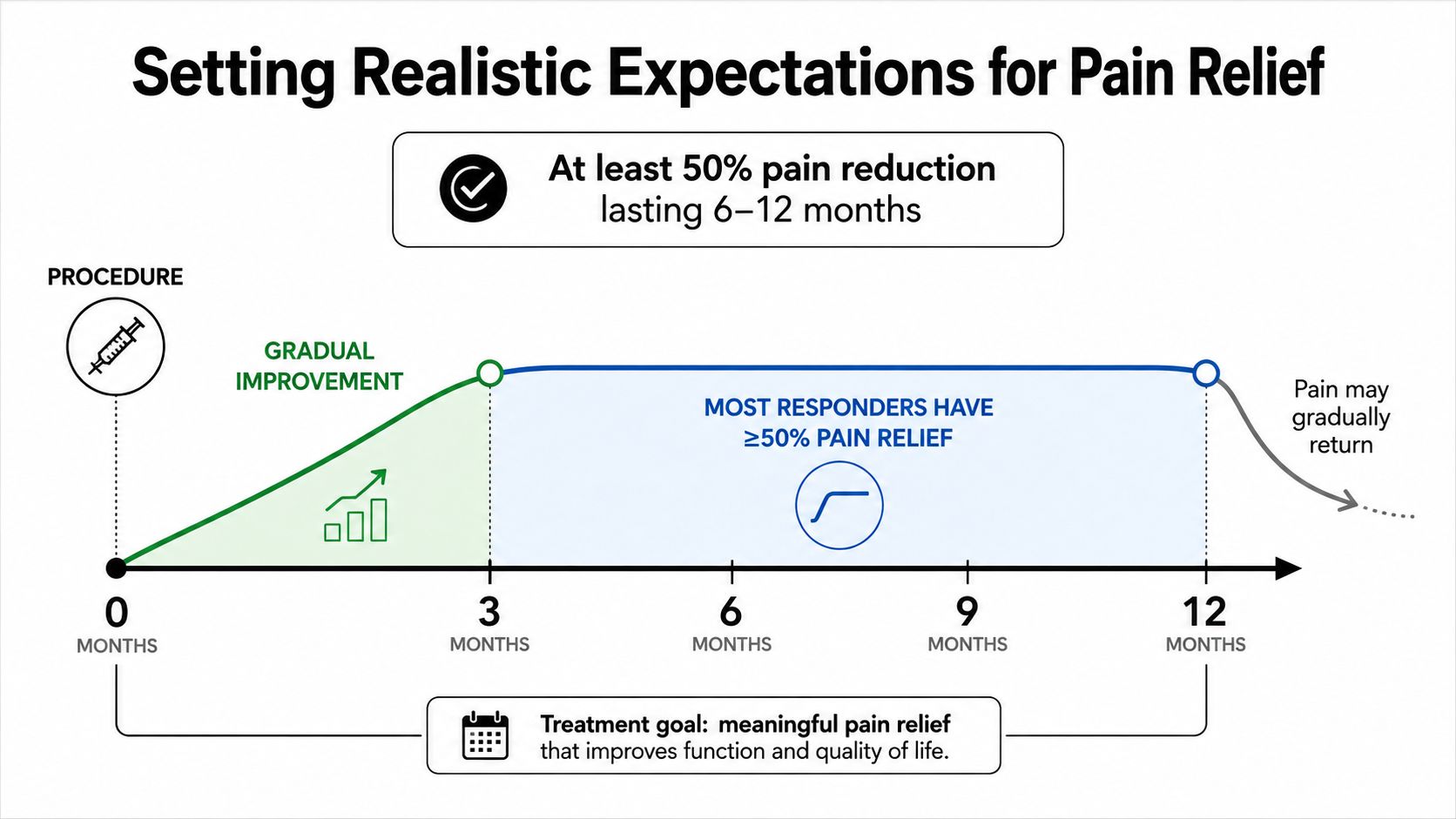
Measure function, not just the pain score
Expect temporary soreness at the treatment site for several days. Relief may build gradually, and patients shouldn't judge the final result during the immediate post-procedure period. Follow-up should assess more than a single number.
Track changes such as:
- Sleep: Are clearer nights becoming more frequent?
- Activity: Can you walk, sit, climb stairs, or work longer?
- Medication: Has the need for rescue medication changed?
- Function: Are you completing exercises and daily tasks more consistently?
- Durability: When did meaningful relief begin, and when did symptoms start returning?
Repeat ablation isn't automatically a failure. If the original treatment produced a meaningful functional response and symptoms later return, repeat treatment may be considered after reassessing the diagnosis and anatomy. A long-term study involving 191 patients found an average 48.48% improvement in pain relief lasting an average of 137.52 days, demonstrating why both magnitude and duration belong in the conversation. Long-term RFA efficacy study
How RFA Compares With Other Pain Treatments
RFA occupies a middle position in chronic pain care. It's more targeted than medication and generally more durable than a diagnostic block, yet it's substantially less invasive than surgery. That position makes it useful when the clinician has identified a specific nerve-mediated pain source but structural disease doesn't require immediate reconstruction.
| Treatment | Typical Effect Duration | Best-Use Case |
|---|---|---|
| Diagnostic medial branch or peripheral nerve block | Short-term and temporary | Confirming whether a specific nerve or joint is contributing to pain |
| Facet or joint steroid injection | Often limited and variable | Selected inflammatory flares or diagnostic and therapeutic trials |
| Epidural steroid injection | Temporary relief for some patients | Radicular pain involving an irritated spinal nerve, not isolated facet-mediated axial pain |
| Physical therapy and structured exercise | Depends on continued participation and the underlying condition | Building strength, improving movement, and restoring function |
| Radiofrequency ablation | Can provide months of relief, with durability varying by indication | Confirmed nerve-mediated pain when conservative care hasn't been sufficient |
| Neurostimulation | Depends on the system, diagnosis, and patient response | Neuropathic pain patterns that require a different form of signal modulation |
| Surgery | Varies by operation and structural problem | Instability, severe structural disease, or joint damage that requires anatomical correction |
A block may answer, “Is this nerve involved?” RFA asks whether interrupting that nerve can provide a longer functional window. Those aren't interchangeable goals.
RFA also can't replace surgery when instability, advanced joint destruction, or another structural condition requires correction. Conversely, surgery may be excessive when a well-localized sensory pain pathway can be treated through a needle. The decision should follow the pain generator, not the appeal of one procedure.
The Midwest Pain & Wellness Approach in Chicago Ridge
For patients in Chicago Ridge, Palos Heights, Palos Hills, Evergreen Park, and Hickory Hills, Illinois, evaluation begins with identifying the pain source, not promising a particular percentage of relief. A pain specialist reviews imaging, previous treatments, medication history, symptom distribution, and the activities pain limits. The goal is to determine whether the pattern is specific enough for a targeted procedure.
Depending on the suspected source, diagnostic medial branch, genicular, or occipital blocks may precede ablation. The response should be compared with a practical baseline, including the familiar pain pattern, activity tolerance, and temporary relief. That record helps distinguish facet-mediated, knee, and occipital-region pain from conditions requiring another treatment pathway.
Matching the procedure to the anatomy
The physician chooses the lesion technique according to the target and nearby structures. Conventional RFA may fit an accessible sensory target. Cooled or pulsed approaches may be considered when lesion size or limiting exposure near motor structures affects planning. Image guidance supports accurate placement, while sedation is adjusted for comfort without compromising safety or the reliability of diagnostic feedback.
Technique affects results, but selection remains the foundation. A technically well-executed lesion cannot compensate for a poorly identified pain generator.
Follow-up tracks pain, function, medication changes, and how long any benefit lasts. If relief is incomplete, the plan may shift to rehabilitation, diagnostic reassessment, another intervention, or referral to a different specialist. Midwest Pain & Wellness offers interventional pain evaluation and multimodal care, including RFA, image-guided injections, stimulation options, and coordinated rehabilitation referrals for communities surrounding Chicago Ridge.
Your Next Steps Toward Lasting Relief
A productive consultation starts with useful information. Bring imaging reports and, when available, the actual images. Prepare a list of treatments you've tried, how long you used each one, and whether it helped. Include your current medications, blood thinners, allergies, and a short description of how pain affects sleep, walking, sitting, work, and household tasks.
Ask direct questions:
- Will I have a diagnostic block first? If so, what response will qualify as meaningful?
- Which RFA method are you recommending, and why does it fit my anatomy?
- Will success mean 50% pain relief, better function, reduced medication, or a combination?
- How will you measure whether the result lasts?
- What will we do if pain returns or the first procedure provides incomplete relief?
Localized axial pain that responds to facet loading, focal knee pain that persists despite conservative care, or an occipital pain pattern may justify an interventional pain evaluation. That doesn't mean RFA is automatically appropriate. It means a specialist can identify whether the pain generator is specific enough for a targeted procedure before you pursue surgery or escalate long-term opioid treatment.
Cost questions also deserve a clear answer, including insurance requirements, diagnostic procedures, facility charges, and follow-up. Review the clinic's information about radiofrequency ablation cost and bring your coverage details to the consultation so financial expectations are addressed early.
Midwest Pain & Wellness offers diagnostic evaluation and image-guided radiofrequency ablation for appropriately selected chronic pain conditions, with follow-up focused on relief, function, and durability. If you're in Chicago Ridge, Palos Heights, Palos Hills, Evergreen Park, Hickory Hills, or another Illinois community, visit Midwest Pain & Wellness to request an interventional pain consultation.