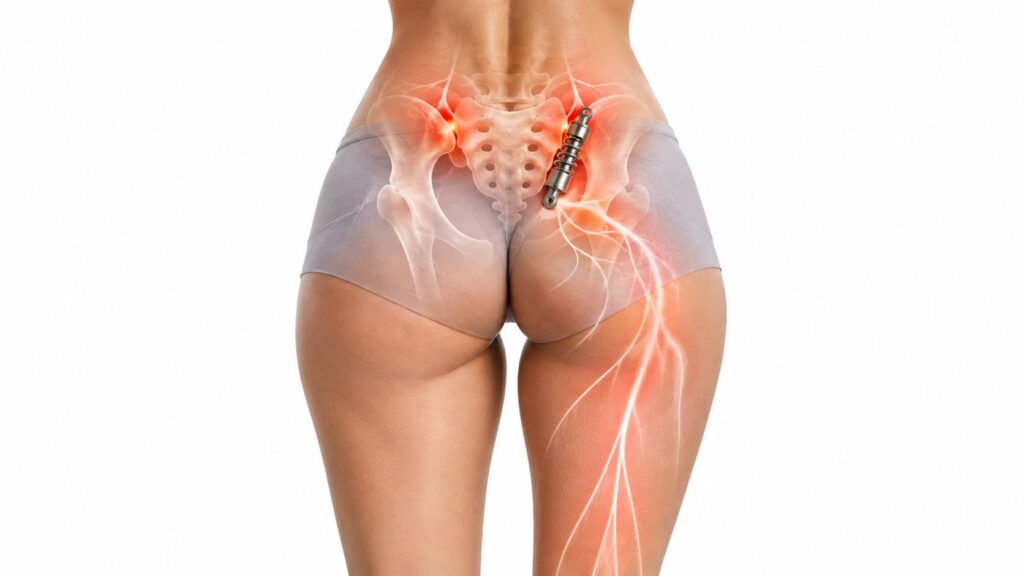
You're sitting in the car after an epidural steroid injection, waiting for the familiar pressure in your back or the pain traveling down your leg to ease. Days pass, but the pain feels unchanged. Now you're wondering whether the injection failed, whether you should schedule the next one, or whether the scan showed the wrong problem.
No pain relief after an epidural steroid injection is frustrating, but it's also clinically useful information. An epidural is not a guaranteed fix, and it isn't appropriate for every type of back or neck pain. The next step should usually be a careful reassessment, not an automatic repeat.
Table of Contents
- When the Relief You Expected Never Comes
- Your Two-Week Self-Tracking Checklist
- Six Reasons the Injection May Have Missed
- Should You Get a Second Injection
- Mapping the Next Treatment Options
- Warning Signs That Need Same-Day Attention
- Bringing It All to Your Next Visit
When the Relief You Expected Never Comes
An epidural steroid injection is designed mainly for radicular pain, meaning pain caused by irritation or inflammation around a spinal nerve. Common examples include sciatica traveling from the low back into the leg, or neck pain extending into the arm with numbness, tingling, or weakness. It has a weaker rationale for nonspecific axial back pain that stays mostly in the muscles or joints of the spine.
That distinction matters. A technically successful injection can produce little benefit if the treated nerve wasn't the main source of your symptoms. Facet-joint pain, sacroiliac pain, hip disease, peripheral neuropathy, myofascial pain, and spinal stenosis without active nerve inflammation may all feel like “back pain,” but they don't necessarily respond to medication placed in the epidural space. This diagnostic mismatch is discussed in a 2025 evidence review of epidural corticosteroid treatment.
Practical rule: A failed injection should prompt the question, “What does this result tell us about the pain generator?” It shouldn't automatically lead to another appointment for the same procedure.
The expected benefit is also limited for many patients. An American Academy of Neurology review found that, compared with no treatment, 24% more patients reported reduced pain and 16% more reported reduced disability for up to three months after epidural injections for radiculopathy, as summarized in the AAN evidence review. Those findings mean some people improve, but a substantial proportion won't experience meaningful relief.
For patients in Chicago Ridge, Palos Heights, Palos Hills, Evergreen Park, and Hickory Hills, the practical takeaway is the same: don't panic, and don't assume the procedure was pointless. Bring the response, or lack of response, back to a clinician who can compare your symptoms, examination, imaging, and functional goals.
Your Two-Week Self-Tracking Checklist
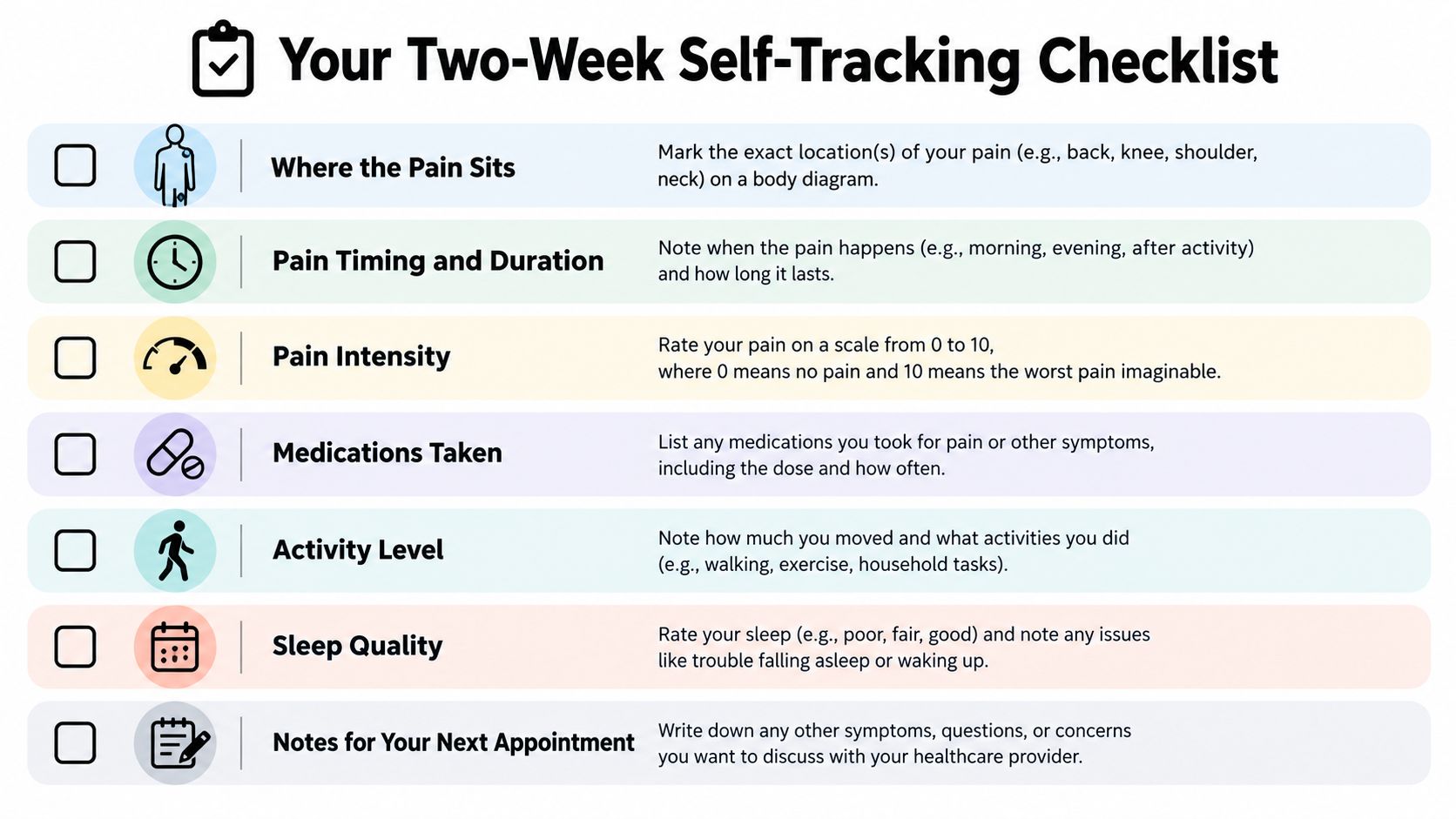
Before your follow-up, record what changed and what didn't. “It didn't work” is understandable, but a more precise record can show whether the injection changed one part of the problem, produced brief relief, or had no measurable effect at all.
Start with the pain pattern
Write down the exact location each day. Note whether pain stays in the low back or neck, travels into the buttock, leg, shoulder, or arm, or appears in several areas. Record whether coughing, sitting, standing, bending, walking, or turning your head changes it.
Track timing as well. A useful entry might read: “Burning pain begins after sitting, lasts through the evening, and travels below the knee.” That gives your clinician more to work with than a single pain score.
Record neurologic symptoms and capacity
Note numbness, tingling, heaviness, or weakness separately from pain. If your leg gives way on stairs, your hand drops objects, or your foot catches while walking, write down when it happened and whether it's becoming more frequent.
Measure walking tolerance in minutes rather than relying on a general impression. Document whether you can walk to the mailbox, stand long enough to prepare a meal, sit through a work task, tie your shoes, or sleep without changing position repeatedly. Function is often the clearest test of meaningful benefit.
Include medications, sleep, and work
List every pain medication you take, including over-the-counter products, and record whether the amount or timing changed. Don't alter prescribed medication without speaking with the prescriber. Note sleep quality, nighttime awakenings, and whether pain prevents you from returning to work or completing ordinary responsibilities.
Bring this short checklist to the appointment:
- Pain map: Mark where symptoms begin and where they travel.
- Neurologic changes: Record numbness, tingling, weakness, balance changes, or coordination problems.
- Walking tolerance: Write the number of minutes you can walk before symptoms force you to stop.
- Daily function: Note specific tasks, such as sitting through a meal or lifting a light object.
- Sleep: Record how often pain wakes you and whether morning symptoms differ.
- Medication use: List what you take and whether use has increased, decreased, or stayed the same.
- Treatment participation: Document rehabilitation, home exercises, work limits, and activities you avoided.
This record isn't a self-diagnosis. It's a way to make the next visit more accurate, particularly when Illinois patients are coordinating care across primary care, imaging, and pain appointments.
Six Reasons the Injection May Have Missed
Most patients assume that no relief means the needle missed. Sometimes technique matters, but a more common possibility is that the injection reached its intended area and the wrong pain generator was treated.
The pain may come from a different structure
-
Facet joints: Facet pain often stays near the spine and may worsen with extension, rotation, or prolonged standing. It typically doesn't follow a clear nerve-root path into the arm or leg.
-
Sacroiliac joint: Sacroiliac pain can sit low in the back or buttock and may worsen with stairs, getting out of a car, rolling in bed, or standing on one leg. A clinician must correlate this pattern with examination findings rather than relying on location alone.
-
Hip disease: Hip-joint problems may refer pain to the groin, thigh, buttock, or low back. Difficulty putting on socks, entering a car, or rotating the hip can point toward the hip rather than the lumbar epidural space.
-
Spinal stenosis without active nerve inflammation: Narrowing in the spinal canal can appear on imaging, but the finding doesn't automatically prove that inflammation around a nerve is driving symptoms. The pattern may be dominated by mechanical compression and limited walking tolerance.
-
Peripheral neuropathy: Burning, tingling, or numbness in a stocking or glove distribution may involve peripheral nerves rather than a single spinal nerve root. Diabetes and other medical conditions can contribute, so the broader history matters.
-
Myofascial pain: Muscles and connective tissues can produce focal tenderness, tight bands, and pain that changes with posture or muscle use. An epidural won't directly treat that source.
Technique still deserves review
The clinician should also confirm the treated level, route, target, medication spread, and imaging correlation. Image guidance improves precision, but it doesn't eliminate the possibility that the symptomatic level was misidentified or that the approach didn't reach the relevant area. A follow-up discussion about fluoroscopy-guided injections can help clarify how the procedure was planned and what the images showed.

The key question isn't just whether the injection was performed correctly. It's whether the pain pattern, examination, imaging, and functional response all point to the treated nerve as the principal source.
Should You Get a Second Injection
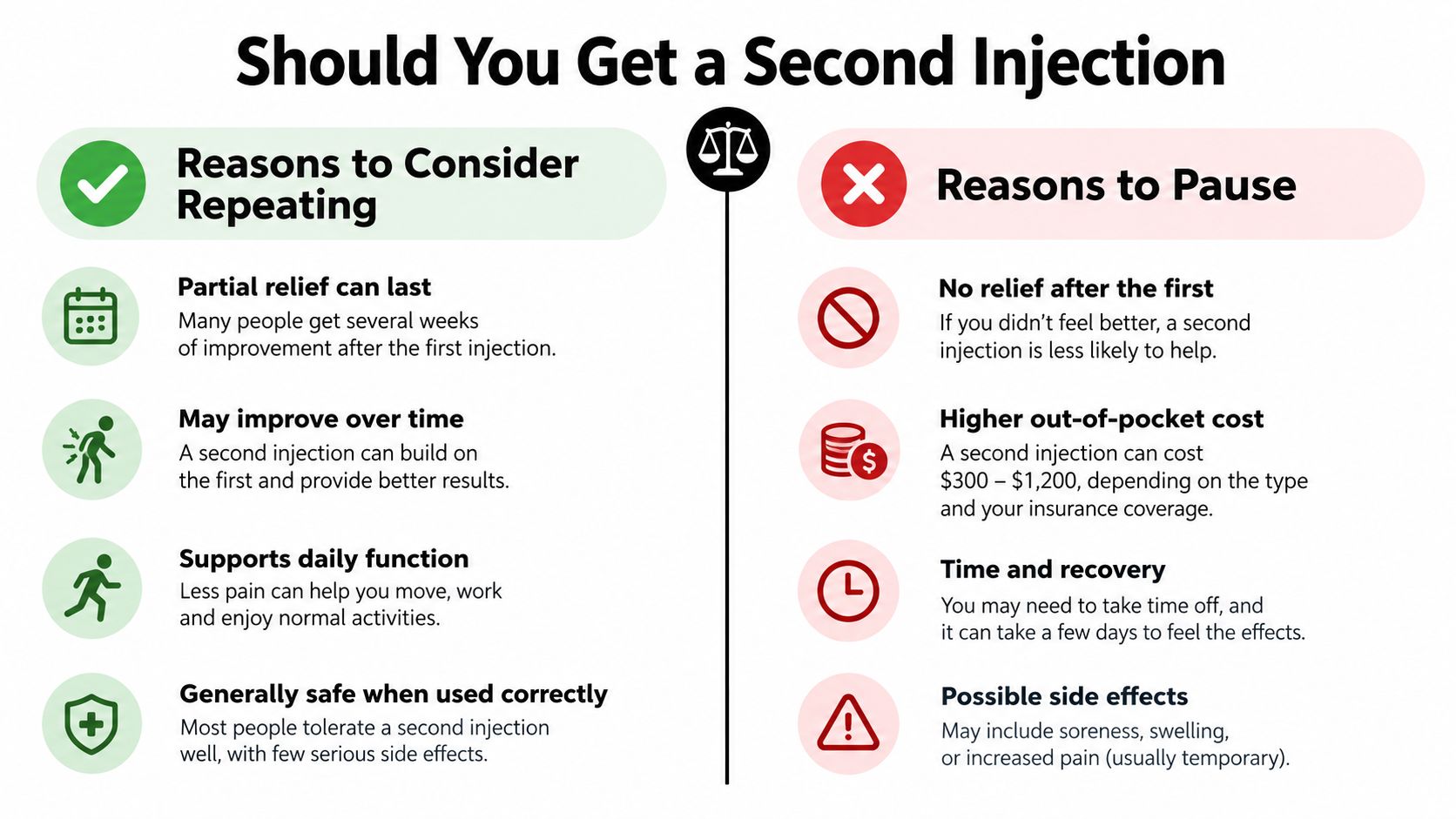
The routine “series of three” approach sounds simple, but it doesn't fit every patient. Available utilization guidance says there isn't enough evidence to support automatically scheduling three injections. A repeat should be connected to measurable benefit, not a preset calendar.
Common coverage benchmarks require at least 50% relief of radicular pain lasting at least two weeks, along with improved function or reduced medication use, before repeating an injection. The relevant guidance also says a repeat may be considered after at least 14 days when the diagnosis remains plausible and the clinician documents why another treatment is reasonable. These thresholds are described in epidural injection utilization guidance_V1.1.2025_Eff02.25.2026_pub01.30.2026_upd02.13.2026.pdf).
A complete nonresponse differs from a short-lived partial response. If your leg pain dropped substantially and you walked farther for several weeks before symptoms returned, repeating the treatment may have a different rationale than repeating it after no change at all.
A repeat injection should answer a specific clinical question and have a measurable goal.
Some policies use a longer interval, such as 30 days, between procedures and describe repeat treatment as appropriate only after documented benefit. One policy also limits treatment to no more than six injections during a 12-month period, while noting that some experts recommend no more than three annually because of cumulative steroid exposure. These criteria appear in medical-necessity guidance for epidural injections.
Repeated corticosteroid exposure can contribute to hyperglycemia, adrenal suppression, bone-density loss, and epidural lipomatosis. Before agreeing to another procedure, ask what changed after the first one, what structure is being targeted now, how success will be measured, and what alternative diagnosis would be investigated if the second injection also fails. You can also review the practical decision points in how many steroid injections may be appropriate.
Mapping the Next Treatment Options
When an epidural doesn't help, the treatment plan should become more specific, not more repetitive. The appropriate alternative depends on whether the next goal is to identify a pain source, calm a confirmed source, decompress a structure, or address persistent nerve pain.
Match the intervention to the pattern
- Diagnostic medial branch blocks: These can help test whether facet joints are contributing when pain is mainly axial and worsens with extension or rotation.
- Sacroiliac injections: These may be considered when buttock or low-back symptoms and examination findings point toward the sacroiliac joint.
- Radiofrequency ablation: If controlled diagnostic blocks support facet or sacroiliac joint pain, radiofrequency treatment may offer longer-lasting relief by interrupting pain signaling from the confirmed source.
- Targeted rehabilitation: Movement retraining, strengthening, and activity modification may be useful when deconditioning, muscle guarding, or mechanical loading continues to amplify symptoms. Midwest Pain & Wellness is a pain and wellness clinic, not a physical therapy practice, but it may coordinate rehabilitation with appropriate providers as part of a broader plan.
- Spinal cord or peripheral nerve stimulation: These options may enter the discussion for persistent neuropathic pain, selected post-surgical pain, or failed spine surgery syndrome after a careful evaluation.
- Regenerative procedures: PRP and cell-based treatments may be discussed for selected tendon, joint, or carefully chosen spine indications. They aren't universal solutions, and candidacy depends on the tissue involved and the quality of the diagnosis.
- Minimally invasive decompression: The MILD procedure or Vertiflex Superion may be relevant when lumbar stenosis produces dominant neurogenic claudication, particularly when walking or standing brings on leg symptoms.
- Kyphoplasty: This targets selected vertebral compression fractures, not ordinary nerve-root pain.

Surgery deserves discussion when imaging shows a compressive lesion that matches progressive neurologic loss, severe persistent symptoms, or a structural problem unlikely to respond to injections. It isn't an automatic consequence of a failed epidural, but delaying evaluation can be unwise when weakness or other neurologic changes are developing.
Administrative accuracy also affects access to appropriate care. Patients and practices can use resources such as avoid denials in pain management to understand why documentation, diagnosis, procedure selection, and medical necessity need to align.
Warning Signs That Need Same-Day Attention
Most soreness after an injection isn't an emergency. New or worsening neurologic or systemic symptoms are different, and they shouldn't be explained away as the steroid “settling in.”
Seek urgent medical evaluation for:
- Sudden or worsening weakness: New difficulty lifting the foot, standing, gripping, or raising an arm requires prompt assessment.
- Loss of coordination or balance: New trouble walking, clumsiness, or a sudden loss of control is not a symptom to monitor casually.
- Vision changes: Blurred vision, double vision, or loss of vision needs urgent attention.
- Severe new headache: A severe headache unlike prior headaches, particularly after a spinal procedure, should be evaluated.
- Bowel or bladder dysfunction: New inability to urinate, loss of bladder or bowel control, or numbness in the saddle region is an emergency concern.
- Fever or chills: These may signal infection, especially with increasing local pain or feeling acutely unwell.
- Severe escalating pain: Rapidly intensifying back or neck pain, especially with neurologic symptoms, warrants same-day evaluation.
FDA-approved corticosteroid labeling warns that serious neurologic events, including spinal-cord infarction, paraplegia, quadriplegia, cortical blindness, and stroke, have been reported after epidural administration, with and without fluoroscopy. The labeling also states that the safety and effectiveness of epidural corticosteroid administration haven't been established and that corticosteroids aren't approved for this route. Those warnings don't mean every symptom represents a catastrophic complication, but they explain why urgent changes deserve immediate attention. Review the FDA corticosteroid labeling rather than waiting for an elective follow-up.
Patients near Chicago Ridge, including those in Palos Heights, Palos Hills, Evergreen Park, and Hickory Hills, can contact their pain clinic for triage guidance during business hours. Don't wait for office hours when emergency symptoms are present. Go to an emergency department or call emergency services according to the severity of the symptoms.
Bringing It All to Your Next Visit
A failed injection isn't the end of treatment. It's a reason to define the pain source more carefully before exposing you to another procedure.
Bring:
- Your two-week symptom and function record.
- Imaging reports and images through the patient portal or on disc.
- A complete list of medications and treatments tried.
- Rehabilitation or therapy notes, if applicable.
- A short statement of your functional goal, such as sleeping through the night, walking the dog, sitting through work, or returning to your job.
A thorough reassessment should include a focused neurologic and musculoskeletal examination, review of the injection details, and a comparison between imaging and the current symptom pattern. Updated imaging may be appropriate when symptoms have changed, the prior study doesn't answer the clinical question, or a serious alternative diagnosis needs consideration.
Use the appointment to describe the location, timing, triggers, and functional effect of the pain. The guidance in how to describe pain to your doctor can help you organize that conversation. Patients in Palos Heights, Palos Hills, Evergreen Park, and Hickory Hills who want to continue care locally can seek an opioid-sparing interventional pain specialist in Chicago Ridge who coordinates diagnostic blocks, image-guided procedures, stimulation, decompression options, and referrals when needed.
The right next step isn't always another injection. It's the treatment that best matches the structure producing your symptoms and the function you want to regain.
Midwest Pain & Wellness evaluates persistent spine, nerve, joint, and post-surgical pain with individualized, opioid-sparing treatment plans rather than automatic repeat injections. Visit Midwest Pain & Wellness to request an evaluation in Chicago Ridge and discuss what your response to the epidural may indicate about the next step.