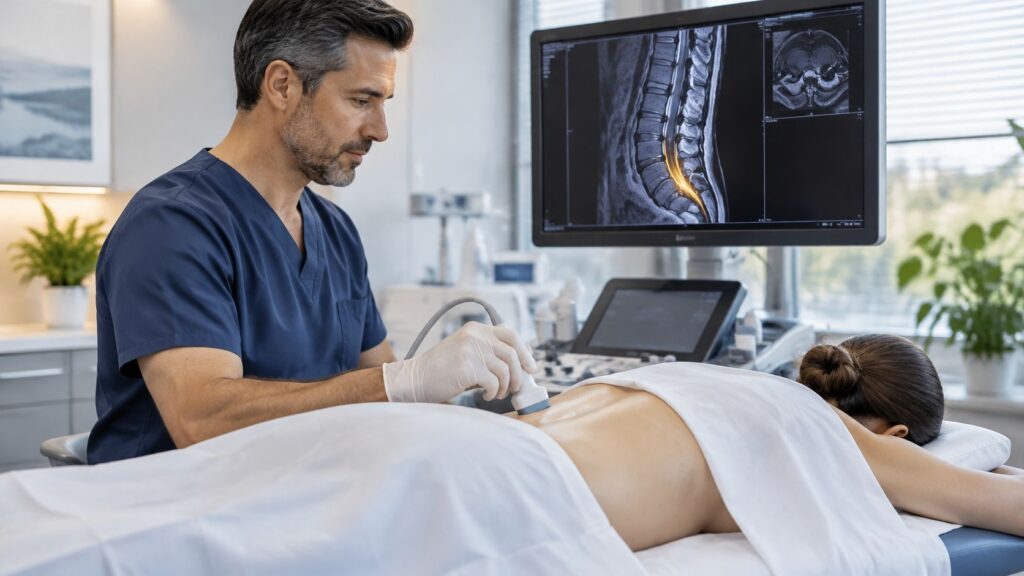
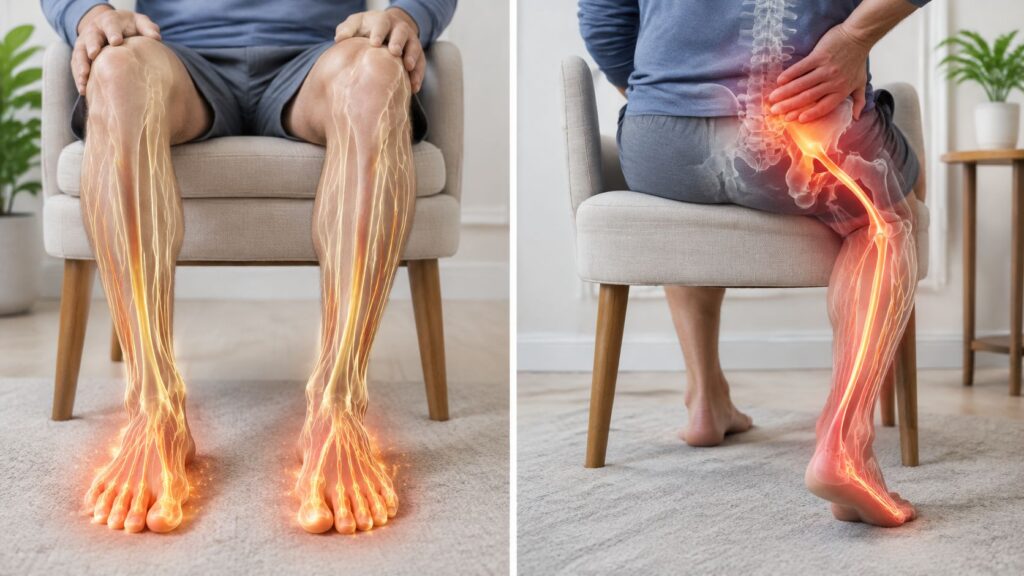
You've adjusted your chair, taken a few days away from the laptop, tried an anti-inflammatory, and stretched until the area between your shoulder blades felt temporarily different. Yet the ache returns when you reach overhead, rotate, or sit through a workday. For many adults in Chicago Ridge, Palos Heights, Palos Hills, Evergreen Park, and Hickory Hills, that pattern leads to the same question: what does effective thoracic spine pain treatment look like when ordinary back-pain advice hasn't worked?
Thoracic pain is often mechanical and not dangerous, but the mid-back has its own anatomy, warning signs, and pain generators. The right plan starts by separating routine stiffness from symptoms that need urgent evaluation, then matching treatment to the structure producing the pain.
Table of Contents
- When Mid-Back Pain Stops Going Away on Its Own
- What the Thoracic Spine Does and Why It Hurts
- Common Causes and the Red Flags You Should Never Ignore
- How Clinicians Pinpoint the Source of Thoracic Pain
- Conservative Care That Actually Fits the Evidence
- Interventional and Regenerative Options for Stubborn Pain
- When to See a Pain Specialist and What to Expect
- Recovery, Realistic Timelines, and Your Next Step
When Mid-Back Pain Stops Going Away on Its Own
A 47-year-old office worker from Palos Hills might describe it this way: a deep, aching band between the shoulder blades has been present for three months. She's taken a weekend away from her laptop, used ibuprofen, followed a stretching routine from a video, and replaced her mattress. She still catches herself guarding her mid-back when she reaches for something on a top shelf.
That isn't an unusual starting point for thoracic spine pain treatment. Mid-back symptoms often begin as a vague ache, stiffness, pressure, or discomfort that wraps toward the ribs. Because the pain doesn't always behave like a pinched nerve in the low back, patients may be told to rest, stretch, or improve posture without anyone identifying whether a joint, disc, nerve, rib attachment, or muscle is involved.
Why generic advice can stall
Thoracic pain is frequently mechanical and often improves with appropriate movement and time. But the thoracic region responds less predictably to generic low-back advice because the rib cage limits motion and several small joints share the workload. A stretch that feels helpful for one person may irritate a costovertebral joint or an inflamed disc in another.
The important distinction is between symptom management and source identification. Heat, medication, and mobility work may calm the area, but they won't necessarily tell you why reaching, breathing, rotating, or sitting triggers symptoms.
Practical rule: Persistent pain deserves a more specific question than “How do I loosen my back?” Ask which structure is most likely generating the pain, and what finding would confirm or challenge that assumption.
A more useful path forward
A stalled course doesn't automatically mean you need an injection, advanced imaging, or surgery. It means the next step should be deliberate. A clinician may review the pain's location and behavior, screen for neurological changes and systemic illness, examine the ribs and thoracic joints, and decide whether conservative care needs refinement or whether a targeted diagnostic step is appropriate.
The rest of the process should move you away from repeating rest and stretching without a response. It should help determine whether your symptoms fit a muscular pattern, a joint source, a disc or nerve problem, or a condition that requires a different medical evaluation.
What the Thoracic Spine Does and Why It Hurts
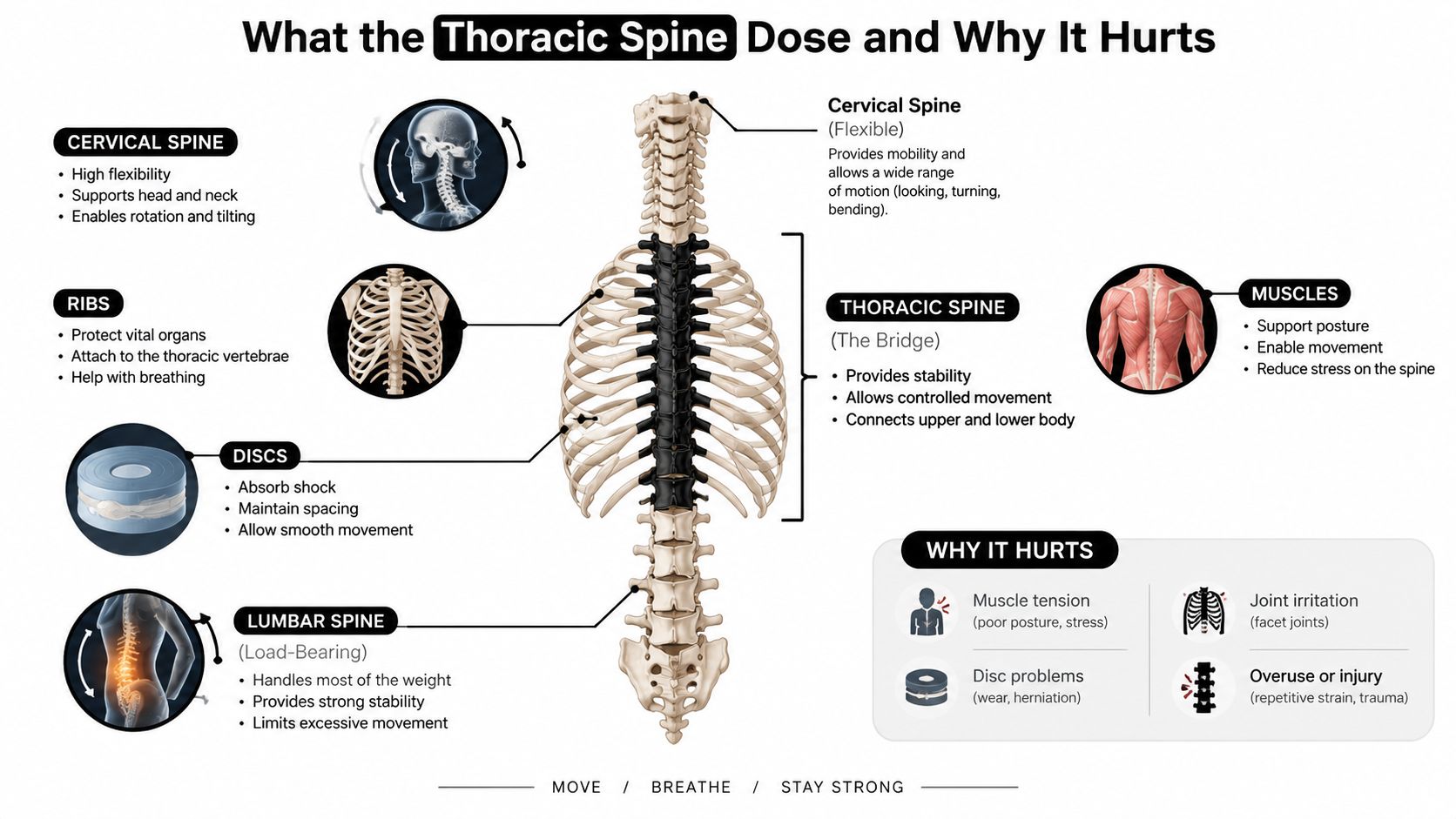
Think of the spine as a three-part bridge. The cervical spine is the flexible upper span that supports head movement. The lumbar spine is the load-bearing lower span that handles substantial bending and lifting. The thoracic spine sits between them, built for stability and connected to the rib cage.
That stability protects the spinal cord and helps support the chest, but it also limits movement at each level. Smaller discs, facet joints, rib attachments, and surrounding muscles must share motion when you twist, reach, breathe, or maintain a seated posture.
The structures that can generate pain
Several sources can produce similar mid-back complaints:
- Facet-mediated pain comes from the small joints behind the vertebrae. Rotation and extension may aggravate it.
- Costovertebral and costotransverse joint pain arises where the ribs connect with the vertebrae. Deep breathing, coughing, or torso movement can make symptoms more noticeable.
- Discogenic pain comes from an irritated thoracic disc and may remain deep, central, or band-like.
- Intercostal neuralgia involves irritation of a nerve traveling along the rib and can create burning, stabbing, or wrapping pain.
- Myofascial pain involves the paraspinal, scapular, or intercostal muscles and may feel like a knot or tight band.
- Referred pain can originate in the cervical or lumbar spine even when the patient mainly notices discomfort in the mid-back.
Why descriptions can sound vague
The thoracic spine doesn't move as freely as the neck or low back, and the ribs blur the boundaries between spinal, muscular, and chest-wall symptoms. Diffuse pain isn't proof that something has been missed. It does mean the examination needs to compare several possible sources instead of assuming every ache is a muscle strain.
Common Causes and the Red Flags You Should Never Ignore
Mechanical causes are common, but thoracic pain deserves careful screening because serious conditions can present in the same general region. A clinician may consider facet irritation, a costovertebral sprain, thoracic disc herniation, postural strain, myofascial pain, or a compression fracture. Non-mechanical causes can include metastatic disease, multiple myeloma, infection, herpes zoster, ankylosing spondylitis, or thoracic aortic pathology.
The presence of a red flag doesn't establish a diagnosis. It changes the urgency of the evaluation.
Three groups that change the decision
Trauma-related concerns include a recent fall, motor-vehicle collision, significant impact, or possible fracture risk related to weakened bone. New thoracic pain after trauma should be assessed rather than treated as ordinary muscle soreness.
Systemic concerns include unexplained weight loss, fever, night pain, malaise, a history of cancer, intravenous drug use, or immunosuppression. Constant pain, pain that disrupts sleep, and symptoms that continue beyond four weeks also appear among imaging criteria used in clinical policies (thoracic spine imaging criteria).
Neurologic concerns include gait changes, loss of balance, bowel or bladder dysfunction, saddle anesthesia, progressive leg weakness, marked neurological findings, or a band-like sensory level. These findings raise concern for spinal cord involvement, or myelopathy, and require prompt assessment.
| Category | Specific Red Flags | Recommended Response |
|---|---|---|
| Trauma | Fall, collision, significant impact, suspected fracture risk | Prompt clinical assessment and imaging decision |
| Systemic | Cancer history, fever, unexplained weight loss, night pain, immunosuppression, malaise | Same-day or urgent medical evaluation, depending on severity |
| Neurologic | Progressive weakness, gait change, bowel or bladder dysfunction, saddle anesthesia, sensory level, myelopathy signs | Urgent evaluation and MRI consideration |
| Persistent or atypical pattern | Constant pain, pain lasting beyond four weeks, abnormal examination, radicular pain, postural change | Structured follow-up and targeted imaging assessment |
For uncomplicated acute thoracic pain without red flags, initial imaging usually isn't warranted. Imaging may be considered when symptoms persist despite about six weeks of conservative treatment, or earlier when cancer, infection, trauma, immunosuppression, or myelopathy is suspected (ACOEM cervical and thoracic spine guideline). Urgent imaging is appropriate when clinicians suspect cancer, infection, fracture, or major or progressive neurological deficits (thoracic spine imaging guidance).
How Clinicians Pinpoint the Source of Thoracic Pain
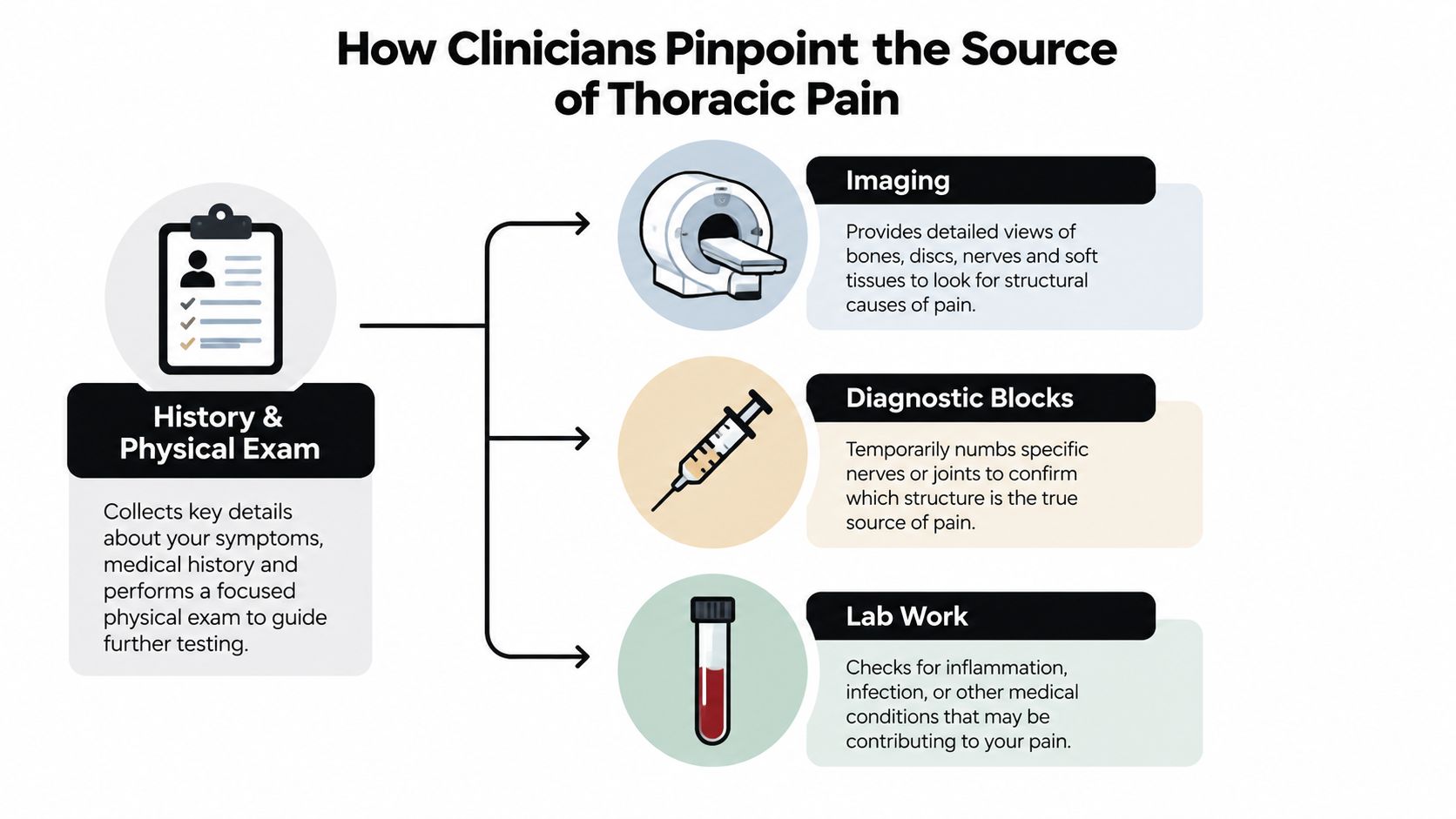
Diagnosis starts with the story, not the scan. The clinician needs to know whether the pain is central or one-sided, whether it wraps around the ribs, and whether sitting, rotation, extension, breathing, coughing, lifting, or lying down changes it. Medication response, previous injuries, surgical history, cancer history, fever, and neurological symptoms also shape the initial differential.
The physical examination then tests the working theories. It may include a neurological screen, reflexes, strength, sensation, gait, spinal movement, rib motion, costovertebral and costotransverse joint palpation, scapular mechanics, and paraspinal muscle assessment. Reproducing pain with a specific maneuver doesn't prove that structure is responsible, but it helps determine what deserves closer attention.
Tests are selected in sequence
For atraumatic, uncomplicated pain, conservative care generally comes before advanced imaging. If symptoms persist, worsen, or show red flags, imaging may help evaluate discs, fractures, infection, tumors, or spinal cord concerns. Laboratory work becomes more relevant when the history suggests infection, inflammation, malignancy, or another systemic process.
When the examination points toward a facet or medial branch source, a carefully selected diagnostic block may help test that hypothesis. A medial branch block isn't a universal treatment for every mid-back ache. Its value depends on whether the symptoms and examination fit the nerves and joints being evaluated.
Midwest Pain & Wellness coordinates this type of staged evaluation for patients from Chicago Ridge, Palos Heights, Palos Hills, Evergreen Park, and Hickory Hills. The practical objective is to avoid ordering every test at once while also avoiding repeated treatment that never answers the central diagnostic question.
A normal or nonspecific scan doesn't make pain imaginary. It means the clinical examination and response to targeted testing may carry more weight.
Conservative Care That Actually Fits the Evidence
Conservative care should be active, specific, and reassessed. It might include temporary activity modification, exercise-based rehabilitation, medication review, sleep and workstation changes, and selected supportive treatments. The mistake is treating “conservative” as a synonym for passive or indefinite.
The evidence for thoracic pain remains limited compared with evidence for other spinal regions. A 2025 systematic review described thoracic pain as “substantially unexplored,” found that manual therapy wasn't superior to placebo, and reported that many exercise, education, and medication studies compared treatments within the same class rather than against stronger controls (2025 systematic review of thoracic pain).
A practical menu
| Modality | Evidence for Thoracic Pain | Typical Role in Plan |
|---|---|---|
| Activity modification | Useful when a movement repeatedly provokes symptoms, but avoidance alone doesn't restore capacity | Reduce aggravating loads while maintaining tolerable movement |
| Exercise | Recommended as a core component for acute, subacute, and chronic cervicothoracic pain | Build strength, endurance, aerobic capacity, and movement tolerance |
| Manual therapy | The thoracic evidence is uncertain, and manual therapy wasn't superior to placebo in the cited review | Consider as an adjunct, not the entire plan |
| Medication review | Thoracic-specific comparative evidence is limited | Match non-opioid medication choices to inflammation, muscle, or nerve features |
| Education and lifestyle changes | Helpful for pacing, posture, sleep, and daily loading, but evidence certainty varies | Support adherence and reduce repeated aggravation |
The most promising signal in the review was a combination of manual therapy and exercise, but the data remained limited and low certainty. That makes exercise, strengthening, endurance, and aerobic work central rather than optional, consistent with the cervicothoracic exercise guideline.
Medication can reduce symptoms enough to permit movement, but it shouldn't become the whole strategy. A practical back pain relief framework is most useful when it supports function, tracks response, and identifies when the current approach isn't working.
Interventional and Regenerative Options for Stubborn Pain
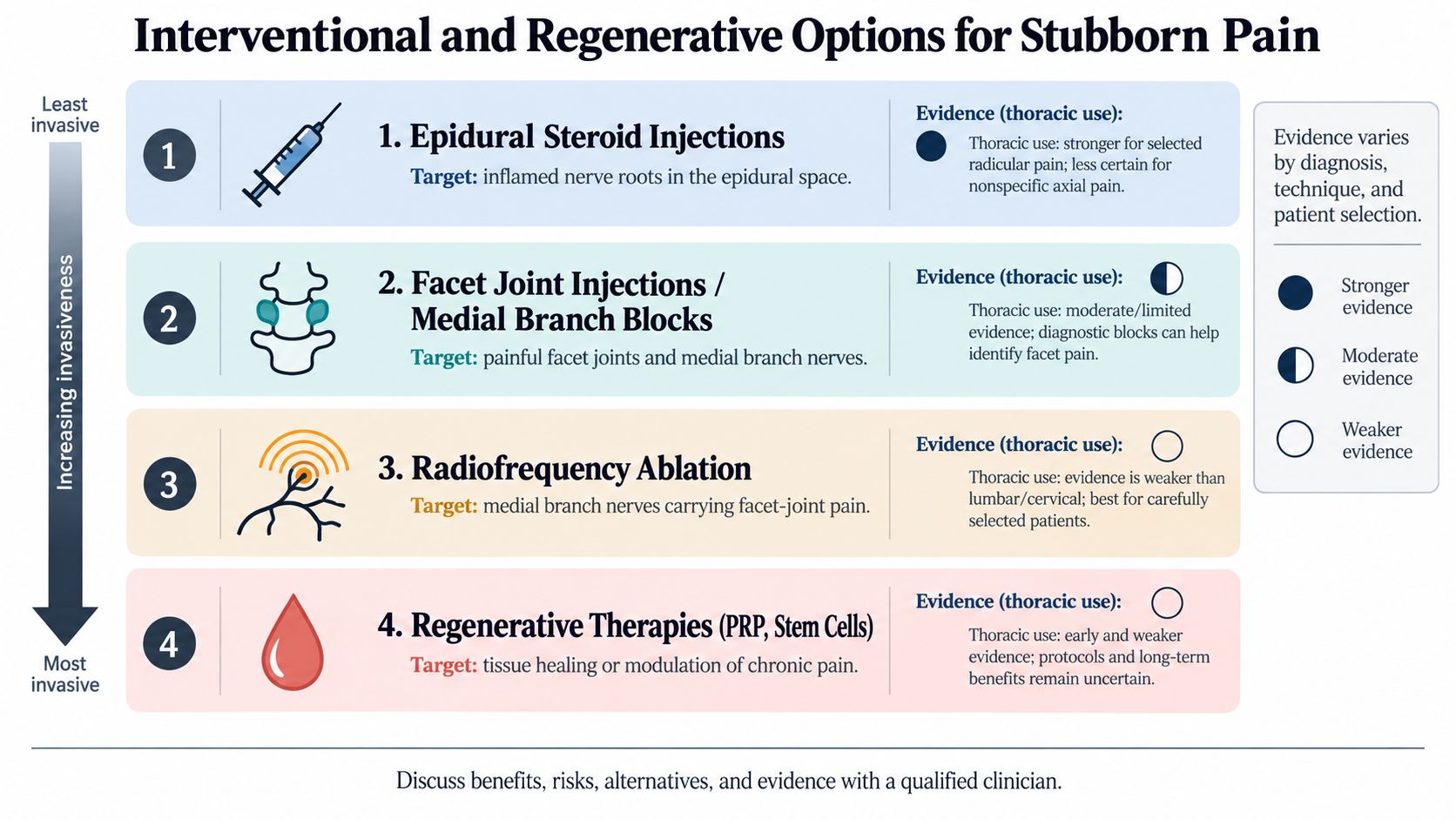
Interventional care makes sense when the examination suggests a specific pain generator and conservative treatment hasn't restored function. The procedure should answer a clinical question or target a plausible source, not serve as a substitute for diagnosis.
Epidural treatment for radicular patterns
Image-guided thoracic epidural steroid injections have evidence support strong enough that a Medicare coverage review reported expert-panel agreement that benefits outweigh risks for thoracic radicular pain. For thoracic disc herniation, one high-quality randomized trial supported fluoroscopic thoracic epidural injection, with or without steroid, as level II evidence with a moderate-to-strong recommendation for long-term effectiveness (Medicare coverage review).
That evidence applies best when symptoms track to a disc or radicular pain generator. It doesn't make an epidural an appropriate answer for nonspecific axial aching between the shoulder blades.
In the largest reported thoracic transforaminal epidural steroid injection series, 30% of patients achieved at least 50% pain relief at a median 22-day follow-up, while 42% achieved at least a 2-point Numeric Rating Scale improvement (thoracic transforaminal injection series). Results were better for disc herniation than degenerative stenosis, 36% versus 21%, although the difference wasn't statistically significant. The message is candid: thoracic TFESI can produce meaningful short-term relief for some patients, but it isn't uniformly high-yield.
Joint procedures and regenerative choices
Facet injections or medial branch blocks target suspected facet-mediated pain. If diagnostic blocks consistently support that source, radiofrequency ablation may be considered to interrupt pain signaling from the relevant nerves. Thoracic-specific evidence is narrower than lumbar evidence, so patient selection and image guidance matter.
Regenerative treatments, including platelet-rich plasma and cell-based therapies, remain more condition-specific and less established for thoracic pain. They shouldn't be presented as a guaranteed repair. Patients considering cell-based pain therapy should ask what structure is being treated, what evidence applies to that structure, and how success will be measured.
When to See a Pain Specialist and What to Expect
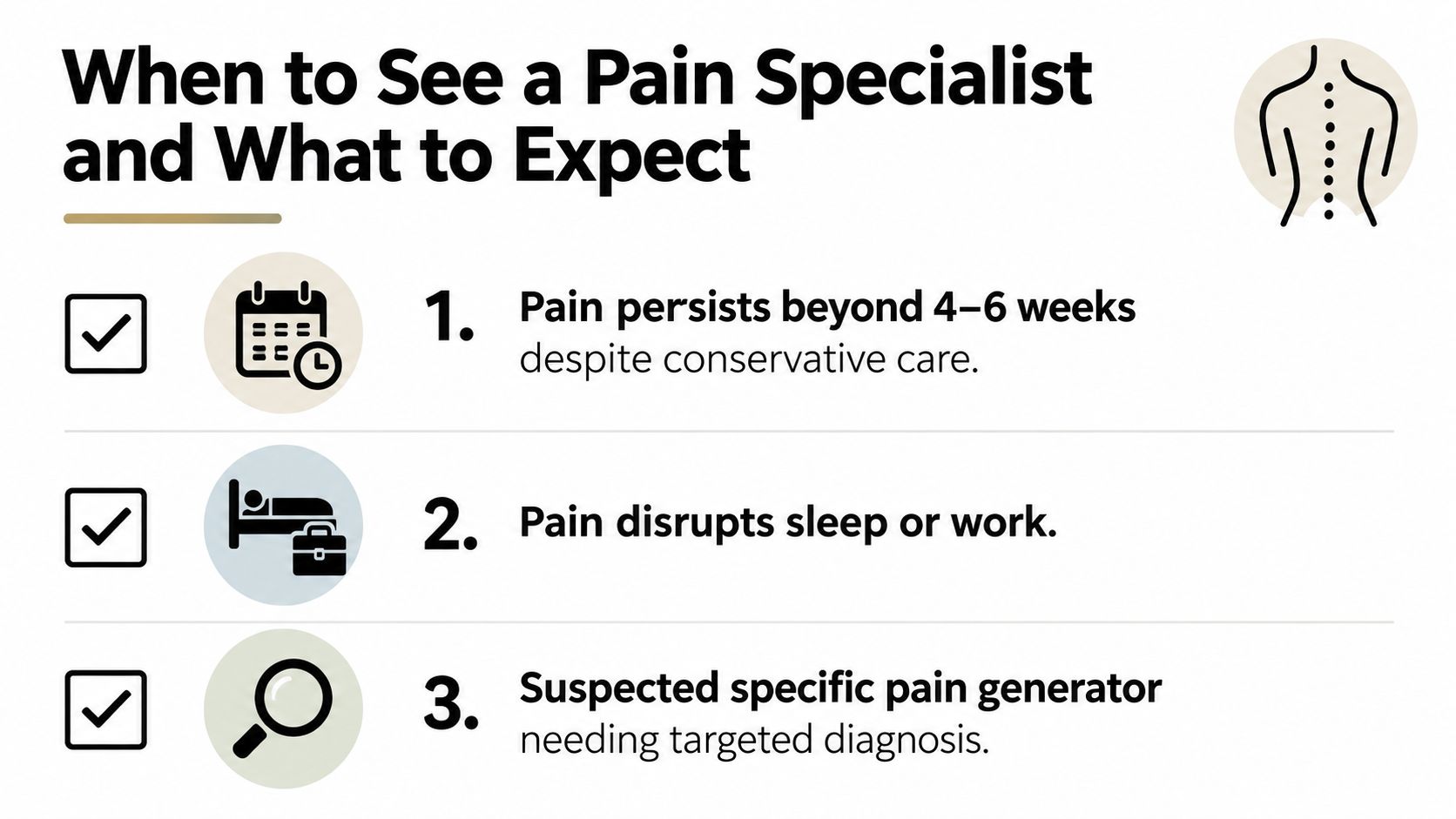
A pain specialist should enter the conversation when symptoms have stalled beyond four to six weeks, when pain disrupts sleep or work, or when the examination suggests a specific generator that needs targeted confirmation. That doesn't mean escalating immediately to an invasive procedure. It means replacing repeated trial and error with a clearer sequence.
The first visit should feel like a diagnostic appointment, not a procedure appointment. Expect a focused history, neurological screening for myelopathy, assessment of thoracic movement, examination of the rib attachments and facet region, and review of prior imaging. The clinician should also examine scapular positioning, paraspinal mechanics, and the way your symptoms change with breathing and rotation.
What a staged plan can include
A reasonable plan identifies the next decision point:
- Refine rehabilitation if the examination supports mechanical pain and the program hasn't yet been specific enough.
- Order imaging or laboratory work if persistent symptoms, abnormal findings, or red flags change the risk assessment.
- Use a diagnostic block when a joint or nerve source is plausible and confirmation would change treatment.
- Discuss a targeted injection or ablation when the expected benefit, risks, and alternatives fit the diagnosis.
Midwest Pain & Wellness provides opioid-sparing, multimodal pain care and coordinates with primary care clinicians, surgeons, chiropractors, and rehabilitation providers. For patients in Chicago Ridge and nearby Illinois suburbs, that coordination can keep the diagnostic findings, rehabilitation plan, and procedural decisions connected to functional goals rather than treating each visit as an isolated event.
Recovery, Realistic Timelines, and Your Next Step
Recovery depends on the generator. Myofascial pain and some costovertebral joint problems may settle along a shorter course once aggravating activity is modified and movement is restored. Disc-related nerve pain, vertebral compression fractures, and post-surgical pain can require a longer, more carefully staged plan.
For many patients, meaningful improvement from well-matched conservative care develops within four to eight weeks. When pain remains stubborn and a diagnostic block is appropriate, the source may become clearer within two visits. Relief from radiofrequency treatment or a targeted injection often lasts two to six months before a clinician considers whether retreatment is appropriate, though individual response varies and no procedure should be promised as permanent.
A simple decision checklist
- Start with safety. Seek prompt medical care for trauma, fever, unexplained weight loss, cancer history with new pain, progressive weakness, gait changes, bowel or bladder symptoms, or other signs of spinal cord or systemic disease.
- Track the pattern. Record what triggers pain, whether it wraps around the ribs, how sleep and work are affected, and whether breathing or rotation changes symptoms.
- Bring your records. Include prior imaging reports, medication history, treatment attempts, relevant medical conditions, and a short list of your functional goals.
- Request a focused referral. Ask your primary care clinician whether an interventional pain evaluation is appropriate if symptoms persist or a specific generator is suspected.
- Choose the next test or treatment for a reason. Every intervention should connect to a working diagnosis and a measurable goal, such as improved sleep, reaching, walking, lifting, or work tolerance.
For residents of Chicago Ridge, IL, Palos Heights, IL, Palos Hills, IL, Evergreen Park, IL, and Hickory Hills, IL, the next step may be a structured evaluation rather than another round of unsupervised stretching. Persistent thoracic pain deserves a plan that is cautious about red flags, honest about uncertain evidence, and specific about what happens next.
Midwest Pain & Wellness evaluates thoracic spine and nerve pain through personalized, opioid-sparing care that may include rehabilitation coordination, image-guided injections, diagnostic blocks, and radiofrequency treatment when appropriate. Visit Midwest Pain & Wellness to request an evaluation in Chicago Ridge, Illinois, and discuss a focused path toward better function.