The question usually arrives before the procedure does. You're sitting in a pain clinic waiting room, shifting carefully in the chair because your lower back and leg have been hurting for weeks or months. The injection has been recommended, but one concern keeps returning: what are the side effects of back pain injections?
That concern is reasonable. Spine injections are minimally invasive, not risk-free. Most reactions are temporary and manageable, while rare complications can threaten nerves or require urgent treatment. The important distinction is knowing which symptoms are expected, which factors raise your personal risk, and which warning signs shouldn't wait.
As a double board-certified interventional pain specialist, I explain the decision this way: the goal isn't to promise zero risk. It's to match the procedure, technique, medication, and patient carefully enough that the likely benefit justifies the specific risks. The discussion below separates common short-term reactions from rare serious harms, explains how injection type changes the profile, and outlines the preparation and follow-up steps that substantially improve safety.
Table of Contents
- Facing the Injection Decision Without the Fear
- The Main Procedures Used for Back Pain
- Common Short-Term Side Effects After a Back Injection
- Rare but Serious Risks You Should Still Understand
- How Side Effects Differ by Injection Type
- Patient Factors That Change Your Personal Risk
- Reducing Risk Before and After Your Injection
- Making an Informed Choice With Your Pain Specialist
Facing the Injection Decision Without the Fear
A patient with chronic low back pain may reach the injection discussion after medication, activity changes, and other conservative care have failed to restore sleep, work, or comfortable movement. Pain that extends into the buttock or leg can make the decision feel urgent. Relief matters, but so does knowing whether the procedure could create a more serious problem.
The available evidence supports a measured conversation. A large multi-institutional review of 16,638 consecutive epidural steroid injection procedures found no major adverse events in the procedures reviewed. A vasovagal reaction occurred in 1.2% of procedures, while dural puncture occurred in 0.06% overall. Steroid-related effects, including sleeplessness, flushing, or a non-positional headache, occurred in 2.6% of patients, as summarized in the CMS coverage evidence review.
What patients need to know before consenting
The practical conclusion is reassuring, with limits. Most side effects are minor and short-lived, but rare complications deserve attention because prompt recognition can affect the outcome. A temporary pain flare occurred in 2.1% of transforaminal and 1.8% of interlaminar epidural injection patients in the same review. Increased pain after treatment can therefore be an expected short-term reaction, although worsening symptoms still require clear instructions about when to call.
Technique changes the risk profile. A transforaminal injection places the needle near a targeted nerve root and nearby blood vessels, while an interlaminar approach follows a different path into the epidural space. The steroid formulation also matters, particularly when vascular exposure is a concern. Blood thinners can increase bleeding risk, diabetes can make temporary glucose elevation more relevant, and low bone density can affect the steroid discussion. Infection risk and prior spine surgery may further change needle placement, medication selection, or whether an injection is appropriate.
The useful question isn't whether an injection has risk. It's which risk applies to your procedure and what the team is doing to reduce it.
Before consenting, confirm what you may feel during the first day, how long soreness may last, which symptoms warrant a clinic call, and which require emergency evaluation. That clarity belongs in safe care.
The Main Procedures Used for Back Pain
“Back pain injection” describes several different procedures. The target tissue determines both the intended benefit and the possible complications, so the name of the injection matters.
An interlaminar epidural steroid injection places medication into the epidural space from the back of the spine. A transforaminal epidural steroid injection approaches the epidural space near a specific nerve root. Both are generally used when inflammation around a spinal nerve contributes to radiating leg pain, though needle position and nearby blood vessels shape the safety considerations.
Facet joint injections place medication into the small joints at the back of the spine. Medial branch blocks target the small sensory nerves supplying those joints, often to determine whether facet pain is present before radiofrequency neurotomy. The injectate may contain local anesthetic, steroid, or both, depending on whether the purpose is diagnostic, therapeutic, or part of a staged treatment plan.
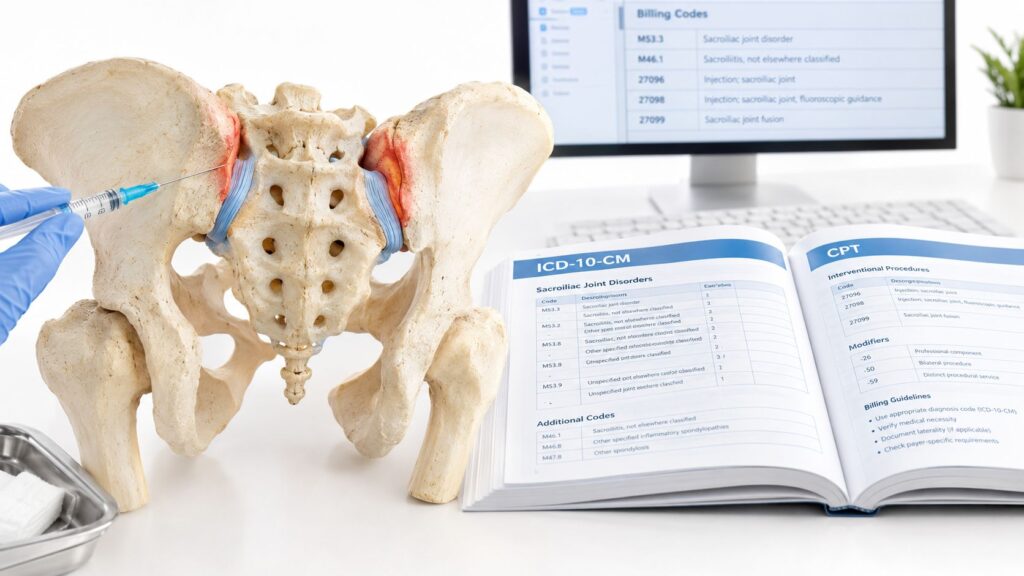
The sacroiliac joint injection enters the SI joint, while lateral branch blocks target nerves associated with SI-mediated pain. Trigger point injections instead treat tight, painful muscle bands. They typically use local anesthetic, sometimes with another medication, and their risks differ from those of a needle placed near the spinal canal.
Other options include platelet-rich plasma and cell-based biologic injections, which use a patient's blood product or another biologic preparation rather than corticosteroid. Peripheral or somatic nerve blocks, such as cluneal or ilioinguinal blocks, place medication near a nerve outside the central spine. The closer the needle is to the spinal canal, major vessels, pleura, or a large motor nerve, the more the procedural anatomy influences risk.
Back pain injection types at a glance
| Injection Type | Target | Typical Injectate | Goal |
|---|---|---|---|
| Interlaminar epidural | Epidural space and inflamed nerve region | Corticosteroid with or without local anesthetic | Reduce inflammation around spinal nerves |
| Transforaminal epidural | Specific exiting nerve root | Corticosteroid with local anesthetic | Treat radicular pain with targeted delivery |
| Facet or medial branch block | Facet joint or its sensory nerve | Local anesthetic, sometimes steroid | Diagnose or calm facet-mediated pain |
| Sacroiliac injection or lateral branch block | SI joint or associated sensory branches | Local anesthetic, sometimes steroid | Address SI-related pain |
| Trigger point injection | Painful muscle band | Local anesthetic or other selected injectate | Reduce myofascial pain and spasm |
| PRP or biologic injection | Selected tendon, joint, or soft tissue | Patient-derived or biologic preparation | Support a non-steroid treatment strategy |
| Peripheral nerve block | Cluneal, ilioinguinal, or another somatic nerve | Local anesthetic, sometimes steroid | Interrupt a localized pain signal |
The procedure's target also predicts what recovery feels like. A spinal needle can cause dural puncture, while a thoracic trigger point needle has a different concern, pneumothorax. A joint injection can irritate the capsule or introduce infection, which is why anatomical precision, sterile technique, and image guidance matter.
Common Short-Term Side Effects After a Back Injection
The first evening after an injection, a patient may notice local soreness, a brief pain flare, lightheadedness, flushing, or temporary numbness and weakness. These effects usually reflect the needle, local anesthetic, or a short-lived steroid response rather than a serious complication. A 2011 Pain Medicine study recorded 103 minor complications, with an overall complication rate of 2.4% per injection. Reported events included increased pain at 1.1%, injection-site pain at 0.33%, persistent numbness at 0.14%, and other minor problems at 0.80%, as described in Pain Medicine's published report.
Timing helps set expectations. Local anesthetic can make a limb feel numb, heavy, or weak for several hours, especially after medication is placed near a sensory or motor nerve. Soreness at the needle site and a temporary increase in back or leg pain may appear during the first few days, before the steroid's anti-inflammatory effect develops. The target and approach affect this experience. A transforaminal injection near an irritated nerve may produce a more noticeable short-term flare than a superficial muscle injection.
A vasovagal reaction may cause sweating, nausea, dizziness, a slow pulse, or fainting during or shortly after the procedure. Flushing, insomnia, and a non-positional headache can also occur after steroid exposure. These reactions are generally temporary, but the patient should remain at the clinic until the staff confirms that standing and walking are safe.
Expected does not mean ignore it
Use the clinic's recovery instructions, which may include relative rest, an ice pack, and gradual activity. People with diabetes should monitor glucose after a corticosteroid injection according to their clinician's plan, because blood sugar can rise temporarily without producing obvious symptoms. Review these epidural steroid injection recovery instructions before the procedure.
Contact the clinic if pain continues to intensify, numbness or weakness lasts beyond the expected anesthetic window, or the injection site becomes increasingly red, swollen, or draining. Seek urgent assessment for progressive weakness, saddle numbness, bowel or bladder changes, fever, or a severe positional headache.
Rare but Serious Risks You Should Still Understand
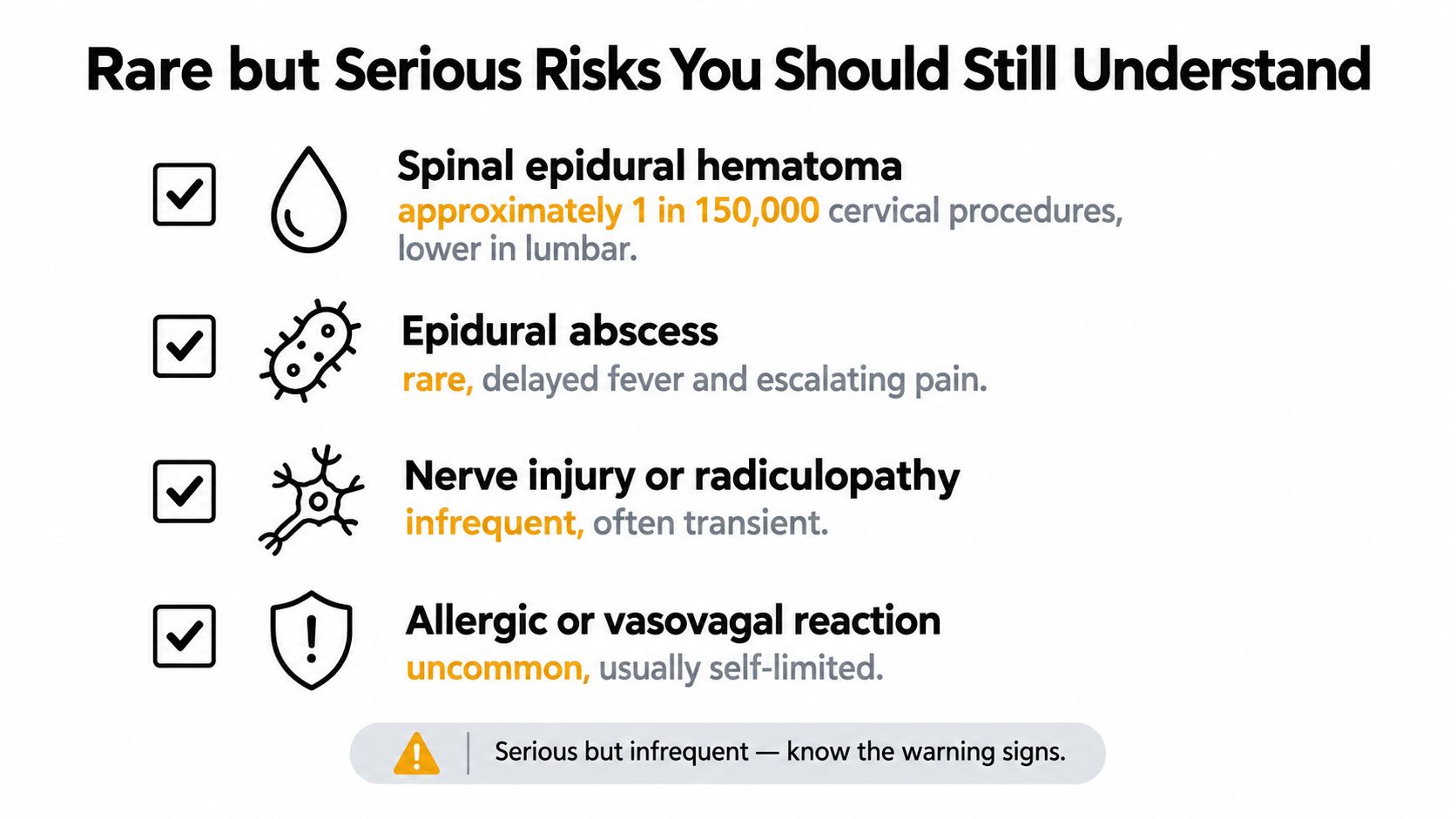
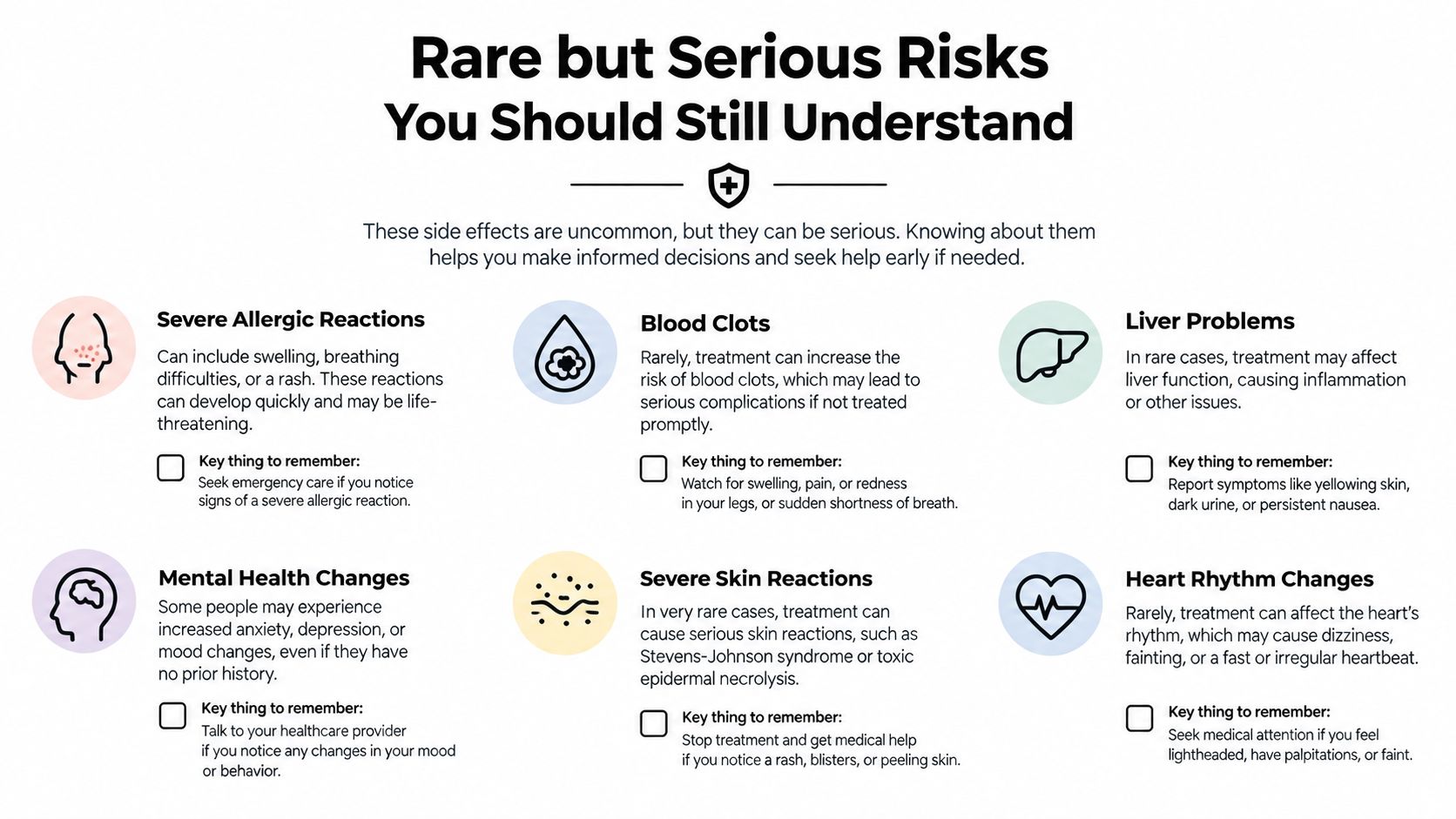
Serious complications are uncommon, but they shape how I select the approach, steroid, and monitoring plan. Recognized harms include infection, epidural hematoma, direct nerve injury, dural puncture, spinal-fluid headache, and rare ischemic neurologic injury. The risk is not identical across procedures, and a patient taking blood thinners or living with diabetes may require a different plan.
Across reviewed epidural procedures, dural puncture occurred in 0.06% overall. A severe headache from spinal-fluid leakage occurs in less than 1% of epidural steroid injections. Broader reviews report infection in 1% to 2% of spinal injections, while severe infections are much rarer, roughly 0.1% to 0.01% of all spinal injections. These figures are summarized in the Cleveland Clinic's ESI explanation and NCBI's clinical reference. The figures describe population-level risk, not an individual patient's prediction.
Why technique and steroid formulation matter
Transforaminal injections place the needle near vessels supplying the nerve and spinal cord. In the cervical region, a misplaced needle or material entering an artery can produce a severe neurologic injury. Reported neurologic risk is higher with cervical transforaminal injections using particulate corticosteroids than with lumbar interlaminar injections using non-particulate dexamethasone. That difference is why formulation and route belong in consent, not in a generic risk list.
Bleeding risk also changes with needle depth and medication. An epidural hematoma is uncommon, but blood accumulating near neural tissue can compress the spinal cord or nerve roots. Anticoagulants and antiplatelet drugs therefore require a documented medication review and a clinician-directed plan. Do not stop them independently.
The potential complications listed in AAOS guidance on spinal injections include bleeding, infection, nerve injury, arachnoiditis, paralysis, spinal headache, muscle weakness, and increased pain. This range reflects what clinicians screen for and work to prevent, not what a patient should expect.
The warning signs that change the response
Contact the clinic promptly for worsening radicular pain, a persistent position-dependent headache, or increasing redness and tenderness at the injection site. Go to an emergency department for new or progressive weakness, saddle anesthesia, bowel or bladder changes, fever with escalating spinal pain, or rapidly worsening numbness.
A hematoma can compress neural tissue, while an abscess may progress before skin changes become obvious. If neurologic function is deteriorating, seek urgent evaluation and tell the emergency team which injection was performed and when.
How Side Effects Differ by Injection Type
The same medication can behave differently depending on where it's placed. A spinal epidural injection brings steroid close to nerve roots and the dura, while a trigger point injection stays in muscle. That difference changes both expected recovery and the consequences of a technical problem.
Comparing the practical profiles
| Injection Type | Common Side Effects | Rare Serious Risks | Steroid-Specific Effects |
|---|---|---|---|
| Epidural steroid injection | Injection soreness, temporary pain increase, headache, transient leg numbness or weakness | Dural puncture, infection, hematoma, neurologic injury, vascular injury | Flushing, insomnia, mood changes, fluid retention, increased glucose |
| Facet or medial branch block | Local soreness, bruising, capsule irritation | Intravascular uptake, dural puncture, hematoma, infection | Systemic steroid effects when corticosteroid is used |
| Sacroiliac injection | Buttock soreness, temporary numbness in a sciatic distribution | Infection, bleeding, nerve or vascular injury | Flushing and glucose effects when steroid is included |
| Trigger point injection | Muscle soreness, bruising, vasovagal symptoms | Pneumothorax near the thoracic region, infection | Local or systemic steroid effects if selected |
| PRP or biologic injection | Noticeable post-procedure soreness and stiffness | Infection, bleeding, tissue injury | No corticosteroid-specific effects |
| Peripheral nerve block | Temporary numbness or motor weakness, burning soreness, bruising | Nerve injury, hematoma, infection | Steroid effects depend on the injectate |
Facet procedures illustrate why image guidance and contrast confirmation matter. A large review reported a general adverse-event rate of 0.84% per case and 1.63% per patient for facet joint injections. In a fluoroscopically guided series of 43,000 facet joint nerve block injections, intravascular injection occurred in 11.4%, local bleeding in 76.3%, oozing in 19.6%, and local hematoma with profuse bleeding in 1.2%. These figures appear in the review of spinal injection complications.
What PRP and nerve blocks do not eliminate
PRP and other biologic injections avoid corticosteroid-specific concerns, but they don't make the procedure risk-free. Patients may experience more post-injection soreness because the intended biologic response can be locally irritating. Peripheral nerve blocks likewise trade some steroid exposure for the possibility of temporary motor block, neuritis, or burning soreness during recovery.
For a closer look at the technical process and expected reactions, see the facet joint injection procedure. The correct choice depends on the pain generator, not merely on which option sounds least invasive.
Patient Factors That Change Your Personal Risk
The same injection can carry different trade-offs for different patients. Medication, metabolic health, bone density, immune status, and anatomy influence both expected benefit and potential harm. The steroid formulation, dose, injection location, and needle path also matter.
Blood thinners require an individualized plan. Warfarin, direct oral anticoagulants, clopidogrel, and aspirin affect bleeding risk differently. The decision to continue or pause one depends on the procedure, the path to the target, and why you take the medication. Never stop an anticoagulant on your own. The prescribing clinician and interventional specialist should agree on the plan.
Diabetes changes the discussion because corticosteroids can temporarily raise blood glucose. Bring your usual readings, medication list, and instructions from the clinician managing your diabetes. Closer monitoring may be appropriate after the injection, but the response should match your treatment plan rather than a universal threshold.
Cumulative steroid exposure matters
Repeated or high-dose corticosteroid exposure can suppress the hypothalamic-pituitary-adrenal axis and contribute to hyperglycemia, osteoporosis, immune effects, and adrenal insufficiency. The NCBI clinical reference on epidural steroid injections also describes concerns about cumulative exposure affecting bone and nearby muscle tissue. Those concerns are one reason clinicians limit injection frequency and consider nonsteroid approaches when appropriate.
Patients with osteoporosis, prior fragility fractures, immune compromise, active infection, or poorly controlled medical conditions may need a modified plan. Severe spinal stenosis, altered anatomy, and prior laminectomy can change the needle trajectory, the value of image review, and the procedure's technical risk.
Bring these details to the consultation:
- Medication list: Include anticoagulants, antiplatelet drugs, steroids, supplements, and diabetes medications.
- Medical history: Report diabetes, osteoporosis, immune suppression, bleeding disorders, glaucoma, and prior infections.
- Procedure history: Mention previous injections, difficult needle placement, dural puncture, allergic reactions, or unusual numbness.
- Anatomic information: Provide details about spine surgery, implants, severe stenosis, or recent imaging.
- Current symptoms: Report fever, new weakness, bowel or bladder changes, or rapidly progressing pain before scheduling.
Reducing Risk Before and After Your Injection
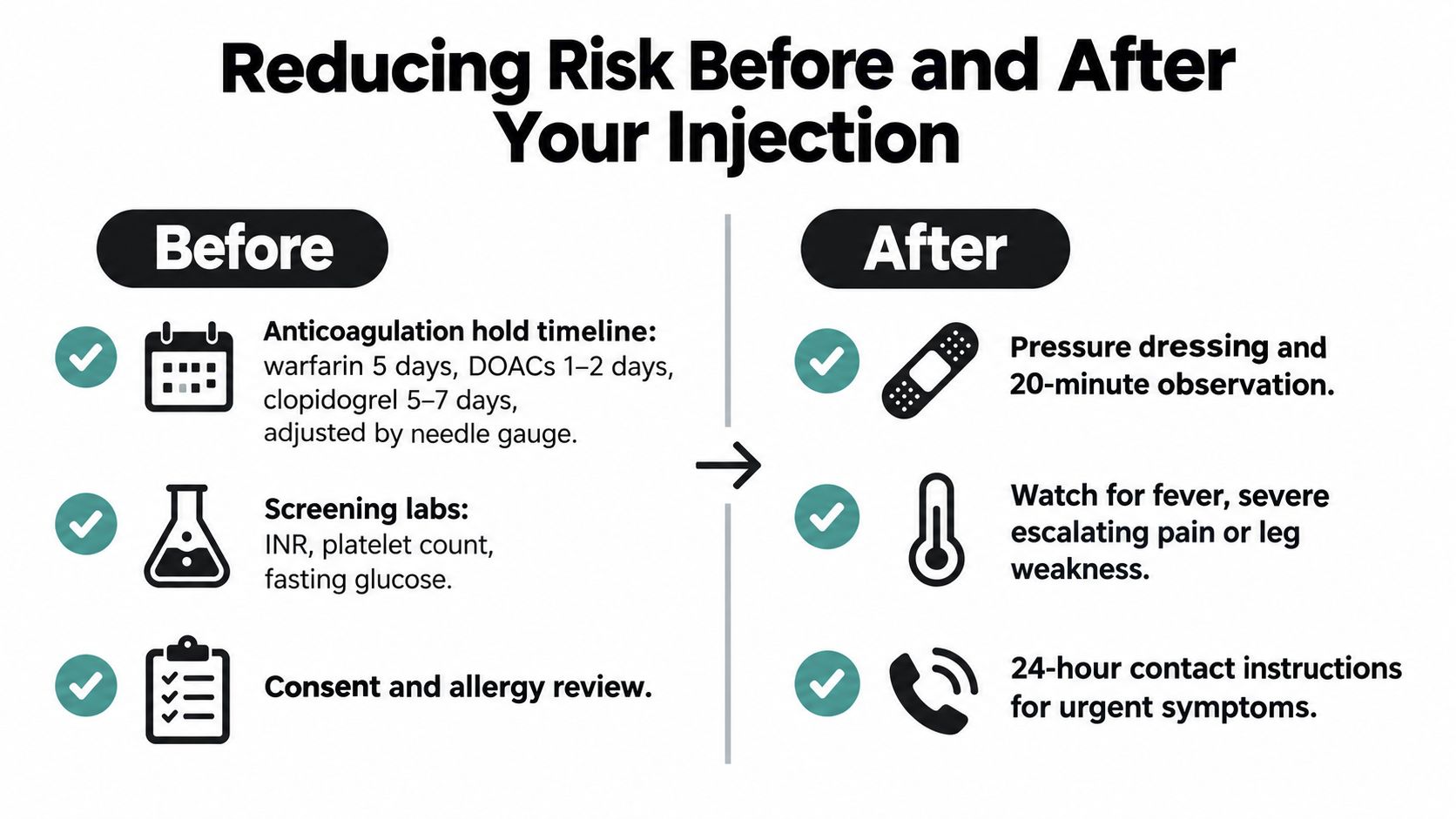
Safety begins before the needle enters the skin. The clinician should confirm the diagnosis, review imaging, verify allergies, assess bleeding and infection risks, and explain why the selected approach fits the suspected pain source.
Anticoagulation planning must be individualized. A warfarin or clopidogrel hold may differ from a plan for a direct oral anticoagulant or aspirin, and stopping medication without coordination can create a serious clotting risk. The clinic should tell you exactly what to take, what to hold, and when to resume it.
What image guidance adds
Fluoroscopy, CT, or ultrasound can improve anatomical targeting, depending on the injection. Contrast confirmation is especially important for procedures near blood vessels or the spinal canal. Image guidance doesn't make complications impossible, but it allows the clinician to verify needle position and identify an unsafe trajectory before medication is delivered.
Read more about the role of a fluoroscopy-guided injection. Prophylactic antibiotics aren't routine for every injection. They may be considered for selected immunocompromised patients or unusual infection-risk situations, based on the clinician's assessment.
After the procedure, remain for the clinic's observation period so the team can respond to dizziness, low blood pressure, or a vasovagal reaction. The appropriate monitoring time depends on the procedure and your condition, but you shouldn't leave until the staff has confirmed that you can move safely and understand the discharge instructions.
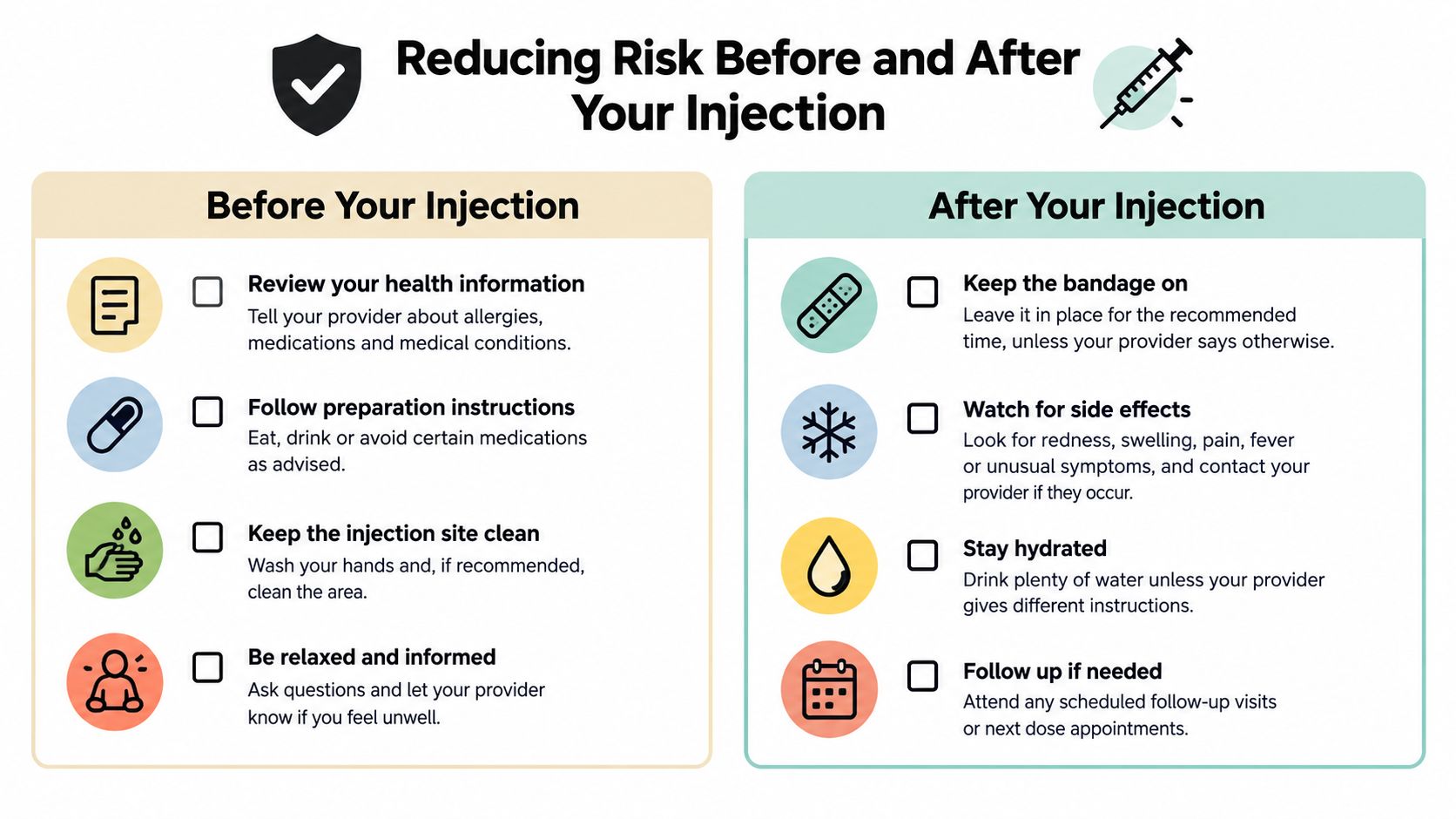
Your recovery checklist
- Protect the area: Follow the clinic's activity instructions, use ice for local soreness if advised, and return gradually to normal movement.
- Track relevant symptoms: Patients with diabetes should follow their glucose-monitoring plan, while everyone should note new weakness, numbness, fever, or worsening pain.
- Keep contact information available: Know the clinic's urgent contact process before you leave, including what to do after hours.
- Seek urgent care for red flags: Fever, drainage, severe escalating pain, new weakness or numbness, bowel or bladder changes, or a severe positional headache require prompt medical guidance.
Patient actions complement sterile technique and careful needle placement. They don't replace the clinic's protocol, and they shouldn't be used to self-manage symptoms that suggest infection, bleeding, or neurologic compromise.
Making an Informed Choice With Your Pain Specialist
Most reactions after back pain injections are temporary, especially local soreness, a brief pain flare, lightheadedness, flushing, or short-lived numbness. Serious complications are uncommon, but their consequences justify a procedure-specific discussion rather than a generic reassurance.
Think in terms of risk stratification, not a choice between “risk-free” and “dangerous.” The approach, needle path, steroid formulation, image guidance, operator technique, anticoagulant plan, diabetes control, bone health, immune status, and spinal anatomy all change the calculus.
Bring three questions to the appointment:
- Which medication will be injected, and is a steroid necessary for my diagnosis?
- How does this injection approach affect bleeding, vascular, dural, or nerve risk?
- Which symptoms should prompt a clinic call, and which require emergency evaluation?
Also bring a complete medication and supplement list. Ask how the clinician is considering cumulative steroid exposure, especially if you've had previous injections or have osteoporosis, diabetes, or immune suppression.
Midwest Pain & Wellness is a pain and wellness clinic serving patients in Chicago Ridge, Palos Heights, Palos Hills, Evergreen Park, Hickory Hills, and surrounding Illinois communities. Its interventional pain care may include image-guided epidural, facet, medial branch, sacroiliac, peripheral nerve, and regenerative procedures, with follow-up focused on what to expect during recovery.
Informed consent shouldn't end with a signature. It's an ongoing conversation about your symptoms on day one, your function during the first week, and whether the treatment remains appropriate as your condition evolves.
If back pain or radiating leg pain is limiting your movement, schedule an evaluation with Midwest Pain & Wellness to discuss whether an image-guided injection, nerve block, regenerative option, or another opioid-sparing treatment fits your diagnosis. Bring your medication list, relevant imaging, and questions about side effects so the team can build a safer, individualized plan.