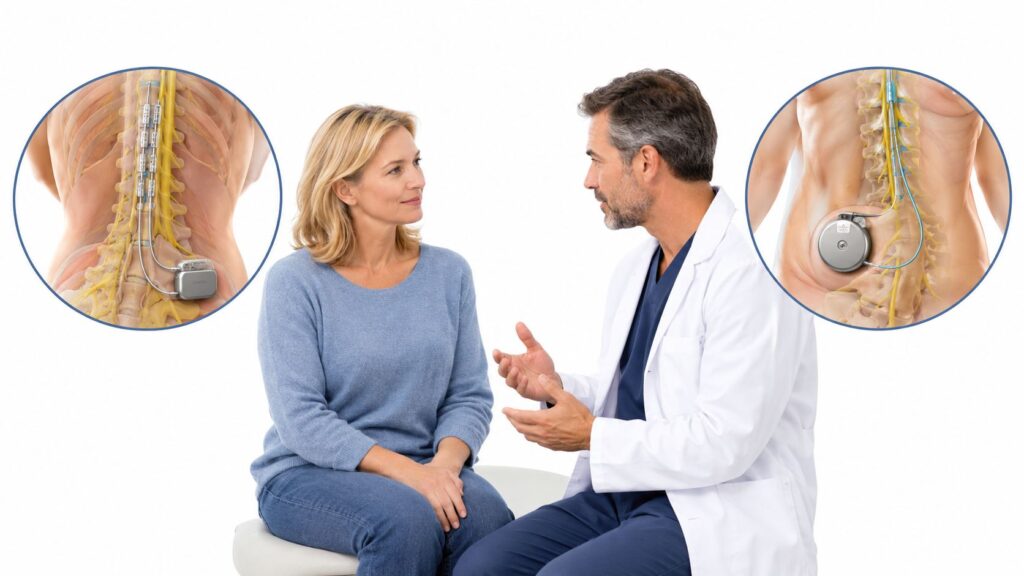
Most patients feel temporary pressure or warmth during radiofrequency ablation, followed by soreness that typically lasts about 3 to 14 days. Meaningful pain relief may take several weeks to become fully apparent, and the experience varies by treatment area, targeted nerve, technique, and individual sensitivity.
If you're in Chicago Ridge, Palos Heights, Palos Hills, Evergreen Park, or Hickory Hills, you may be weighing two uncomfortable choices: continue living with chronic back, neck, knee, hip, or nerve pain, or try a procedure that uses controlled heat near a pain-carrying nerve. The word “ablation” can sound severe, but RFA isn't intended to create a painful ordeal. It uses imaging, local anesthetic, and, when appropriate, light sedation to make treatment tolerable while allowing the clinician to monitor your responses.
The more useful question isn't only “Does radiofrequency ablation hurt?” It's also: What will I feel during the procedure, what will recovery feel like, and which symptoms are not normal?
Table of Contents
- What to Expect During Radiofrequency Ablation
- How Anesthesia and Sedation Keep You Comfortable
- What Clinical Evidence Says About Pain Outcomes
- Understanding the Recovery Timeline and Soreness Window
- Comparing Recovery Across Different Treatment Areas
- When to Call Your Pain Specialist in Illinois
- Frequently Asked Questions About RFA Pain
What to Expect During Radiofrequency Ablation
A patient arriving for RFA usually knows the chronic pain well. They may have tried medication, injections, activity changes, or other conservative care and still struggle with walking, sleeping, working, or turning their neck. Their concern is often simple: will the treatment feel worse than the pain they already have?
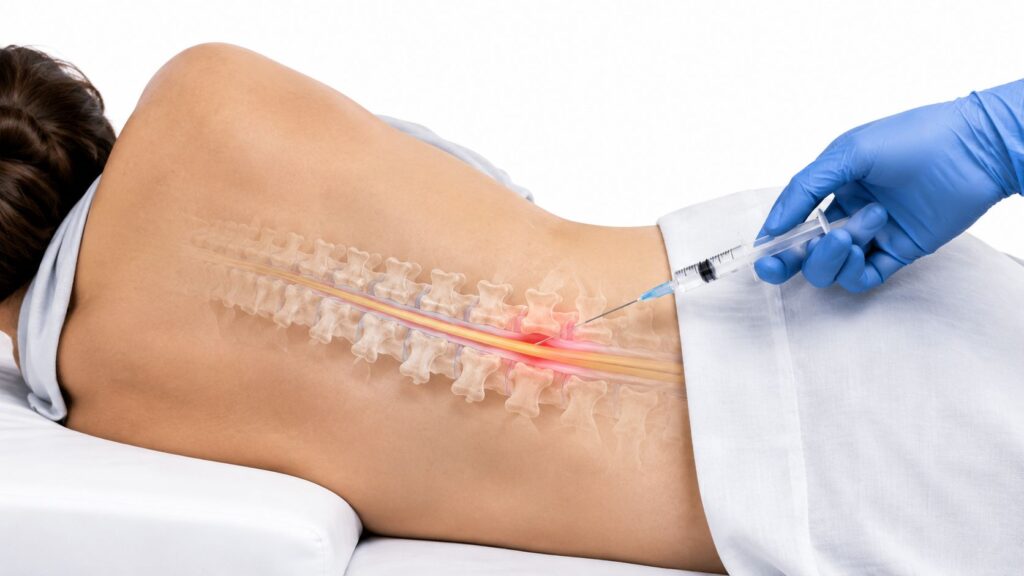
RFA is typically an outpatient procedure performed with image guidance, local anesthetic, and light intravenous sedation when the body region and patient factors support it. The anesthetic numbs the skin and needle pathway, but it doesn't guarantee that every sensation disappears. Patients may notice brief pressure, probing, warmth, or a short increase in discomfort when the clinician stimulates or heats the targeted nerve. The aim is to keep the procedure tolerable while preserving safety and communication, as described in this clinical overview of image-guided RFA.
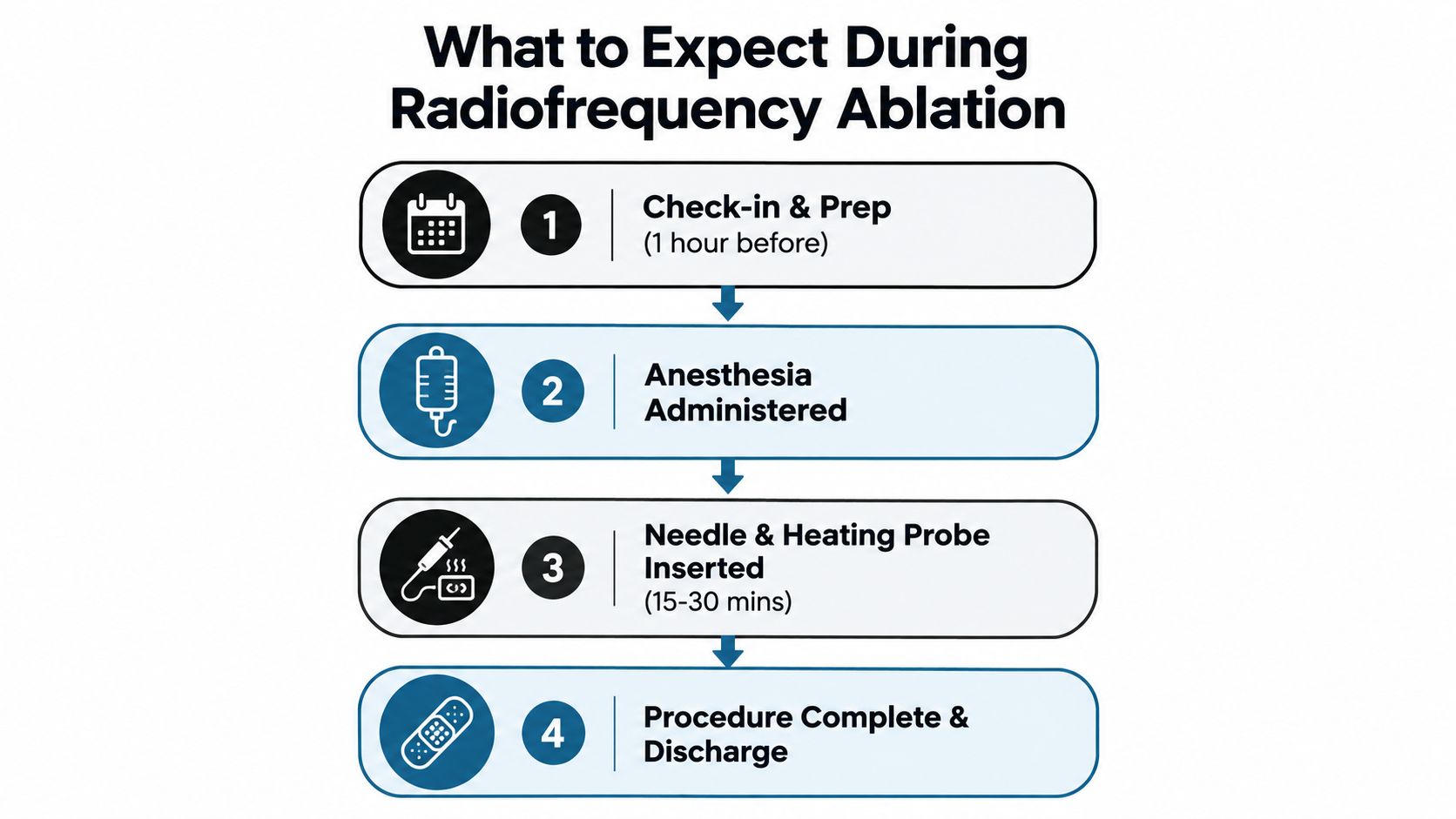
The procedure in practical terms
After check-in, the care team reviews medications, allergies, the planned treatment area, and the instructions for going home. You'll be positioned so the physician can reach the targeted nerve safely. Imaging guides the needle, which helps the physician work near the intended nerve rather than treating a broad area.
The local anesthetic may sting briefly. Needle placement can create pressure or a deep pushing sensation. During testing, you might feel a brief electrical jolt or a familiar sensation, because the clinician is confirming the needle's location and monitoring how the nerve responds.
Practical rule: Tell the clinician immediately if discomfort feels electrical, intolerable, or anatomically unexpected. The team can pause, reassess the needle position, and adjust anesthetic or sedation.
Radiofrequency energy then heats tissue around the selected nerve. Some patients notice warmth, pressure, or a temporary ache. After the probe is removed, a small dressing covers the needle site, and you'll be monitored before discharge. Patients seeking an explanation of how the treatment uses heat can review radiofrequency ablation and heat for healing.
How Anesthesia and Sedation Keep You Comfortable
Comfort during RFA depends on more than one medication. It usually involves local anesthesia, careful imaging, communication during the procedure, and sedation selected for the patient and treatment area.
Local anesthetic numbs the skin and the path followed by the treatment needle. You may still feel pressure because numbing medication doesn't remove the sensation of movement or contact. It also doesn't prevent every sensation during nerve stimulation, which is why the clinician continues to ask how you're feeling.
Conscious sedation is different from general anesthesia. It can help reduce anxiety and make the procedure easier to tolerate while allowing you to remain responsive. You may feel relaxed or drowsy, but the care team can communicate with you and monitor your responses. That communication matters when the physician is working close to a nerve and needs to distinguish expected sensations from an unusual response.
A randomized knee RFA trial enrolled 143 participants, and all procedures took place as outpatient treatments under conscious sedation. The study supports a common clinical model, but it doesn't mean every spinal, hip, knee, or peripheral-nerve procedure uses identical medications or sedation levels. The exact plan depends on the target, medical history, medications, anxiety level, and facility protocol. You can review questions about sedation and specialist coordination through this anesthesiologist resource.
Before treatment, ask:
- What will I receive? Confirm whether the plan includes local anesthetic, intravenous sedation, or both.
- Will I be awake? Ask whether you'll be able to answer questions and report sensations.
- What happens afterward? Clarify transportation, activity limits, and medication instructions.
- What should I report? Ask which sensations require the clinician to pause during treatment.
General anesthesia isn't automatically necessary for musculoskeletal RFA. Keeping a patient responsive can support safety, neurologic monitoring, and a quicker outpatient recovery.
What Clinical Evidence Says About Pain Outcomes
The strongest answer to whether RFA is “worth it” comes from separating short-term treatment discomfort from longer-term disease pain. A needle can cause soreness around the treatment site even when the targeted pain later improves. Those are different experiences and shouldn't be treated as evidence that the procedure failed.
In a 2020 study of cooled RFA for genicular nerve pain, participants rated pain on a scale from 0 to 10. The mean baseline score was 6.6, falling to 3.1 at 18 months and 3.6 at 24 months, with the baseline-to-follow-up reduction statistically significant at p < 0.0001. Those follow-up averages were approximately 45% lower at 18 months and 42% lower at 24 months than baseline, based on the reported scores. The findings come from genicular nerve treatment, so they shouldn't be applied directly to every lumbar, sacroiliac, cervical, or hip procedure. The data are reported in this study of cooled RFA for genicular nerve pain.
Evidence also differs by diagnosis. A systematic review of percutaneous RFA for trigeminal neuralgia reported that, after one month, mean pain scores decreased from 9.2 to 0.7 in the RFA group. At that point, 92.8% of treated patients had mild or no pain, compared with 26.7% in the sham-treatment group. Trigeminal neuralgia is substantially different from chronic low back, knee, hip, or sacroiliac pain, so these results demonstrate potential rather than a guaranteed outcome for every patient. The review is available in this analysis of percutaneous RFA for trigeminal neuralgia.
How to interpret the numbers
These studies don't prove that RFA will eliminate your pain. They show that selected patients can experience measurable improvement after a period when the treated area may feel sore or irritated.
A realistic outcome may be less pain when walking, longer sleep, easier stair climbing, or reduced reliance on medication. Complete numbness or total pain elimination isn't the only meaningful measure of success.
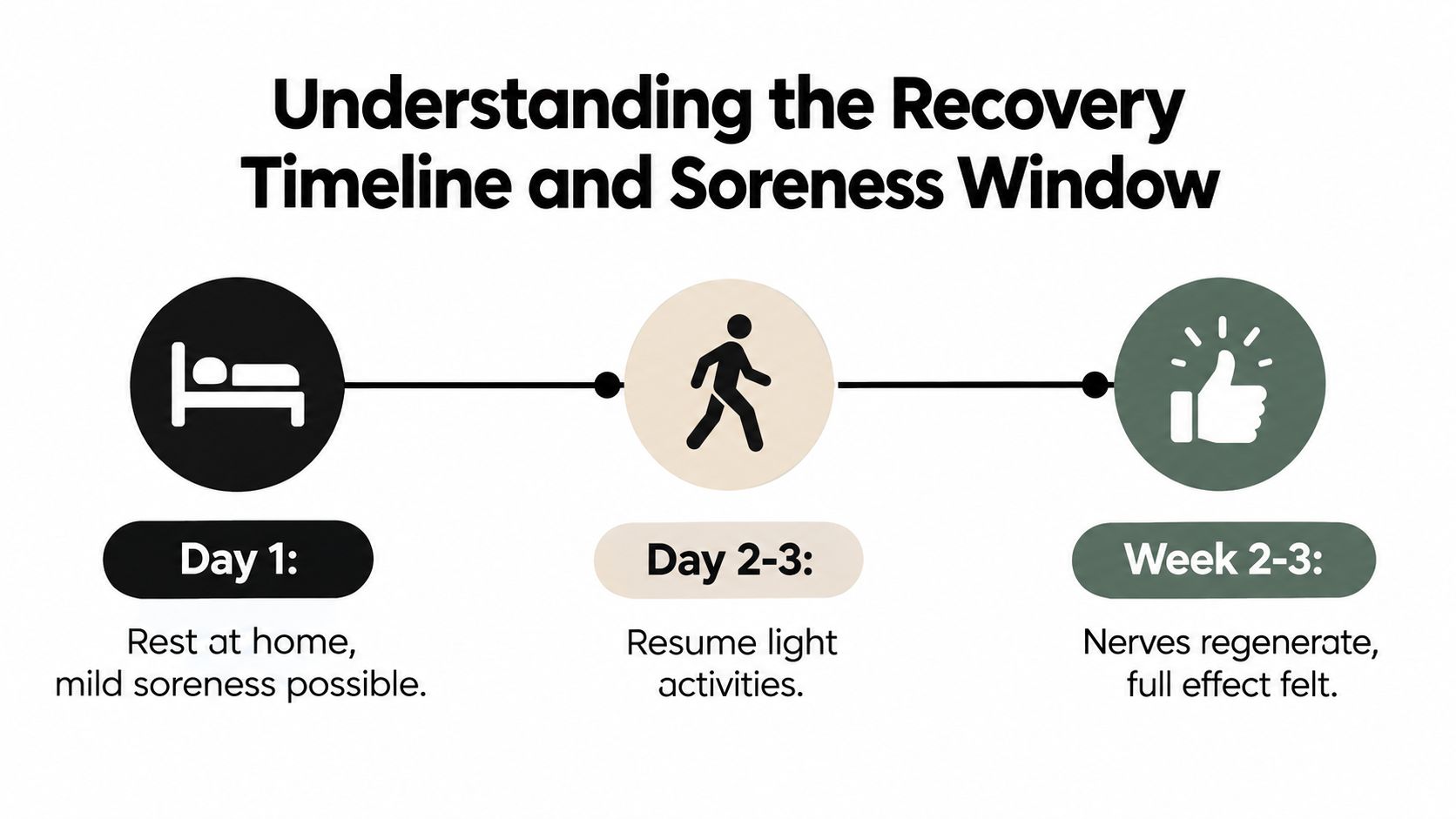
Understanding the Recovery Timeline and Soreness Window
Recovery often feels different from the procedure itself. The more typical short-term issue after musculoskeletal RFA is localized soreness, not severe ongoing procedural pain. Patients may describe it as tenderness at the needle sites, a sunburn-like feeling, or neuritis-like burning around the treated area.
The first several days
For the first 24 to 48 hours, activity is commonly limited. Relative rest doesn't mean complete immobility. Follow the treating clinician's instructions, avoid activities that sharply increase pain, and plan transportation and support if sedation was used.
Soreness may continue for approximately 3 to 14 days. Temporary pain increases, neuritis, neurogenic inflammation, altered sensation, sensitivity to light touch, or motor deficits have been reported, although these events are rare. They can reflect needle-track irritation, thermal inflammation, or temporary abnormal nerve activity rather than treatment failure, according to this evidence-based recovery summary.
Use only the measures approved for your situation:
- Relative rest: Reduce strenuous activity while continuing safe movement.
- Cold or heat: Use the option your clinician permits for the treated area.
- Analgesics: Take prescribed or otherwise approved medication according to instructions.
- Site care: Keep the dressing and needle sites managed as directed.
The following weeks
Pain relief isn't always immediate. The nerve and surrounding tissues may need time to settle, and follow-up is often assessed at 4 to 6 weeks. A temporary flare during the early recovery window doesn't automatically mean the treatment didn't work.
For general planning around recovery resources, patients may also find this recovery guide from Pain and Sleep Therapy Center useful as a reminder to arrange rest, transportation, and help with routine tasks. Its procedure focus differs from RFA, so your pain specialist's instructions remain the appropriate guide for your treatment.
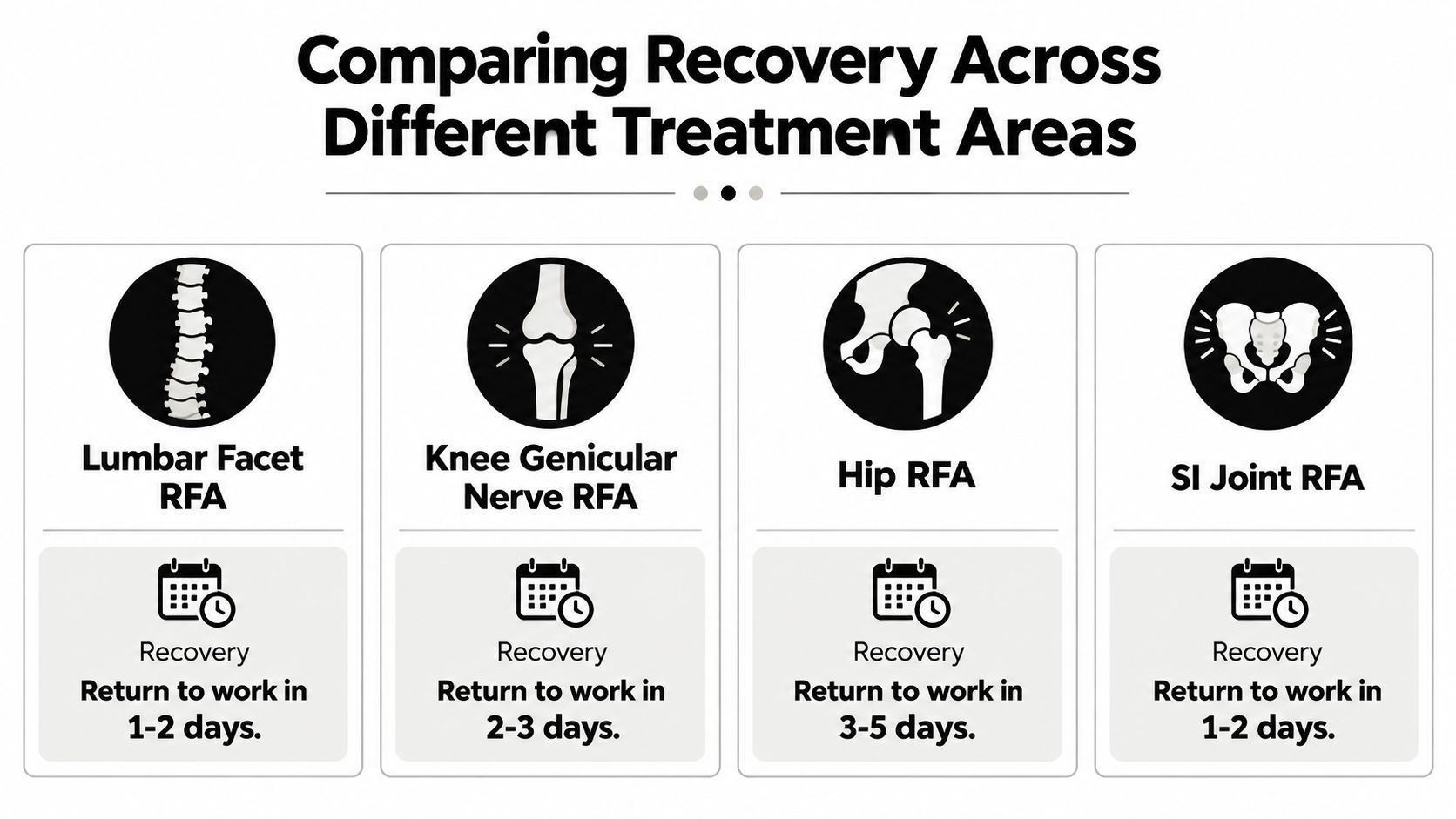
Comparing Recovery Across Different Treatment Areas
Your recovery and expected benefit depend heavily on the body region and the definition of success. Lumbar facet RFA, genicular nerve RFA, hip RFA, and trigeminal neuralgia RFA don't treat the same anatomy or condition. A patient shouldn't use results from one area as a promise about another.
A 2025 hip RFA study found that 56.25% of patients achieved at least a two-point pain reduction, while 43.75% achieved at least 50% relief. Responders reported relief for about six months on average. A separate 2025 genicular nerve study found pain reduction in 71% of patients, but only 26% achieved the stricter threshold of more than 50% relief. These findings are reported in the 2025 study of hip and genicular nerve RFA outcomes.
Why the treatment site changes the experience
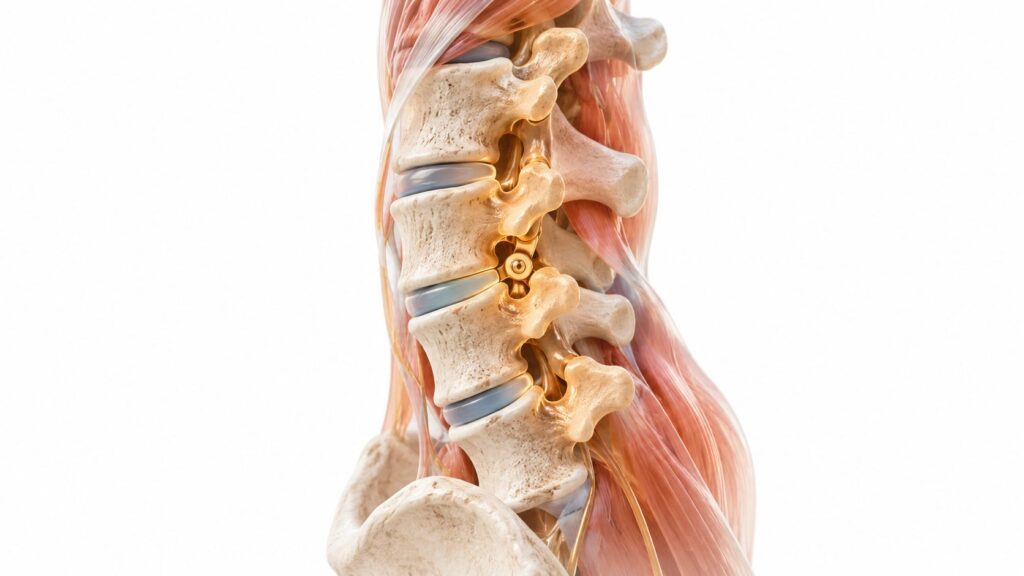
Knee treatment may produce soreness around several needle sites and can affect stairs or walking during the first part of recovery. Hip treatment may involve deeper discomfort and different activity restrictions. Spine procedures may create localized back or neck soreness, while nerve-targeted treatments for facial pain follow a different clinical pathway altogether.
The practical mistake is to ask only whether the procedure works. Ask how success will be measured for your specific condition:
- Can you walk farther?
- Can you climb stairs more comfortably?
- Can you sleep with fewer interruptions?
- Can you return to work or exercise?
- Can you reduce medication under medical supervision?
Patients considering genicular nerve ablation should ask which nerves will be treated, whether a diagnostic block is planned, and how partial relief will be evaluated. “Less pain” doesn't necessarily mean pain-free, and functional improvement may be the more useful target.
When to Call Your Pain Specialist in Illinois
Mild soreness, tenderness near the needle sites, and a temporary increase in familiar pain can occur during recovery. These symptoms should follow the instructions given by your treating team and should gradually become more manageable.
Contact your pain specialist promptly if you develop:
- Worsening weakness: New or increasing difficulty moving the treated limb or body region.
- Progressive numbness: Sensory loss that spreads or continues to worsen.
- Fever: Especially when it occurs with increasing local pain or feeling unwell.
- Drainage: Fluid, pus, or persistent bleeding from a needle site.
- Severe swelling: Swelling that is increasing rather than settling.
- Uncontrolled pain: Pain that doesn't respond to the approved treatment plan.
Don't wait for a routine follow-up if symptoms are rapidly worsening or feel different from the expected recovery pattern. Patients in Chicago Ridge, Palos Heights, Palos Hills, Evergreen Park, and Hickory Hills, Illinois, should use the clinic's direct instructions for urgent questions and coordinate with their referring or primary care providers when advised.
A clear recovery plan reduces uncertainty. Before leaving the procedure center, confirm whom to call, which symptoms require immediate attention, and what to do if the office is closed.
Frequently Asked Questions About RFA Pain
Does radiofrequency ablation hurt during the procedure?
You may feel a needle sting, pressure, warmth, probing, or a brief jolt during testing or heating. Local anesthetic and, when appropriate, sedation are used to keep the experience tolerable.
How long does the soreness last?
Localized soreness commonly lasts 3 to 14 days, although your body region and individual response matter. Follow-up is often assessed later, when the treatment's effect can be judged more fairly.
Will I need more than one treatment?
There isn't one universal schedule. The decision depends on your diagnosis, response, nerve recovery, and whether the original pain source remains active.
What happens when the nerve regenerates?
The treated nerve can regain its ability to transmit pain over time, so relief isn't necessarily permanent. If symptoms return, your specialist can reassess the diagnosis and options.
Does RFA work for everyone?
No. Results vary by treatment area, nerve selection, condition, and patient factors. A proper evaluation should connect the procedure to a specific pain source and a measurable functional goal.
Is temporary worsening automatically treatment failure?
No. Early soreness or irritation can occur during healing. Worsening weakness, progressive numbness, fever, drainage, severe swelling, or uncontrolled pain requires prompt medical contact.
Midwest Pain & Wellness provides image-guided radiofrequency ablation and personalized interventional pain care for adults in Chicago Ridge and surrounding Illinois communities. Visit Midwest Pain & Wellness to discuss whether RFA fits your pain source, comfort needs, and recovery goals with an interventional pain specialist.