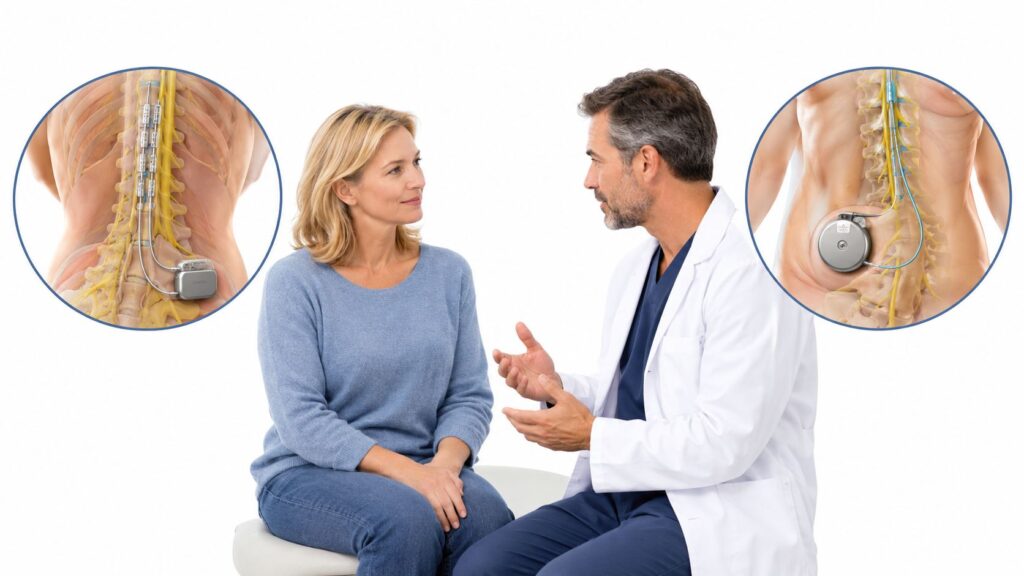
Your feet burn when you get into bed. One leg also sends a sharp jolt from your buttock to your calf when you sit too long. You search both symptoms, and the results keep switching between peripheral neuropathy and sciatica, as if they're interchangeable. They aren't. They can feel similar, they can happen together, and the treatment that helps one may do very little for the other.
Table of Contents
- Why These Two Nerve Conditions Get Confused
- What Peripheral Neuropathy and Sciatica Actually Are
- Symptom Patterns You Can Actually Feel and Map
- How a Pain Specialist Actually Diagnoses Each One
- When the Two Conditions Overlap and Stack Up
- Interventional and Opioid-Sparing Treatment Options
- Red Flags That Mean Urgent Care
- A Practical Next-Step Plan for the Chicago Ridge Area
Why These Two Nerve Conditions Get Confused
A common starting point in clinic is a 58-year-old with diabetes who describes two different problems. Both feet tingle and burn at night. After lifting groceries, pain shoots down one leg. It's tempting to look for a single label that explains everything.
That shortcut causes trouble. The burning in both feet may reflect peripheral nerve damage that developed slowly. The one-sided shooting pain may reflect an irritated spinal nerve root after a mechanical strain. Treating both as generic leg pain can lead to months of stretching, medication changes, or waiting while the actual source goes unaddressed.

The Question That Changes the Plan
The useful question isn't, "Which name fits?" It's where the nerve problem lives, what's injuring it, and whether that cause is treatable. A pinched root near the spine calls for a different workup than nerves failing at their farthest ends in the feet.
Describe the pattern before you accept a label. Where it starts, which side it favors, and what makes it flare often tell a clinician more than the word pain alone.
Many readers over 50 are sorting through diabetes, spine wear, medication effects, and old injuries at the same time. Reliable background reading helps, including health articles for adults over 50 that put nerve symptoms in the context of overall aging and chronic disease. It doesn't replace an exam when weakness, numbness, or burning persists.
A pain and wellness clinic is structured for that sorting work. This isn't a visit limited to exercises or reassurance. It combines neurological examination, review of metabolic contributors, selective testing, and, when appropriate, image-guided treatment. That's the setting where the distinction between peripheral neuropathy and sciatica becomes a care plan rather than a guess.
What Peripheral Neuropathy and Sciatica Actually Are
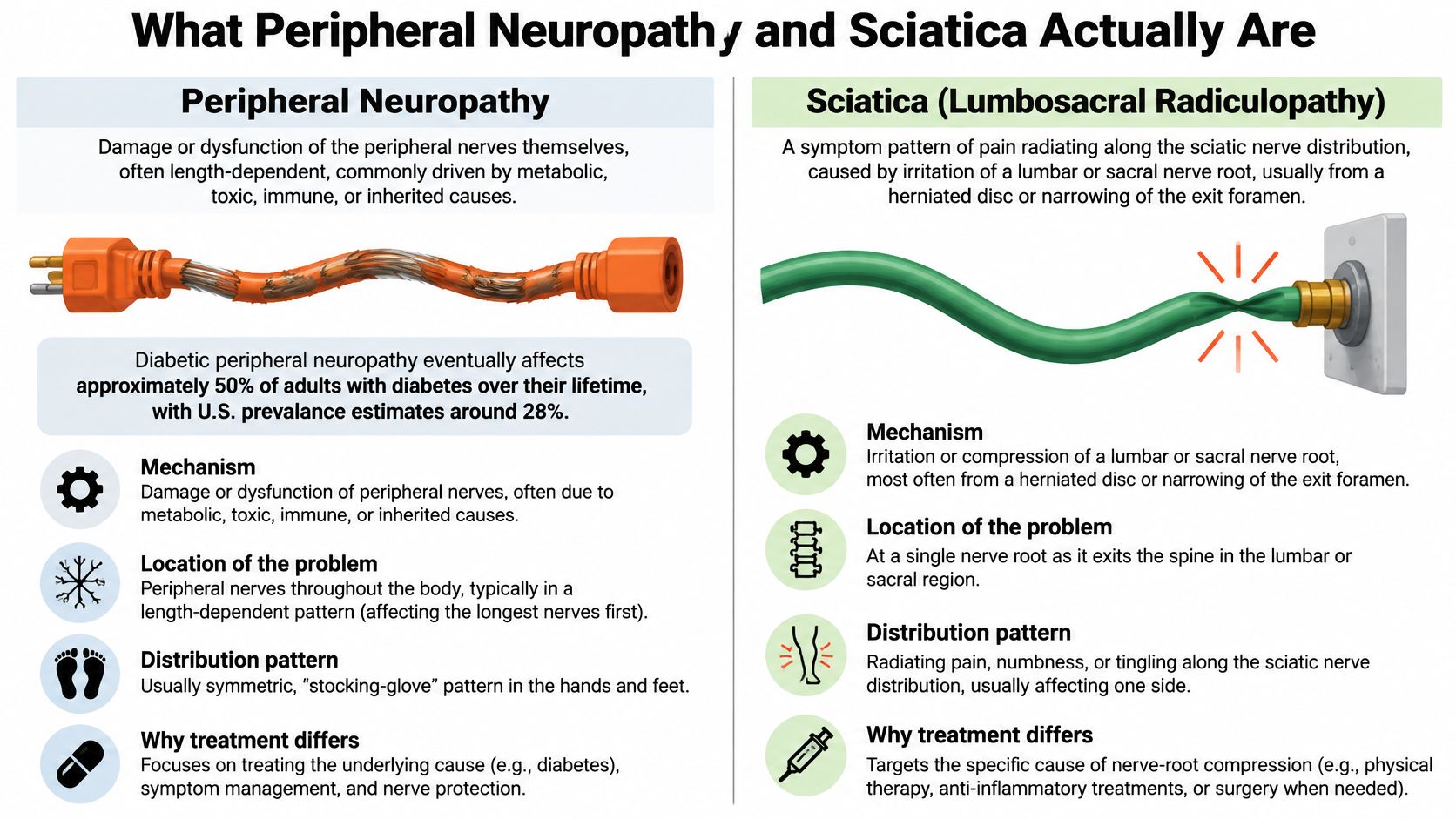
Peripheral neuropathy means damage or dysfunction in nerves outside the brain and spinal cord. The common form is distal symmetric polyneuropathy. The longest nerves fail first, so symptoms usually start in the toes and feet, then move upward. Hands may follow later.
Think of a worn extension cord. The insulation has degraded along the cable, signals leak or fade, and the far end works worst. Causes can be metabolic, toxic, immune related, or inherited. Diabetes is a major driver, and diabetic peripheral neuropathy eventually affects approximately 50% of adults with diabetes over their lifetime, with U.S. prevalence around 28% and study estimates ranging from 6% to 51%.
A Different Location for Sciatica
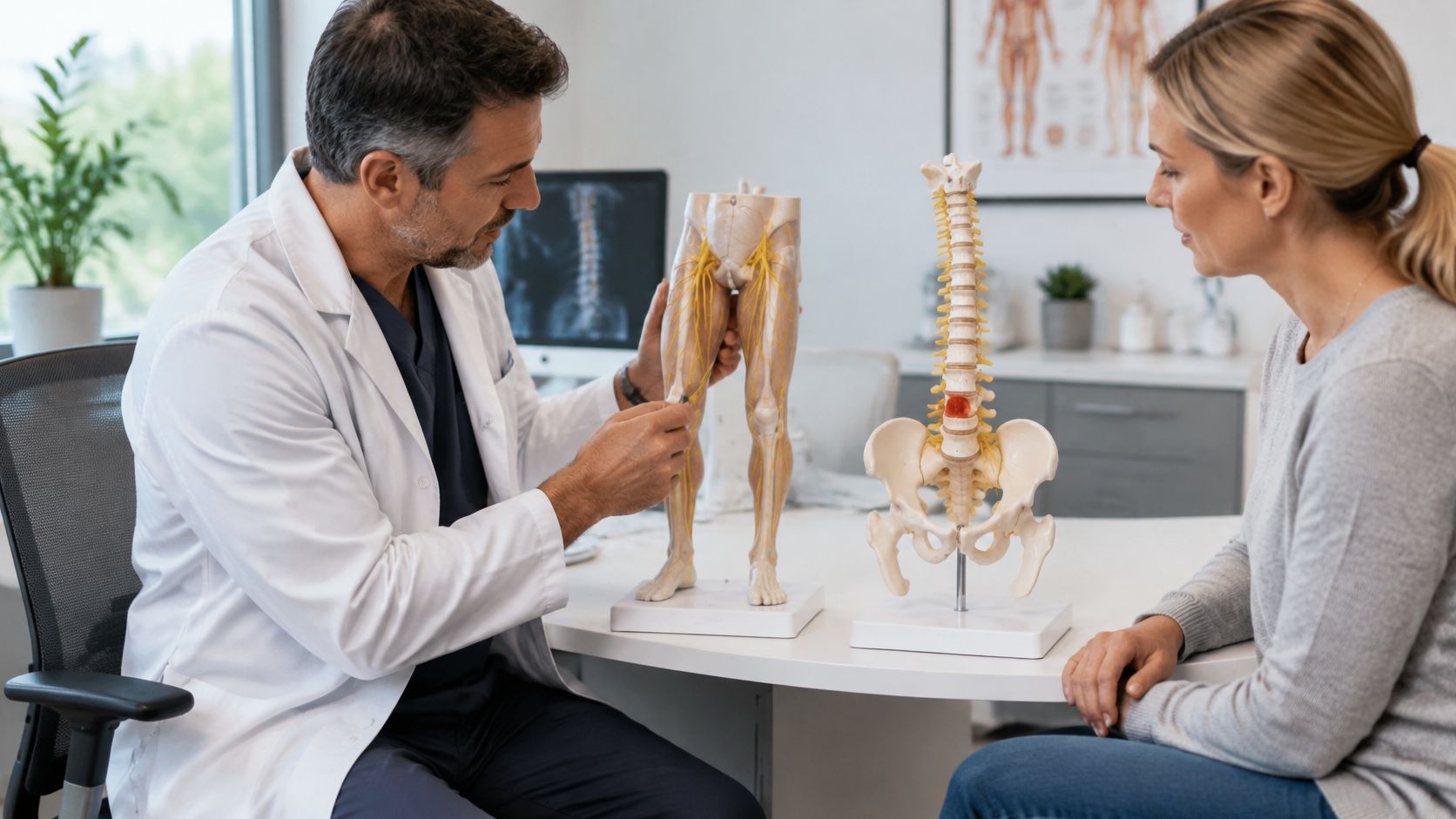
Sciatica describes pain traveling along the sciatic nerve distribution, usually from the low back or buttock into the leg. The more precise clinical term is lumbosacral radiculopathy. The problem typically starts where a lumbar or sacral nerve root exits the spine and gets irritated by a herniated disc or narrowing around the opening.
That is closer to a hose pinched at one point near the wall. Flow suffers downstream, but the hose itself isn't worn out along its whole length. Move the pinch point, and symptoms can change quickly with posture or pressure.
- Peripheral neuropathy: The nerve itself is sick, often on both sides, starting farthest from the spine.
- Sciatica: A nerve root is irritated near the spine, often affecting one leg in a narrower path.
- Why it matters: One may need metabolic treatment and nerve protection. The other may need targeted spine care.
Neither label is a complete diagnosis by itself. Neuropathy still requires a search for contributors such as blood sugar problems, vitamin deficiency, kidney or liver disease, toxins, infections, or immune disorders. Sciatica still requires matching the painful path to a specific root, strength pattern, and reflex change. The name is the starting point, not the answer.
Symptom Patterns You Can Actually Feel and Map
Start with distribution. Peripheral neuropathy often creates a stocking and glove pattern, with both feet affected in a fairly similar way. Sciatica more often follows one leg from buttock toward calf or foot, sometimes in a stripe that matches a single nerve root.
Pain quality helps, but it doesn't decide the case alone. Burning, tingling, electric jolts, and numbness occur in both conditions. What changes the symptom is often more revealing. Sitting, bending, coughing, standing, or walking may aggravate a root problem. Length-dependent neuropathy tends to persist across positions and may feel worse at rest or at night.
Symptom Profile Comparison
| Feature | Peripheral Neuropathy | Sciatica (Lumbosacral Radiculopathy) |
|---|---|---|
| Typical start | Toes or soles, often both feet | Low back or buttock, then one leg |
| Spread | Slowly upward from the feet | Down the leg along a root path |
| Triggers | Often present at rest or night | Sitting, bending, coughing, walking |
| Associated signs | Balance trouble, reduced protective sensation | Focal weakness, reflex change in one pattern |
| Back pain | May exist for a separate reason | Common, but can be absent |
Try a simple map before your visit. Note whether one foot or both feet are involved, whether light touch feels different on one side, and whether a specific movement reproduces the leg pain. Write down when symptoms began and whether they've spread. This isn't self-diagnosis. It's useful history.
Bring the pattern, not just a pain score: "Both soles burn nightly" and "pain shoots to my right heel when I sit" point a clinician in different directions.
For practical steps while you're sorting out a one-sided radiating pattern, review ways to help sciatica symptoms at home and in clinic. If numbness affects balance, your foot catches, or weakness appears, don't treat the map as a reason to wait.
How a Pain Specialist Actually Diagnoses Each One
Diagnosis starts with a focused history and neurological exam, not a scan. Strength is checked in specific leg and foot muscles. Reflexes, gait, balance, and sensation are compared side to side. The feet are examined for loss of protective sensation, skin breakdown, and ulcer risk.
Different exam tools answer different questions. Pinprick or temperature testing checks small fiber function. Vibration testing checks large fiber function. A 10-g monofilament helps identify loss of protective sensation. In suspected radicular pain, maneuvers that stretch or load the nerve root can help see whether leg symptoms reproduce in a root pattern.
Labs, Nerve Testing, and Imaging Have Separate Jobs
Blood work is targeted, not indiscriminate. Glucose testing and vitamin B12 are common considerations, and the history may prompt other tests for monoclonal proteins, kidney or liver problems, medication effects, toxin exposure, or immune causes. A medication and supplement review matters because some exposures contribute to nerve injury.
EMG and nerve conduction studies can localize a lesion, separate polyneuropathy from radiculopathy, and distinguish patterns of nerve injury. They're most useful when symptoms are atypical, rapidly progressive, markedly asymmetric, motor predominant, or still uncertain. They aren't needed for every straightforward case. A 2025 analysis found MRIs and EMG are frequently ordered for peripheral neuropathy, account for substantial diagnostic costs, yet rarely change diagnosis or management, with recommendations discouraging routine MRI for peripheral neuropathy and routine EMG for typical diabetic neuropathy.
MRI shows anatomy, not nerve function. It's sensitive for root abnormalities, but degenerative findings are common in people without symptoms, so the image has to match dermatomal pain, sensory loss, weakness, and reflex changes. Guidelines generally support no immediate imaging during the first 4 to 6 weeks of uncomplicated lumbar radicular pain without red flags.
When Normal Results Don't End the Story
Routine EMG and nerve conduction studies can miss small fiber neuropathy, which can cause burning pain and temperature sensitivity. In that setting, skin biopsy to assess nerve fiber density may become relevant. A normal test may reveal the limit of that test, not prove your nerves are fine.
A detailed explanation of how nerve pain is diagnosed step by step can help you prepare questions. The core principle is simple. Each test should answer a specific question that could change treatment.
When the Two Conditions Overlap and Stack Up
Overlap is common in real life because the risk factors travel together. A person can have diabetes injuring peripheral nerves while lumbar degeneration narrows the space around a nerve root. Prior back surgery, chemotherapy exposure, or an old work injury can add another layer.
That combination explains a frustrating experience. An injection eases the shooting leg pain, but both feet still burn. Or glucose control improves, yet one calf still weakens when you push off. Those outcomes don't necessarily mean treatment failed. They may mean only one contributor was treated.
Three Questions for Mixed Nerve Pain
- Is nerve injury present: The exam, history, and selective testing establish whether symptoms fit nerve dysfunction.
- Where is it located: Root, peripheral nerve, small fibers, or more than one site may be involved.
- Is there a treatable cause: Blood sugar, B12, medication exposure, compression, and other contributors guide sequencing.
Sequencing matters. If progressive root weakness is present, the spine problem can't wait behind a long metabolic workup. If both feet have lost protective sensation, foot protection and fall prevention start immediately, even while the spine question is clarified. Care often runs in parallel rather than one diagnosis at a time.
Two diagnoses can both be true. The goal is to assign each symptom to the source most likely causing it, then treat in the order that protects function first.
Coordination is part of the treatment. A pain specialist may work with primary care for metabolic control, endocrinology for diabetes management, a surgeon when compression needs surgical opinion, and rehabilitation clinicians for strength and gait. That's different from being handed from office to office without anyone owning the whole picture.
Mixed cases also require honest expectations. Relieving a pinched root doesn't reverse established peripheral nerve damage. Improving a metabolic contributor doesn't decompress a narrowed foramen. A clear plan states which symptoms each intervention is meant to improve and which may remain.
Interventional and Opioid-Sparing Treatment Options
Treatment follows the source. For sciatica from an irritated root, options may include image-guided epidural steroid injections, selected nerve blocks, facet or medial branch procedures when those structures contribute, sacroiliac joint interventions, and radiofrequency ablation for appropriate pain generators. Some patients with lumbar stenosis may be candidates for minimally invasive lumbar decompression or interspinous spacer treatment.
Peripheral neuropathy care starts with treating contributors and protecting the feet. That can include metabolic optimization, correcting deficiencies, reviewing neurotoxic exposures, neuropathic pain medication, targeted rehabilitation, and balance work. For localized or refractory neuropathic pain, peripheral nerve blocks, sympathetic blocks, peripheral nerve stimulation, or spinal cord stimulation may be considered in selected patients.

Building a Multimodal Plan
Other tools in a pain and wellness practice serve different problems that often coexist. Kyphoplasty addresses painful vertebral compression fractures. Regenerative options such as PRP may be used for selected tendon or joint contributors. Botox has roles in chronic migraine and cervical dystonia, and hormone treatment may be relevant for some patients. None of these replaces diagnosis. Each has to match a defined target.
For day-to-day self-care between visits, heat, positioning, activity pacing, and similar measures can be reasonable adjuncts, as outlined in these natural sciatica pain relief tips. They shouldn't delay evaluation when weakness or numbness is progressing.
The opioid-sparing emphasis in Illinois has a policy context. CDC data for 2012 recorded 67.9 opioid pain reliever prescriptions per 100 Illinois residents, compared with 82.5 per 100 nationally, with Illinois ranked 43rd overall, 50th for long acting or extended release prescribing, and 50th for high dose prescribing. That doesn't mean opioids are never appropriate. It supports trying targeted procedures, rehabilitation, and non-opioid strategies before relying on long-term opioid therapy.
If your dominant problem is distal burning and numbness, review peripheral neuropathy pain treatment options before your consultation. Effective care usually combines several targeted measures. A single pill or a single injection rarely addresses metabolic injury, root compression, deconditioning, and fall risk at once.
Red Flags That Mean Urgent Care
Don't wait for a routine visit if nerve symptoms change suddenly or involve bladder, bowel, or saddle sensation. Cauda equina syndrome is uncommon, but it's an emergency because compressed nerves at the bottom of the spinal canal can lose function.
Seek Same Day Emergency Evaluation For
- Bladder change: New urinary retention, impaired sensation of needing to urinate, or loss of control.
- Bowel change: New fecal incontinence or inability to control bowel function.
- Saddle anesthesia: Numbness around the groin, inner thighs, or area that would touch a saddle.
- Rapid weakness: Quickly worsening leg or foot weakness, especially on both sides.
- Concerning context: Fever, suspected infection, recent major trauma, known cancer, or unexplained severe night pain.
Urgent assessment generally means an immediate neurological exam, urgent MRI, and specialist involvement. The point isn't to alarm every person with leg pain. It's to separate symptoms that can be worked up in clinic from signs that need emergency imaging.
Nerve root problems are also serious in injury settings. Illinois workers' compensation data list lumbar radiculopathy at 2.1% of paid claims with an average payment of $6,459 per claim, which underscores why post-injury radiating pain and weakness shouldn't be dismissed as ordinary soreness. If a foot suddenly slaps the floor or your toes keep catching, seek prompt clinical assessment even if pain is mild.
A Practical Next-Step Plan for the Chicago Ridge Area
Start by bringing the records that let a clinician see patterns instead of restarting from zero. Prior MRI images and reports, EMG results, lab work, a medication and supplement list, and notes about diabetes, chemotherapy, back surgery, or injuries are all useful. If symptoms followed work or a personal injury, bring that paperwork too.
What to Expect at the First Visit
You'll be asked where symptoms began, how they spread, what positions change them, and how they affect walking, sleep, work, and balance. The exam compares sensation, strength, reflexes, gait, and foot risk. From there, the plan may involve targeted labs, selective imaging or nerve testing, treatment of contributors, rehabilitation, or an image-guided procedure.
Ask direct questions. Does my pattern fit a nerve root, a length-dependent neuropathy, or both? Which test would change management? Which symptoms should improve with this treatment, and which ones may need a separate approach? Those answers prevent a common problem, treating an MRI finding that doesn't match your exam.
The local service area is specific to Illinois and centered on Chicago Ridge, IL. It includes Palos Heights, IL, Palos Hills, IL, Evergreen Park, IL, and Hickory Hills, IL. In the cited municipal series, Chicago Ridge had 14,407 residents, Hickory Hills 13,933, Palos Heights 12,566, Palos Hills 17,596, and Evergreen Park 19,934, for a combined population of approximately 78,436.
Coordination continues after the visit. Care may be shared with your primary care clinician, surgeon, chiropractor, or physical and occupational therapists, but the pain and wellness clinic remains focused on diagnosis, interventional options, and opioid-sparing management. Workers' compensation and personal injury cases need the same pattern-based evaluation, with documentation tied to function and neurological findings.
If burning, numbness, or radiating leg pain has persisted, spread, or changed how you walk, schedule an evaluation rather than trying to force your symptoms into one label. Bring your symptom map and your records. The next step is matching the pattern to the right source.
If you're in Chicago Ridge, Palos Heights, Palos Hills, Evergreen Park, or Hickory Hills and can't tell whether your leg or foot symptoms fit a pinched nerve root, peripheral neuropathy, or both, Midwest Pain & Wellness offers pattern-based evaluation and opioid-sparing interventional care to clarify the source. Schedule a consultation, bring your imaging, medication list, and symptom notes, and ask which targeted treatment options fit your specific findings.