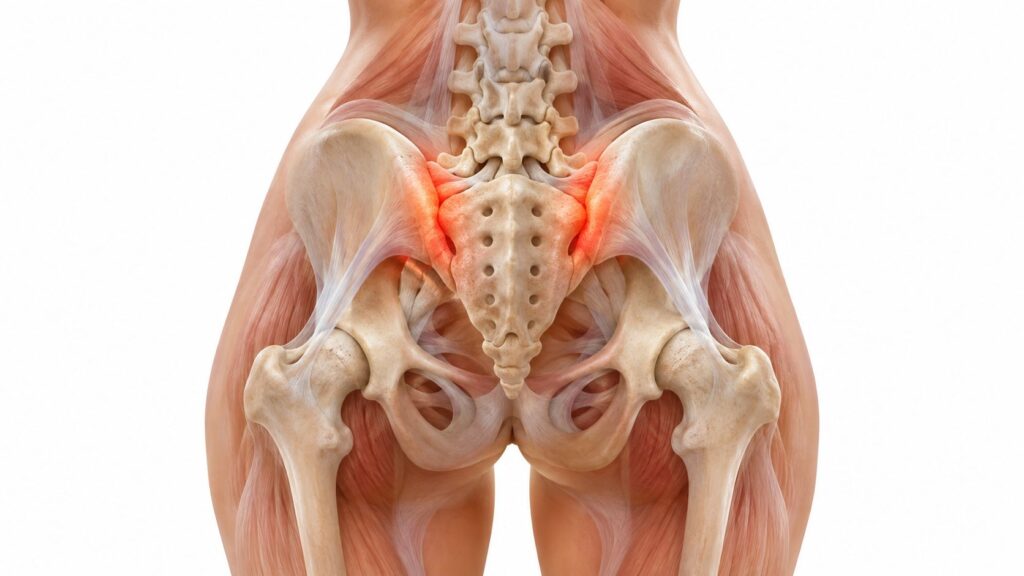
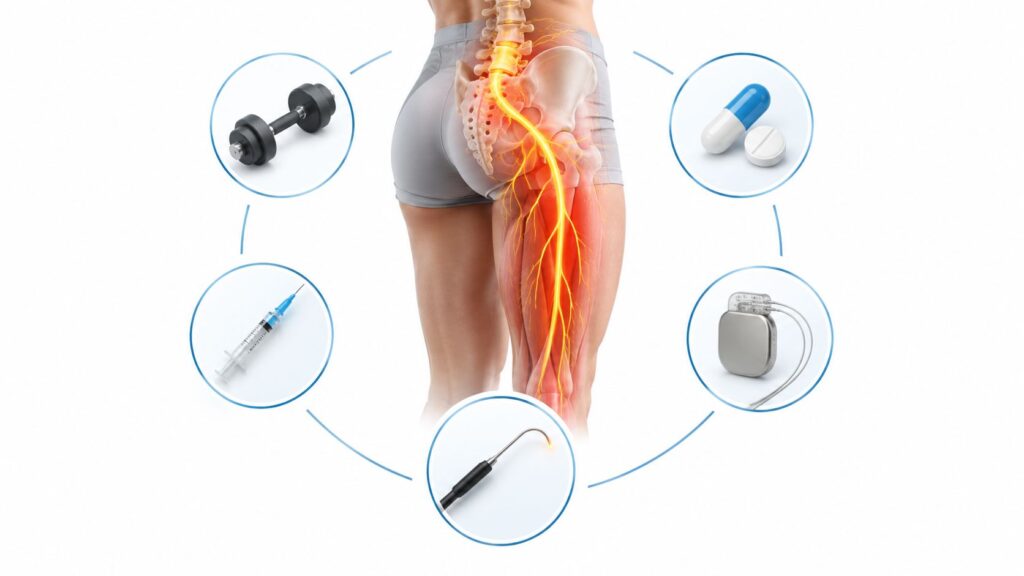
20.9% of U.S. adults, about 51.6 million people, lived with chronic pain in 2021, and 6.9%, about 17.1 million people, had high-impact chronic pain that restricted daily activities, according to the CDC report on chronic pain prevalence. That scale is why advanced pain management is not a niche service. It's a practical response for people whose pain has outgrown simple medication changes and who need a plan built around function, not just symptom suppression.
In the Chicago suburbs, that matters for patients in Oak Lawn, Palos Hills, Palos Heights, Worth, Bridgeview, Hickory Hills, Alsip, Burbank, Evergreen Park, and Orland Park. Those communities sit in the Illinois corridor around Chicago Ridge, and many patients there are looking for a clinic that can coordinate procedures, rehab, and follow-up without treating pain like a one-size-fits-all problem.
Understanding Advanced Pain Management and Why It Matters
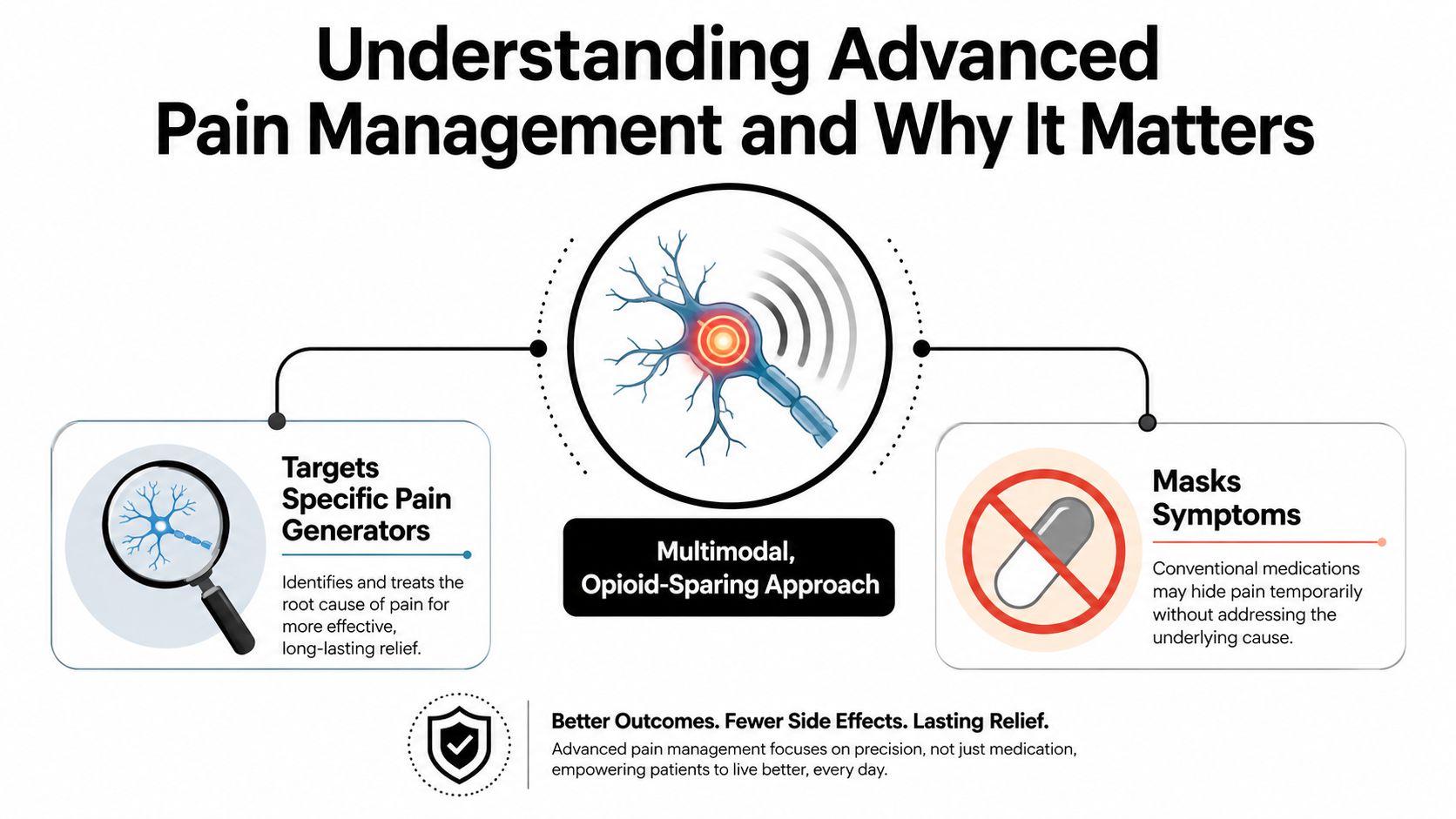
Advanced pain management starts with a simple idea. Pain has a source, and the smartest treatment is the one that targets that source as directly as possible. For many patients, that means a multimodal, opioid-sparing plan that combines procedures, medications, movement-based care, and behavioral support instead of pushing a single drug strategy harder and harder.
Why the scale of chronic pain changes the treatment model
The CDC's numbers make the case for a broader model. With chronic pain staying roughly in the 20.5% to 21.8% range from 2019 through 2021, this is a persistent public-health problem, not a temporary surge CDC chronic pain data. Earlier federal estimates were similar, which helps explain why modern pain medicine focuses on durable function and lower medication burden rather than chasing complete elimination of discomfort in every case.
That's also why the old escalation model fails so many people. If a treatment only dulls symptoms for a few hours, patients often end up cycling through refills, side effects, and diminishing benefit while the underlying pain generator stays active. Advanced care aims for a different outcome, less pain, better movement, safer medication use, and a plan that can be adjusted when the first step doesn't fully work.
Practical rule: when pain keeps returning after routine medication changes, the next move shouldn't be more of the same. It should be a closer look at the pain generator, the function limits, and the treatment path that fits both.
What this means for patients in the suburbs
For someone in Chicago Ridge or a nearby suburb, advanced pain management usually means a clinic visit leads to a real strategy, not a quick prescription swap. The right plan may involve image-guided procedures, neuromodulation, rehab coordination, or behavioral health support, depending on whether the pain is coming from a nerve, a joint, a post-surgical issue, or another source. The goal is to restore activity and reduce reliance on systemic opioids, not promise a pain-free life that medicine can't guarantee.
The economic burden is also part of the picture. Peer-reviewed and government sources estimate the annual U.S. cost of chronic pain at roughly $600 billion to $635 billion CDC chronic pain report. That cost reflects both treatment spending and lost productivity, which is why precision-based care matters for patients and families alike.
Core Interventional Procedures That Target Pain Directly
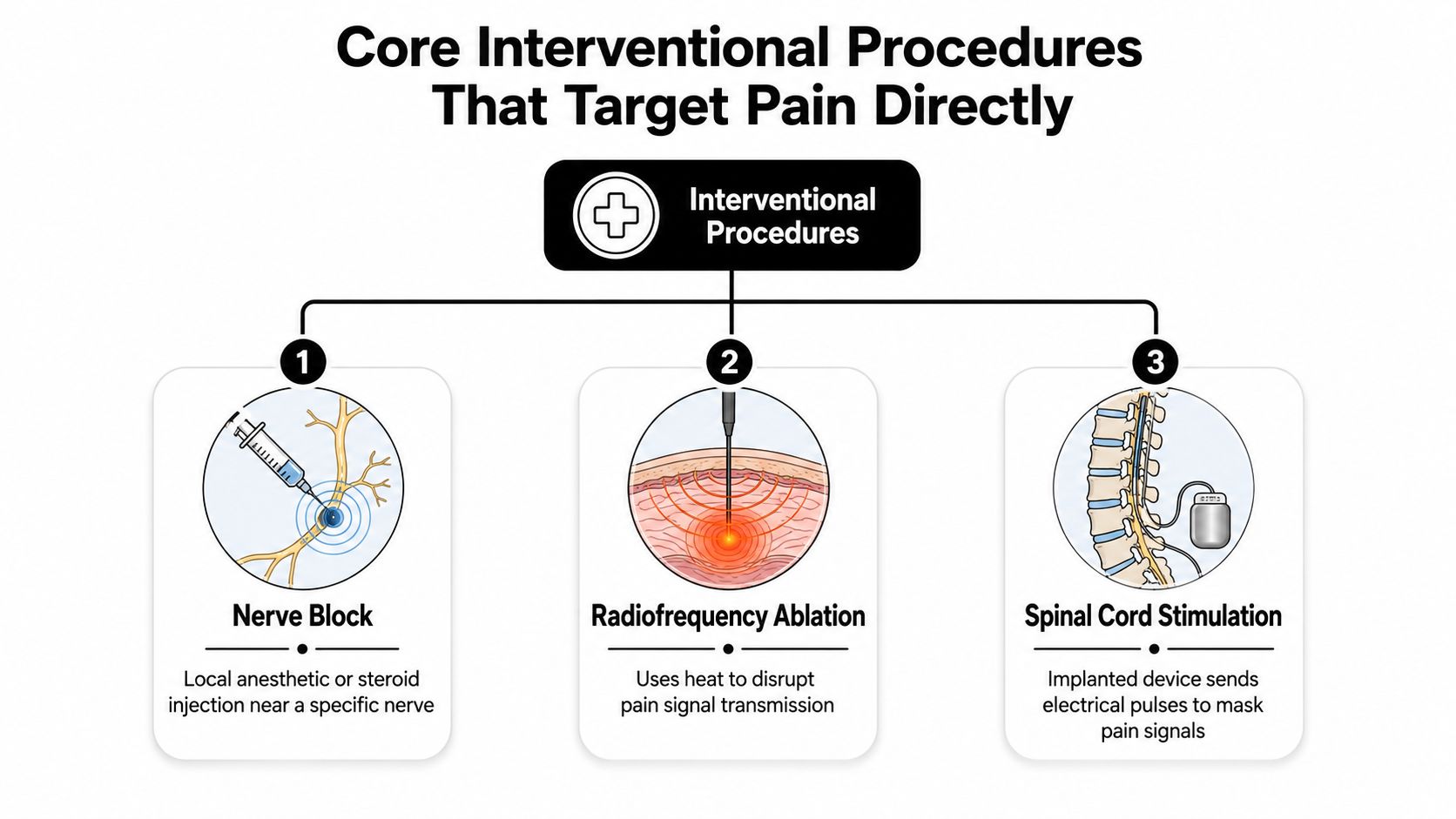
The strongest interventional treatments work like targeted tools, not blunt instruments. Instead of flooding the body with medication, a pain specialist uses imaging, anatomy, and diagnostic feedback to place treatment where the pain starts. In practice, that often means a staged approach, first confirming the pain source, then choosing the least invasive treatment that can realistically help.
The main procedure families
Image-guided injections are often the first step when a nerve, joint, or inflamed structure appears to be driving pain. Fluoroscopy or ultrasound helps place medication near the problem area, which is very different from hoping an oral drug reaches the right tissue in the right amount. For many patients, a well-placed injection can calm inflammation enough to let movement and rehab work again. Nerve block overview
Radiofrequency ablation is used when a specific pain pathway has been identified and the goal is to interrupt signal transmission for a longer period. It works by interrupting specific pain pathways long enough to reduce pain and make standing, walking, or sleep more manageable, without relying on systemic symptom suppression. It does not repair the underlying anatomy, but it can create enough relief to support function.
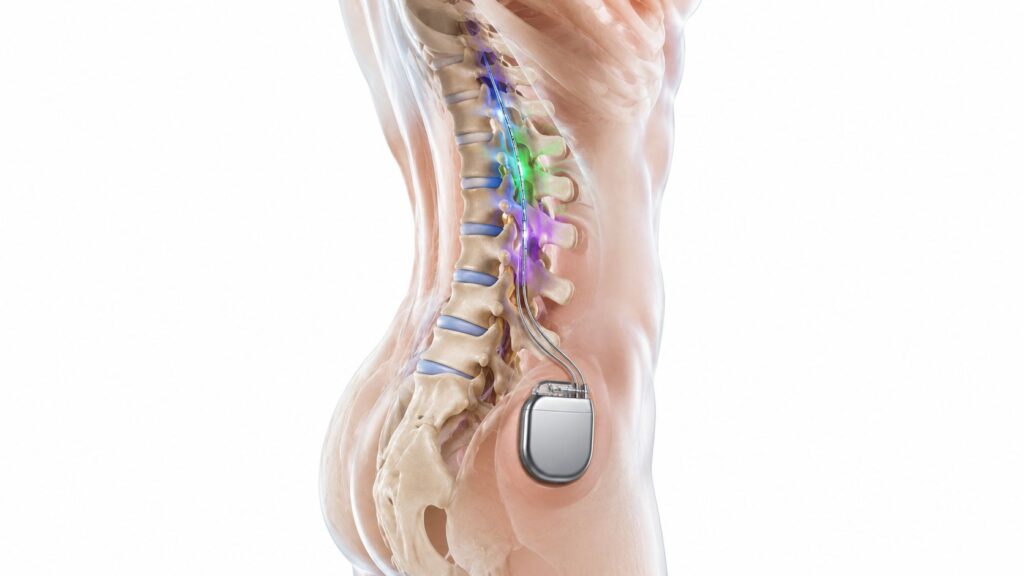
Spinal cord stimulation is a form of neuromodulation. It delivers programmable electrical impulses and adjusts frequency, amplitude, and pulse width to alter pathologic pain signaling rather than suppressing symptoms systemically neuromodulation review. The value here is adjustability. If the pain pattern changes, the device settings can often be tuned instead of starting over from scratch.
Less invasive options still have a role
Some patients hear “advanced” and assume it only means implants or major procedures. That is not accurate. Minimally invasive decompression procedures, kyphoplasty for vertebral fractures, and selected regenerative treatments can fit into a broader plan when imaging and symptoms line up. The right choice depends on anatomy, prior treatment response, and whether the main goal is pain relief, stability, or making another therapy more effective.
The best procedure is the one that matches the pain generator, not the one with the most dramatic name.
Advanced care also includes the possibility of treating headache disorders with targeted procedures, including botulinum toxin for chronic migraine in appropriate cases. That is one reason a clinic's toolkit matters. A patient with back pain, a post-surgical nerve issue, and neck-related headache does not need three separate philosophies, they need one coordinated plan.
Comparing Treatment Options for Different Pain Conditions
Pain conditions do not respond to the same intervention. A patient with facet-driven low back pain, a patient with neuropathic leg pain, and a patient recovering from surgery may all need advanced care, yet the first choice is often different in each case. The table below gives a practical comparison, not a rigid rulebook, because diagnosis, imaging, and prior treatment response still guide the final decision.
| Pain Condition | First-Line Interventions | Advanced Options | Typical Timeline |
|---|---|---|---|
| Chronic back pain | Activity modification, non-opioid medication, diagnostic blocks | Radiofrequency ablation, image-guided injections, minimally invasive decompression | Relief can be immediate or staged, depending on the procedure |
| Neuropathic pain | Non-opioid medication, targeted evaluation, nerve-focused blocks | Spinal cord stimulation, peripheral nerve procedures, the right injection for nerve pain | Some options start with a trial before any permanent step |
| Post-surgical pain | Diagnostic review, non-opioid medication, rehabilitation | Neuromodulation, selective injections, coordinated rehabilitation | Timing depends on healing status and the pain pattern |
| Chronic migraine | Preventive evaluation, trigger review, conservative therapies | Botox in selected patients, multidisciplinary headache care | Usually repeated on a schedule rather than one-time treatment |
The broad pattern is straightforward. In a pain condition that appears inflammatory or mechanical, an image-guided injection may come before ablation. In a pain condition that behaves like nerve dysfunction, neuromodulation becomes more relevant. In a condition where structure and function are both impaired, treatment usually combines a procedure with rehab rather than replacing rehab entirely.
How to think about selection
The useful question is not what the strongest procedure is. It is what the narrowest treatment is that can move this pain in the right direction. That approach helps avoid over-treating a condition that may settle with a targeted block, and it also keeps a patient from being under-treated when the pain pattern points to a longer-term solution.
For patients asking whether a nerve-focused treatment fits their situation, the decision often comes down to how clearly the pain follows a nerve pattern, how long it has been present, and whether earlier treatment changed function. If the answer to those questions is messy, a good specialist usually starts with diagnostics rather than jumping straight to a device or repeat injections. A focused review can also clarify whether a patient is better served by a nerve block, a repeat diagnostic injection, or a different pathway entirely, which is why many clinics pair interventional planning with rehabilitation and behavioral health input instead of treating pain in isolation.
How Advanced Procedures Fit Into Coordinated Care
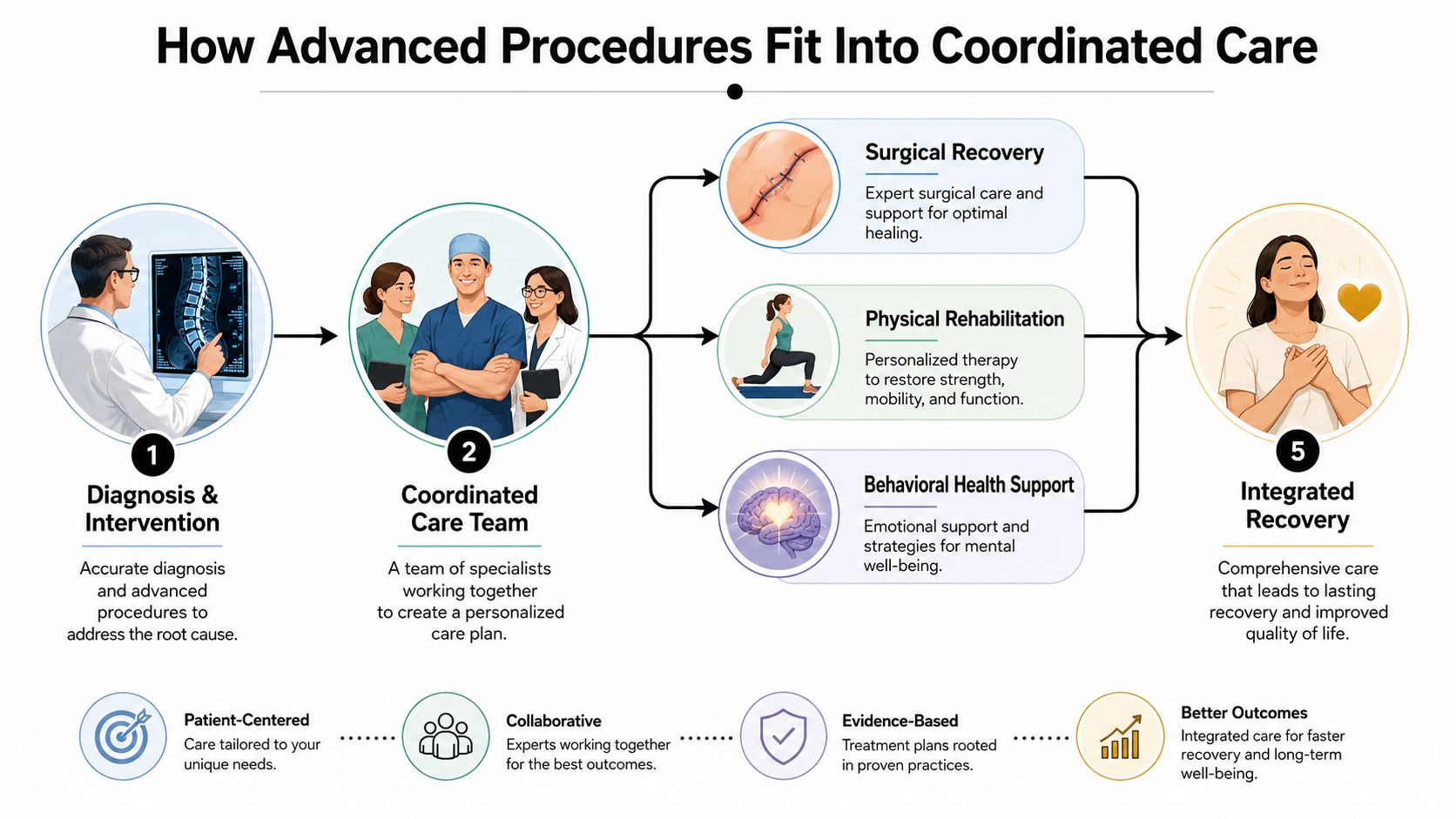
Pain procedures work best when they're part of a team process. The U.S. HHS pain best-practices report identifies gaps in access to evidence-based psychological and behavioral health care, and it also points to telehealth as a way to extend multimodal treatment into underserved areas HHS pain best practices report. That matters because pain doesn't stay in one lane. It affects sleep, mood, movement, work, and the ability to keep up with rehab.
Why procedures alone usually aren't enough
A nerve block can reduce pain enough to make walking exercises possible again. A stimulation trial can lower pain enough for a patient to participate in strengthening work that would have felt impossible a month earlier. That positive feedback loop is the core value of interventional care: pain falls far enough that recovery work can begin.
The literature supports that model. StatPearls describes chronic pain treatment as starting with non-opioid analgesics, combining pharmacologic and nonpharmacologic therapies, and considering interventional procedures for refractory pain or when reducing opioid use is a goal StatPearls chronic pain treatment. It also emphasizes monitoring for severe depression and suicidal ideation because chronic pain carries serious mental-health risk. That's not a side note, it's part of safe pain care.
What coordination looks like in real life
Surgeons, rehab clinicians, and pain specialists often need to share the same plan. Before surgery, a pain specialist may help optimize symptoms so the patient enters the operation in better shape. After surgery, the same specialist may treat residual pain, reduce inflammation, or help sort out whether the pain is expected healing or something that needs a different intervention.
Behavioral health support belongs in the same conversation. Patients with depression, anxiety, or PTSD don't need their pain treated as “all in the head.” They need help managing the very real ways chronic pain changes attention, sleep, muscle tension, and recovery tolerance. Telehealth can help here when transportation, weather, or mobility make in-person follow-up harder.
Practical rule: if pain treatment improves symptoms but the patient still can't function, the plan is incomplete.
That's where coordinated care wins. Procedures open a window. Rehab, surgery follow-up, and behavioral health keep that window from closing again.
Candidacy Criteria and What to Expect From Treatment
Patients do best when candidacy is matched to the procedure, not to desperation. A person who has a clearly localized pain source, has tried conservative care, and has realistic goals is usually a better candidate than someone hoping one treatment will solve every layer of a complex pain history. Imaging, diagnostic blocks, and functional assessment help separate those situations.
What specialists look for before recommending a procedure
A strong evaluation usually includes a review of prior treatment response, current medications, imaging when needed, and the way pain affects standing, walking, sleep, and work. If the pain pattern suggests nerve involvement, a diagnostic block may help confirm the target. If the pain is more diffuse or mixed, the specialist may need to slow down and clarify the dominant generator before recommending anything invasive.
Some treatments have a built-in test phase. Spinal cord stimulation often involves a trial period before permanent implantation, which lets the patient and clinician see whether the therapy meaningfully changes pain and function before a long-term commitment. That trial model is one reason neuromodulation can be so useful in difficult pain cases, it gives you real-world data before finalizing the plan neuromodulation review.
What the day of treatment and recovery tend to look like
Procedure length, anesthesia needs, and recovery time vary by treatment, but many interventional pain procedures are outpatient. Some are done with local anesthetic and light sedation, while others require a more involved setup. Afterward, patients usually get specific activity instructions, especially if the treatment involves a needle target, heat-based lesioning, or an implanted device.
Results don't always appear on the same schedule. An injection may provide quick relief if inflammation was the main issue. An ablation may take a little time to settle in as the tissue response develops. A device trial can teach the most important lesson of all, whether the therapy changes pain enough to justify the next step.
If a procedure helps pain but not function, the follow-up conversation should focus on why. Pain scores matter, but they're only one part of the result.
Patients should bring a plain summary of what they've tried, what helped, what caused side effects, and what still limits daily life. That makes the first consultation more productive and keeps the plan focused on the few treatments that are most likely to matter.
Accessing Advanced Pain Management in the Chicago Suburbs
In Illinois, patients in Oak Lawn, Palos Hills, Palos Heights, Worth, Bridgeview, Hickory Hills, Alsip, Burbank, Evergreen Park, and Orland Park can access care without having to think of pain treatment as something only downtown hospitals provide. Midwest Pain & Wellness serves the Chicago Ridge area with a clinic model built around interventional procedures, coordination, and opioid-sparing treatment. The practice describes an approach that includes image-guided injections, radiofrequency ablation, spinal cord and peripheral nerve stimulation, minimally invasive lumbar decompression, kyphoplasty, regenerative options, and headache procedures.
That kind of setup matters for working adults, post-injury patients, and people whose pain makes long trips difficult. The clinic's model also supports workers' compensation and personal injury cases, which is important when the pain problem began in an accident, at work, or after surgery. For many patients, the right next step is not guessing whether they “qualify,” it's getting evaluated by a pain specialist who can review the history, imaging, and function together.
What local patients usually ask for
Many people arrive wanting to know whether they need a referral, whether the pain source can be identified, and whether treatment can be coordinated with another physician. Those are the right questions. A pain clinic should be able to explain whether a diagnostic block, an image-guided intervention, or a longer-term procedure makes sense, and it should be able to communicate with the referring provider when needed.
Midwest Pain & Wellness's interventional pain management clinic is one option for patients who want that type of coordinated, procedure-based care in the south and southwest suburban corridor. The point isn't to chase every available intervention. It's to choose the few that fit the condition, the timeline, and the patient's real life.
If you live in Illinois and your pain has outlasted standard treatment, schedule a consultation with a pain specialist who treats procedures, rehab coordination, and follow-up as one plan. Bring your imaging, medication list, and a short history of what's worked and what hasn't so the first visit can move quickly toward the right option.
Common Questions About Advanced Pain Management
How long do results last? It depends on the procedure and the pain source. Some injections calm inflammation for a limited period, while ablation and neuromodulation are chosen when longer-term control is the goal. The measure is whether pain relief lasts long enough to improve sleep, movement, and rehab participation.
What if a procedure doesn't work? Then the plan should change, not stall. A useful treatment pathway usually has checkpoints, so a poor response to one intervention informs the next decision instead of ending care.
Can I keep other treatments going? Yes, and often you should. Advanced procedures are usually meant to sit inside a larger plan that may include medication, rehabilitation, and behavioral health support.
Are these options better than long-term opioids? They're different, and often safer for the right candidate because they aim at the pain generator or the pain pathway instead of relying on ongoing systemic suppression. Chronic pain also carries mental-health risk, so the safest plan is the one that treats pain without ignoring function and mood StatPearls chronic pain treatment.
Will insurance cover it? Coverage depends on the procedure, the diagnosis, and the plan details. Before committing, verify benefits and ask whether preauthorization is needed.
If chronic pain has been shrinking your daily life, Midwest Pain & Wellness can evaluate whether an interventional, opioid-sparing plan fits your condition. The clinic coordinates advanced pain management with referral partners, rehabilitation, and follow-up care for patients across the Illinois suburbs around Chicago Ridge. Visit Midwest Pain & Wellness to request an appointment and start building a treatment plan that matches your pain, your goals, and your function.