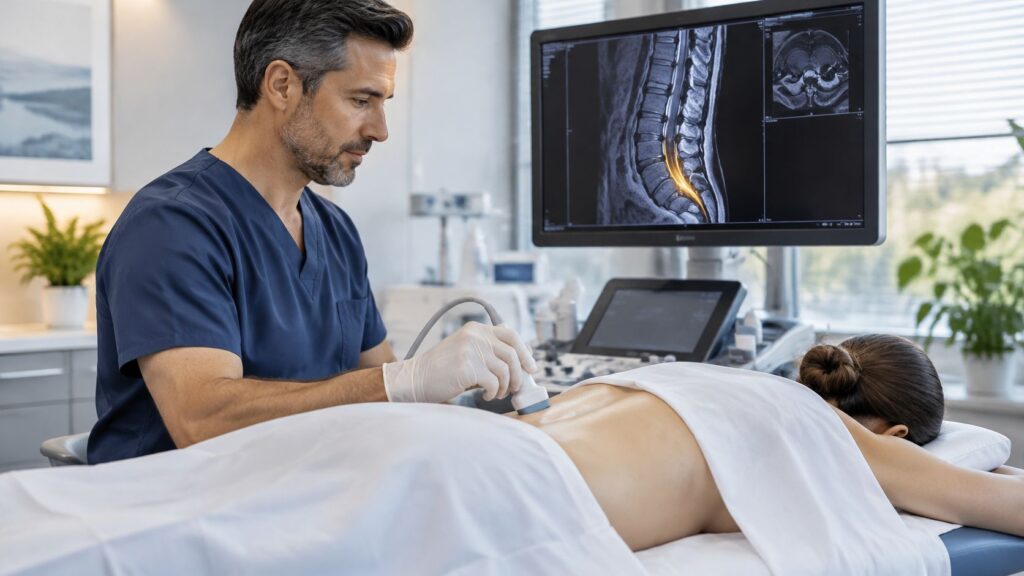
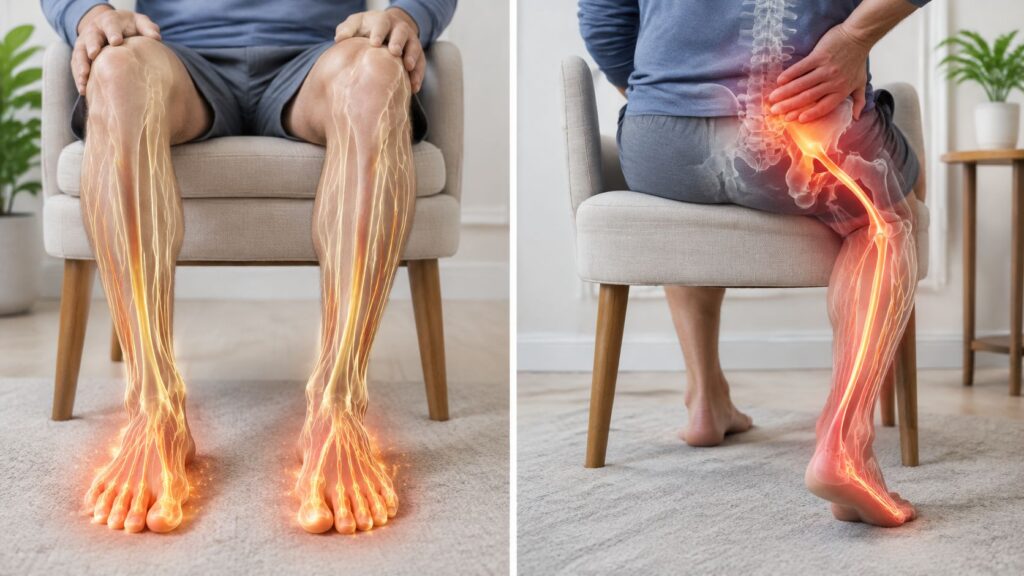
Lower back pain usually doesn't start as a dramatic event. For many people in Chicago Ridge and nearby communities, it starts with a small concession. You sit through the drive to Oak Lawn with one hand bracing your back. You avoid lifting groceries in Palos Heights. You wake up stiff in Worth and tell yourself it will pass. Then weeks turn into months, and the pain starts deciding how you work, sleep, exercise, and move through the day.
That cycle is common, but it isn't something you have to accept. Low back pain affected approximately 628.8 million people worldwide in 2021 and remains the leading cause of years lived with disability, according to Frontiers in Public Health. The scale matters because it reminds patients of something important. If your back pain has lingered, you're not dealing with a rare mystery. You're dealing with a common medical problem that requires a precise, structured plan.
Good lumbar pain management isn't one treatment. It's a sequence. First, identify the actual pain generator. Then match the least invasive treatment that fits the diagnosis. Escalate only when the next step makes sense.
Understanding Your Lumbar Pain Journey
Many patients arrive frustrated because they've already tried "back pain treatment" in the broadest sense. They may have rested, stretched, taken medication, changed mattresses, or gone from one office to another without anyone clearly explaining what pain source is being treated. That frustration is valid. Generic advice often fails because lumbar pain isn't one condition.
A patient in Hickory Hills might have pain from an irritated nerve root. Someone in Burbank may have arthritic facet joints. Another person in Evergreen Park may have spinal stenosis that flares with standing and walking. These problems can all feel like "low back pain," but they don't respond to the same plan.
What a real treatment journey looks like
A practical lumbar pain management pathway usually moves through a few stages:
- Recognition of the pattern. Pain has lasted long enough, recurs often enough, or limits function enough that self-care isn't solving it.
- Targeted evaluation. The history, exam, and imaging review are used to narrow down where the pain is coming from.
- Conservative care first. Non-opioid measures are used when they fit the diagnosis and symptom pattern.
- Interventional treatment when appropriate. Injections, nerve procedures, decompression, or neuromodulation come into play when simpler measures aren't enough.
Living with back pain is exhausting, but the answer usually isn't "do more of everything." It's "do the right thing for the right diagnosis."
That shift matters for patients in Oak Lawn, Palos Hills, Alsip, Bridgeview, and Orland Park who are tired of repeating treatments that never had a clear target to begin with. Relief becomes much more realistic when the plan follows the source of pain instead of chasing symptoms.
Why an Accurate Diagnosis is Your First Step to Relief
There is a common expectation that an MRI or X-ray will immediately explain one's pain. In practice, diagnosis is rarely straightforward. For 85 to 95% of patients who present to primary care with low back pain, a specific pathoanatomical origin can't be identified right away, which is why a broader biopsychosocial assessment matters, as outlined in Neurospine.
What a specialist workup actually includes
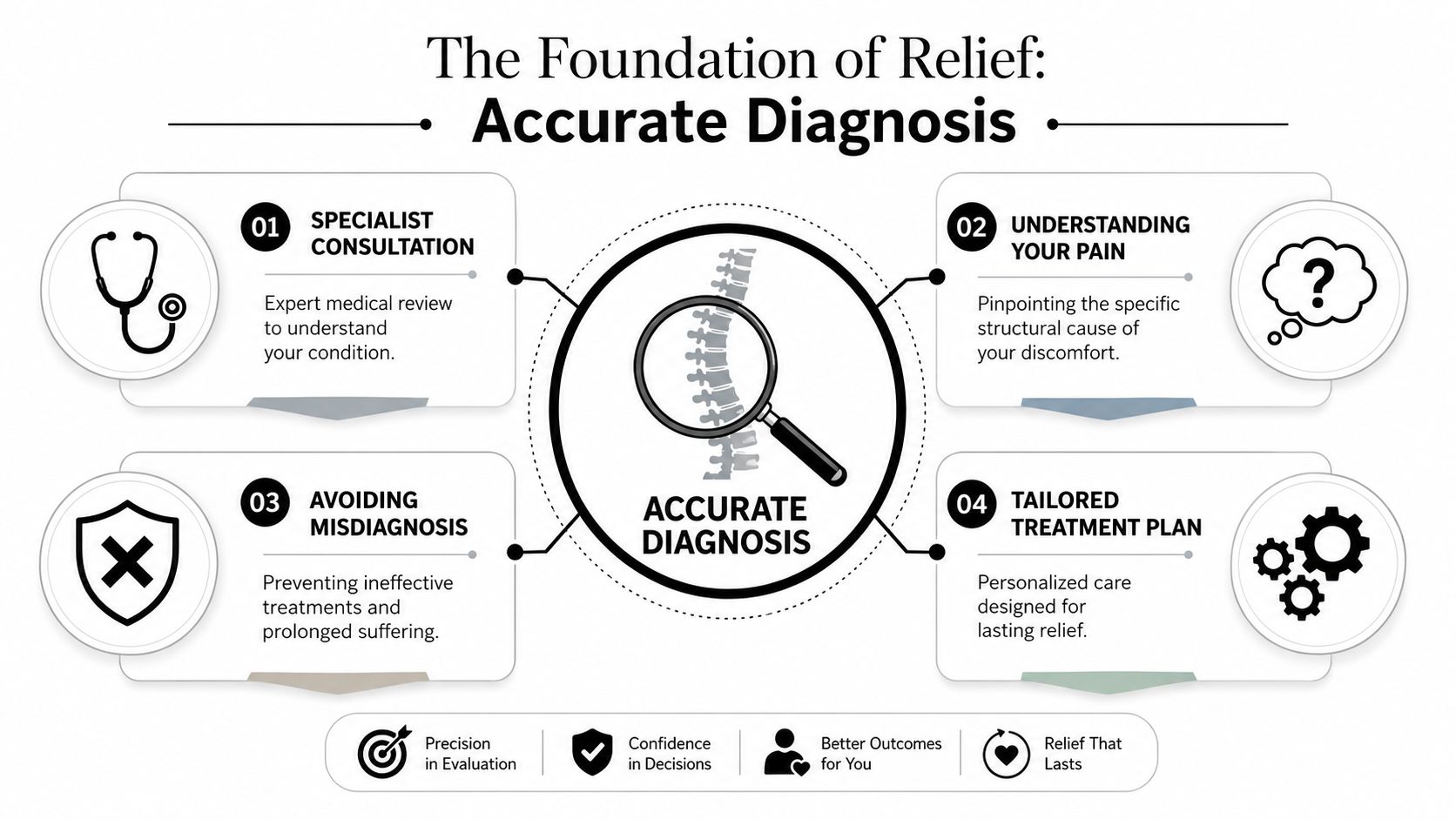
A focused pain evaluation is more than asking where it hurts. It usually includes:
-
History that looks for patterns
Pain with sitting, pain with walking, pain that radiates below the knee, morning stiffness, prior surgery, failed injections, work demands, sleep disruption, and medication history all change the differential. -
A structured physical exam
Range of motion, provocative maneuvers, neurologic testing, gait, and tenderness patterns help separate likely disc, joint, nerve, sacroiliac, or stenotic causes. -
Imaging review in context
Imaging helps, but only when it matches the symptoms and exam. Many adults have structural findings that don't fully explain their pain. -
A plan to confirm the pain source
Sometimes the next step isn't another scan. It's a diagnostic procedure designed to test whether a specific structure is causing the pain.
For a deeper look at that process, review this guide on how to diagnose back pain.
Why this changes treatment outcomes
Patients often get stuck when treatment starts before diagnosis gets specific. If the pain is coming from a facet joint, a general exercise handout won't answer the full problem. If the pain is primarily nerve-related, treating it like a muscle strain can waste months.
A specialist consultation helps answer practical questions such as:
- Is this mechanical or nerve-driven
- Does the pain match the imaging
- Are there red flags that change urgency
- Would a diagnostic block clarify the source
Clinical reality: The fastest route to relief isn't always the fastest appointment. It's the most accurate diagnosis.
That is why strong lumbar pain management begins with precision, not guesswork.
Building a Foundation with Conservative Care
Interventional pain clinics don't replace foundational care. They organize it. A dedicated pain and wellness clinic isn't a physical therapy office, but it should know when therapy, activity modification, and non-opioid medication belong at the front of the plan.
Early physical therapy matters. According to the American Academy of Family Physicians, engaging in physical therapy during the early phases of low back pain is clinically associated with a reduced need for opioids, advanced imaging, and surgery in the future, as described by AAFP guidance on chronic low back pain. That doesn't mean every patient needs the same therapy program. It means movement-based care often works best when it's targeted early instead of delayed until pain becomes entrenched.
What conservative care should accomplish
Good first-line care has clear goals. It should help you:
- Calm an acute flare so pain becomes manageable enough to move again
- Restore mechanics through guided strengthening and mobility work
- Reduce aggravators such as poor lifting habits, prolonged sitting, or repeated extension or flexion
- Avoid opioid-first treatment unless there's a very specific reason
Simple supports can help between visits. For people who spend long hours driving or deskbound, ergonomic adjustments may improve relief from sitting discomfort while the larger treatment plan addresses the true pain source.
When conservative care has done enough, and when it hasn't
The goal isn't to stay in conservative care forever. The goal is to use it intelligently.
A patient is often still on the right track when function is gradually improving, flares are less intense, and activity tolerance is expanding. Escalation makes more sense when:
- Pain keeps returning despite reasonable adherence to the plan
- Daily function remains limited at work, at home, or during sleep
- Nerve symptoms persist such as radiating pain, numbness, or leg heaviness
- The diagnosis points to a structure that often responds better to targeted intervention than oral medication alone
This overview of how to help back pain reflects the same principle. Start with measures that support healing, then move to procedures when the clinical picture justifies it.
Targeted Relief with Image-Guided Injections
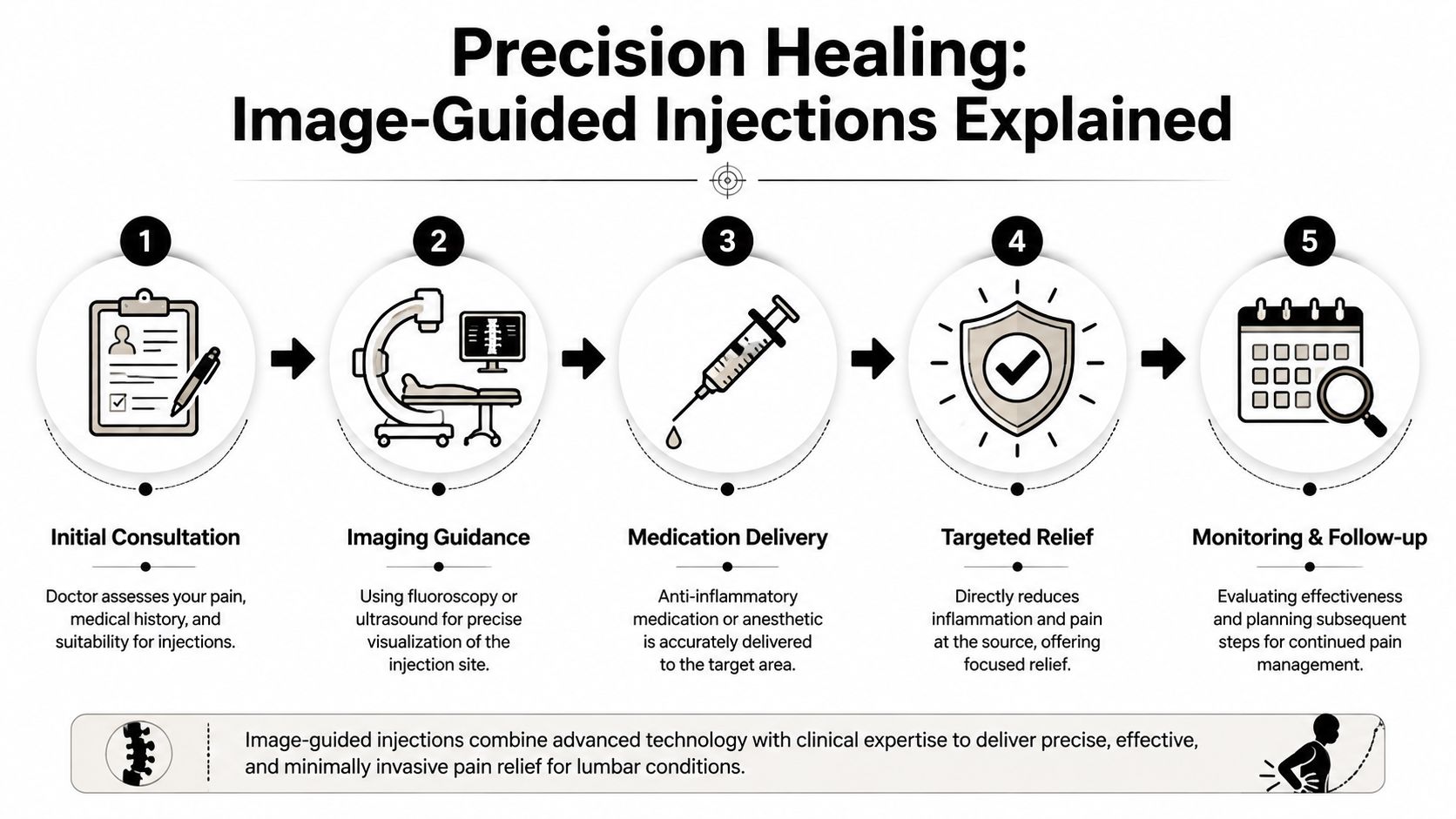
Oral medication travels through the whole body. An image-guided injection is different. It allows the physician to place medication at or near the suspected pain generator with far more precision. In lumbar pain management, that precision is the point.
Think of it this way. If your home's wiring is failing in one room, you don't rebuild the whole house first. You test the circuit that appears responsible. Injections often work the same way. Some are primarily therapeutic, meant to calm inflammation and reduce pain. Others are diagnostic, meant to prove whether a structure is causing symptoms.
The main injection categories
Epidural steroid injections
These are commonly used when a disc problem or spinal narrowing irritates a nerve root and causes back pain with leg pain. Clinical guidance cited by OrthoIllinois notes that epidural steroid injections can reduce pain by 30 to 50% in up to 70% of patients within the first month after injection. They don't fix every structural problem, but they can reduce inflammation enough to improve walking, sleeping, and participation in rehab.
Facet joint injections and medial branch blocks
These are more useful when the pain pattern suggests arthritic facet joints. Pain is often worse with extension, twisting, or getting up from a chair. The key distinction is purpose. A facet joint injection may be aimed at relief. A medial branch block is often used to test whether the small nerves serving the facet joint are the culprit.
For facet-origin pain, a diagnostic block is considered positive only if it produces greater than 70% pain relief, based on the benchmark described in this clinical review of facet diagnosis and treatment. That threshold matters because it helps determine whether the patient is a reasonable candidate for radiofrequency ablation.
Why imaging guidance matters
These procedures shouldn't be done by feel alone. Real-time imaging improves accuracy, supports safety, and helps ensure the medication reaches the intended target.
A useful injection should answer a question. If it doesn't help diagnostically or therapeutically, it may not have been the right injection for that pain pattern.
Patients in Palos Hills, Worth, Bridgeview, and surrounding Illinois communities often worry that an injection means they're on a path to surgery. It doesn't. In many cases, injections are the middle ground between basic conservative care and more durable procedures.
Advanced Solutions for Chronic Lumbar Pain
Some patients improve with therapy, medication adjustment, and injections. Others get partial relief, then plateau. That doesn't mean they're out of options. It means the pain mechanism may require a more durable strategy.
At that point, advanced lumbar pain management becomes less about temporary calming and more about matching the procedure to the structure or nerve pathway driving symptoms. At this stage, a dedicated interventional approach matters.
When radiofrequency ablation makes sense
If facet-mediated pain has been confirmed with the appropriate diagnostic process, radiofrequency ablation can provide longer relief than a temporary block. The procedure targets the medial branch nerves that carry pain signals from arthritic facet joints.
Data summarized by CGH Medical Center reports that 60 to 80% of patients experience at least 50% pain reduction lasting 6 to 12 months after lumbar medial branch RFA. That's why the diagnostic phase matters so much. RFA works best when the pain generator has been properly identified first.
When decompression is the better fit
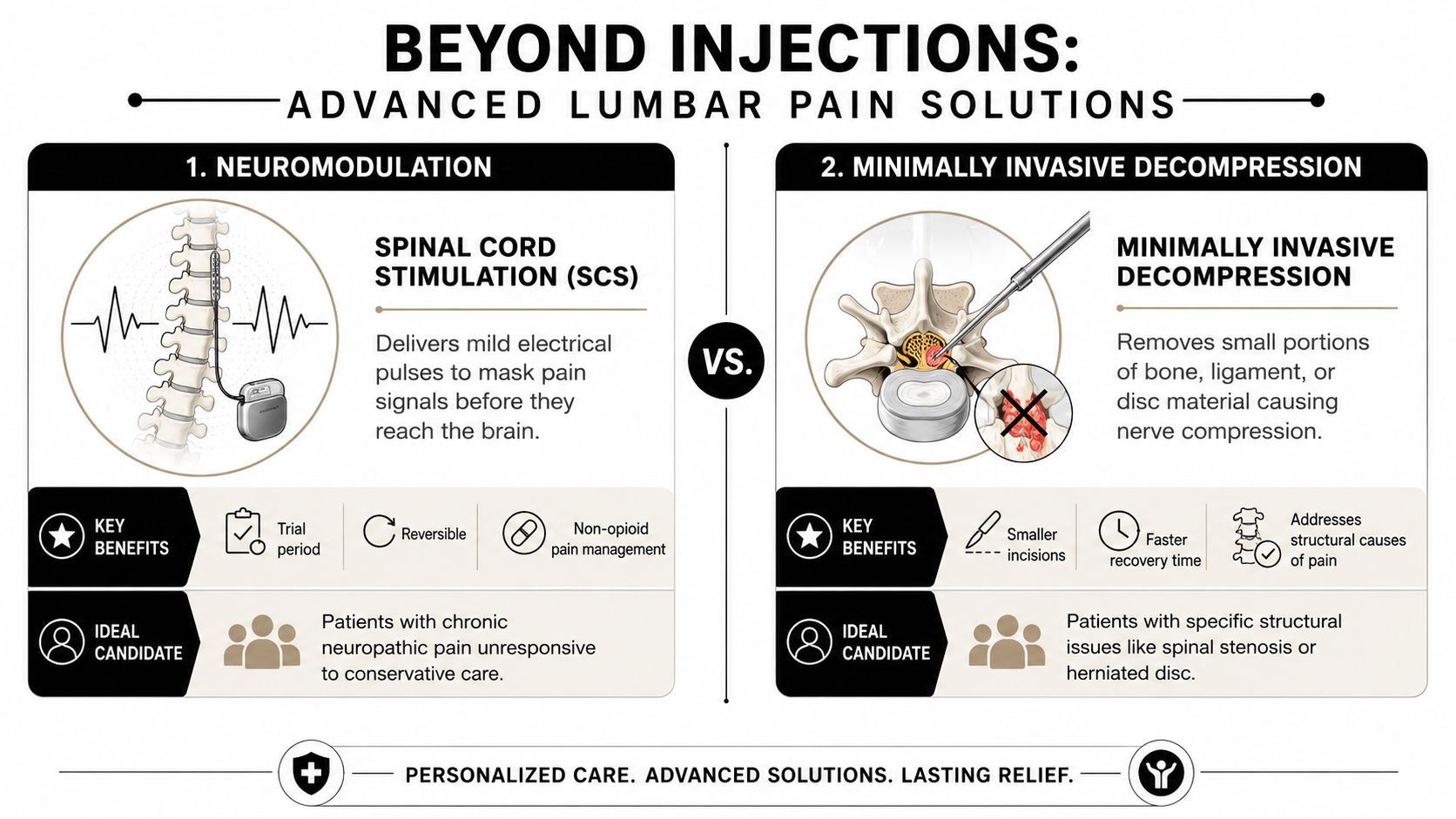
Not all chronic back pain comes from joints. Some patients have lumbar spinal stenosis, where narrowing in the spine contributes to back and leg symptoms, especially with standing or walking. For the right candidate, minimally invasive lumbar decompression procedures such as MILD or Vertiflex may reduce pressure without committing the patient to a major open surgery pathway.
These options are usually considered when the symptom pattern is strongly positional and the anatomy supports decompression. They aren't used as catch-all solutions for every chronic back problem. They work best when stenosis is a major driver.
When nerve modulation helps more than structural treatment
If pain is broad, neuropathic, or persistent after prior spine treatment, spinal cord stimulation may be appropriate. Rather than removing tissue or burning a joint nerve, this approach modulates pain signaling before it is fully perceived.
Patients often like one practical feature. A trial period can help determine whether meaningful pain control is possible before moving forward with a long-term implant. That's especially useful for people with chronic nerve pain who want a reversible, opioid-sparing option.
The overlooked diagnosis of vertebrogenic pain
One of the most commonly missed pain sources is vertebrogenic pain, which arises from inside the vertebrae rather than from a disc herniation or a pinched nerve. This pattern can be missed if everyone assumes the pain must be muscular, disc-related, or facet-related.
For patients with chronic low back pain from worn vertebral endplates, the Intracept procedure is the only FDA-approved treatment for vertebrogenic pain, and two-thirds of patients achieve greater than 50% pain relief, according to UT Southwestern's review of the Intracept procedure. This is an important option for patients who have failed conservative care and injections without a lasting answer.
A clinic such as Midwest Pain & Wellness may evaluate these pathways as part of a broader non-opioid, interventional treatment plan when the diagnosis supports them.
Exploring Regenerative Medicine for Back Pain
Regenerative medicine draws a lot of attention because it speaks to something patients want. Not just pain reduction, but tissue support and healing. The problem is that "regenerative" gets used too loosely. Responsible care requires a more measured discussion.
What these treatments are trying to do
Procedures such as platelet-rich plasma, often called PRP, use components derived from a patient's own blood and place them into a targeted area with the goal of supporting the body's repair response. In back pain care, the question isn't whether the idea is interesting. The question is where it fits, for whom, and with what expectations.
Some patients ask about these options after they've tried standard conservative treatment but aren't ready for more invasive procedures. Others are hoping to avoid medication escalation. That's reasonable, but the right next step still depends on the diagnosis. A regenerative procedure won't replace decompression when stenosis is the main issue, and it won't substitute for nerve modulation when the primary problem is persistent neuropathic pain.
A balanced way to think about regenerative care
A practical framework looks like this:
- Use it selectively when the pain source and exam make biologic support conceptually relevant.
- Keep expectations realistic because evidence varies by condition and target tissue.
- Avoid treating it like a shortcut around proper diagnosis and established care pathways.
Patients interested in a broader wellness lens sometimes also explore discussions around recovery, resilience, and strategies for peak anti-aging performance, but those conversations should complement, not replace, a spine-specific treatment plan.
For a more direct overview of biologic options in pain care, this page on regenerative medicine and tissue engineering is a useful starting point.
Newer treatments deserve careful optimism. The right question isn't "Is it advanced?" It's "Is it appropriate for my diagnosis?"
Your Path to Lumbar Pain Relief in Illinois
The best lumbar pain management plans are rarely dramatic. They are methodical. Diagnose carefully. Start conservatively when that makes sense. Use image-guided injections to both treat and clarify the source. Escalate to RFA, decompression, spinal cord stimulation, or vertebrogenic treatment only when the history, exam, imaging, and prior response all line up.
That stepwise approach matters because lower back pain isn't one problem. It can come from joints, nerves, discs, endplates, or narrowing around spinal structures. Each source calls for a different response. Patients do better when the treatment matches the mechanism.
Whether you are in Orland Park, Burbank, or Alsip, your path to relief starts here. The same is true for patients in Oak Lawn, Palos Hills, Palos Heights, Worth, Bridgeview, Hickory Hills, and Evergreen Park who want a clear plan instead of repeated short-term fixes.
A few habits support long-term spinal health after treatment:
- Keep moving consistently instead of waiting for long pain-free stretches to restart activity
- Protect your mechanics during lifting, carrying, and repetitive bending
- Address flares early before they become another months-long setback
If lower back pain is limiting your work, sleep, or independence, the next step isn't guessing harder. It's getting evaluated and building a treatment roadmap that fits your diagnosis.
Frequently Asked Questions About Lumbar Pain Management
Do I need a physician referral to see a pain specialist
That depends on your insurance plan. Some plans allow direct specialist scheduling, while others require a referral from primary care or another physician. If you're unsure, call your insurer and ask whether pain management is a specialty that requires referral authorization. The clinic can also help clarify what is needed before your first visit.
Will insurance cover procedures like injections, RFA, or spinal cord stimulation
Coverage varies by carrier and by procedure. In general, insurers often want documentation showing that the diagnosis is clear, conservative care has been tried when appropriate, and the planned intervention matches accepted clinical indications. More advanced treatments may also require prior authorization. The practical takeaway is simple. Coverage questions are common, and they are usually handled through documentation rather than guesswork.
What should I expect after an injection
Most patients go home the same day. The first day or two can be variable. Some people feel early relief from local anesthetic, then a return of symptoms before the anti-inflammatory effect develops. Others notice gradual improvement. Your physician will usually ask you to track the level of relief, how long it lasted, and whether specific movements improved. That information helps guide the next step.
How long is recovery after minimally invasive lumbar procedures
Recovery depends on the procedure and the reason it was done. Many minimally invasive interventions have a shorter recovery period than open surgery, but "minimally invasive" doesn't mean "no recovery." You may still need activity modification, wound care instructions, and follow-up visits. For decompression-type procedures such as MILD, patients are often focused on when walking tolerance, standing comfort, or leg symptoms begin to improve. Those expectations should be reviewed individually before the procedure.
If I've already tried physical therapy or injections, is there still a point in another evaluation
Yes, especially if no one clearly identified the pain generator. Failed treatment doesn't always mean your condition is untreatable. It may mean the prior treatment was aimed at the wrong structure, timed poorly, or stopped before the diagnosis became clear.
Are opioids the main answer for chronic low back pain
Usually, no. A modern pain practice should focus on opioid-sparing care whenever possible. The wider literature on low back pain has shown a gap between evidence-based guidelines and real-world prescribing, and current best practice places far more emphasis on targeted non-opioid care, movement-based treatment, image-guided interventions, and diagnosis-specific procedures than on making painkillers the default.
When should I stop waiting and get evaluated
Schedule an evaluation when pain keeps returning, limits work or sleep, radiates into the leg, causes numbness or weakness, or hasn't improved with reasonable self-care. It also makes sense to get assessed sooner if you've already been cycling through temporary fixes without a clear explanation.
If lower back pain is taking over your routine in Chicago Ridge, Oak Lawn, Palos Hills, Palos Heights, Worth, Bridgeview, Hickory Hills, Alsip, Burbank, Evergreen Park, or Orland Park, schedule a consultation with Midwest Pain & Wellness. A focused evaluation can clarify the source of pain and map out a practical, opioid-sparing path toward better movement and function.