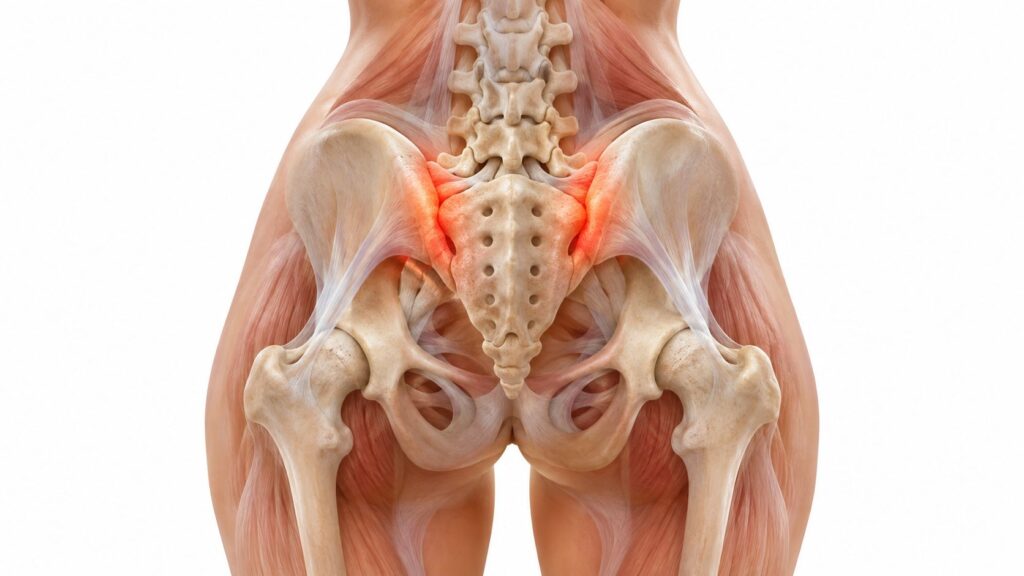
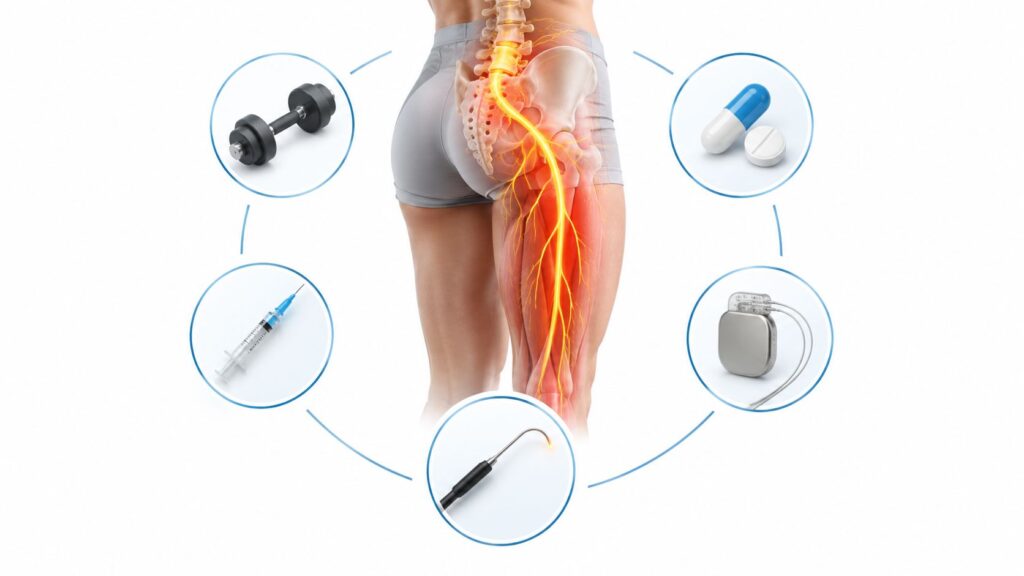
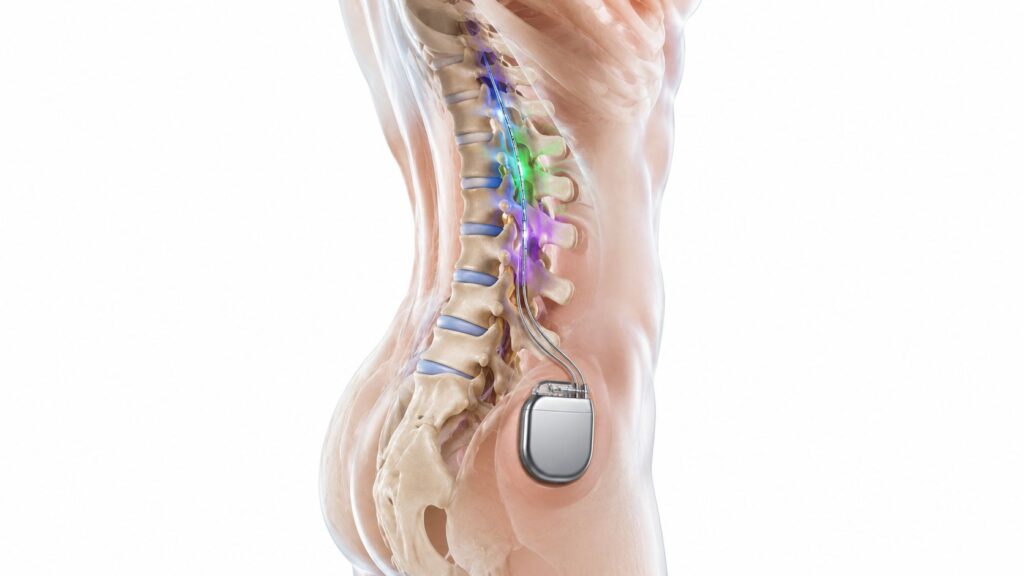
A pain management clinic is a multidisciplinary, opioid-sparing center that identifies pain sources and coordinates interventional, rehabilitative, and behavioral care to restore function. It isn't only a place for injections or opioid prescriptions.
You may be looking for help after weeks or months of back pain, neck pain, joint pain, or burning nerve symptoms have started to change how you sleep, work, drive, or spend time with family. Primary care treatment may have helped temporarily, but the pain keeps returning, or the next step isn't clear.
A modern clinic brings the pieces together. A specialist evaluates the likely pain generator, reviews imaging and prior treatment, considers procedures when appropriate, and connects the plan with movement-based rehabilitation and other support. The aim is to help you do more safely and consistently, not merely to make a pain score smaller for a short time.
This approach matters because chronic pain affects a substantial share of the population. Estimates place global adult prevalence at about 20%, with some analyses reporting 20% to 30% or 22.9% to 30.3% across multinational surveys. Earlier estimates described chronic pain as affecting at least 10% of the world's population, while WHO-linked survey data reported 37% prevalence in developed countries and 41% in developing countries. Global chronic pain burden estimates help explain why specialized coordination has become important.
For Illinois residents near Chicago Ridge, Palos Heights, Palos Hills, Evergreen Park, and Hickory Hills, understanding the model can make a referral feel less uncertain. The following guide explains what clinics treat, how opioid-sparing care works, what happens during visits, and how to compare local options. If you're also researching broader long-term pain solutions for recovery, use that resource to consider how medical care can fit within a longer recovery plan.
Table of Contents
- Introduction to What a Pain Management Clinic Really Does
- How a Modern Pain Management Clinic Works
- Conditions Commonly Treated at a Pain Management Clinic
- Evidence Based Opioid Sparing Treatments and Procedures
- What to Expect at Your First and Follow Up Visits
- How to Choose a Pain Management Clinic in Illinois
- Taking the Next Step Toward Lasting Relief
Introduction to What a Pain Management Clinic Really Does
Consider someone with lower-back pain that began after an injury. At first, rest and medication seemed reasonable. Later, sitting through a workday became difficult, sleep became fragmented, and a short walk required planning. The person may have tried primary care, home exercises, or an earlier procedure, yet still doesn't know whether the main problem comes from a disc, a narrowed spinal canal, an irritated joint, a nerve, or several factors together.
A pain management clinic starts by investigating that question. The clinician listens to how symptoms began, what worsens them, whether pain travels into an arm or leg, and how the problem affects movement and daily responsibilities. A focused examination and review of records then help determine whether the pain is primarily inflammatory, mechanical, nerve-related, or mixed.
Why clinics use more than medication
The modern model developed partly in response to the limitations of medication-only pain care. In the United States, opioid prescriptions increased by 2 to 3 million per year from 1990 to 1995, and Purdue Pharma received FDA approval for OxyContin in 1995. Later review found that more than 630,000 people died from drug overdoses in the United States between 1999 and 2016, with most deaths involving opioids prescribed for pain. This history of pain care and the opioid crisis helps explain why responsible clinics emphasize alternatives, monitoring, and coordinated treatment.
Opioid-sparing doesn't mean ignoring pain or abruptly stopping medication. It means using procedures, rehabilitation, non-opioid medicines, and functional strategies so medication isn't carrying the entire treatment burden. A plan may focus first on safer movement, sleep, work tolerance, and targeted treatment of a specific pain source.
Midwest Pain & Wellness is a Chicago Ridge example of this interventional pain and wellness model. Its care may include image-guided procedures, stimulation, minimally invasive spine treatment, regenerative options, and coordination with other providers. The important question isn't whether a clinic offers a long list of services. It's whether those services are selected for your diagnosis and connected to a realistic functional goal.
How a Modern Pain Management Clinic Works
A useful analogy is an orchestra. Your pain is the composition, but different clinicians play different instruments. The physician evaluates the medical problem and directs procedures or medication decisions. A physical therapist or rehabilitation professional helps restore movement. Behavioral support can address sleep, fear of movement, stress, and the emotional strain that often accompanies persistent pain. The patient remains the conductor because the plan must fit daily life.
From symptom suppression to coordinated restoration
A medication-only approach may lower symptoms without changing the reason a person can't stand, bend, lift, or sleep. A procedure-only approach can also fall short if the patient never rebuilds strength, confidence, or useful movement afterward. Modern care sequences these elements rather than treating each one as a separate event.
The International Association for the Study of Pain describes pain management centers as integrated, multidisciplinary teams using a shared biopsychosocial model. That model considers the body, the nervous system, mood, sleep, habits, work demands, and social circumstances together. The clinic's job is to identify which factors are driving disability and which interventions can change them.
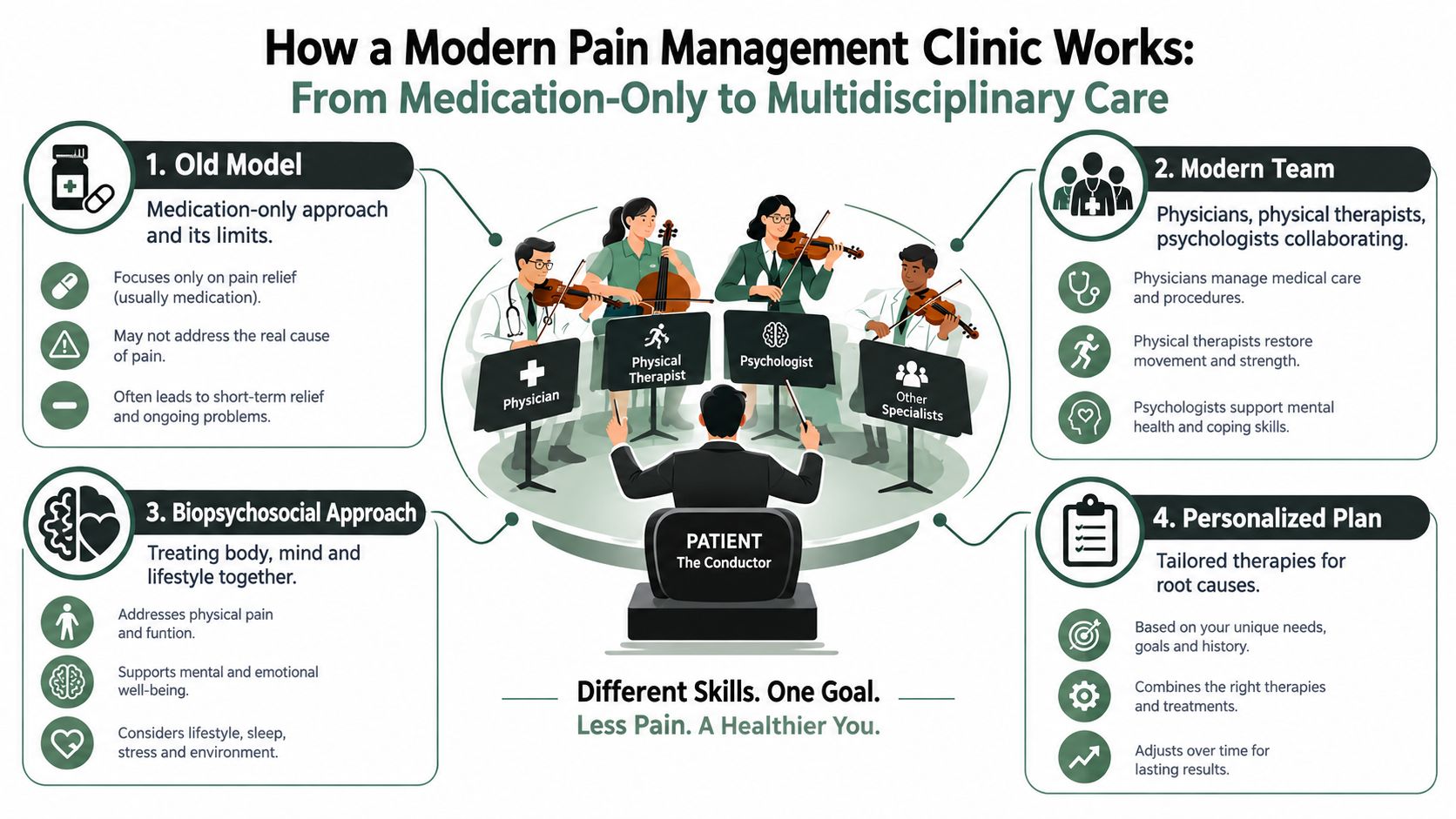
A typical plan follows a practical sequence:
- Assessment: The specialist defines the symptom pattern, examines movement and nerves, and reviews imaging and treatment history.
- Prioritization: The team identifies the most likely pain generators and the activities the patient needs to recover.
- Targeted treatment: A procedure, medication adjustment, rehabilitation referral, or combination is selected for a specific reason.
- Active rebuilding: The patient practices movement, pacing, conditioning, or other strategies while symptoms are being addressed.
- Measurement: Follow-up looks at sleep, walking, work, chores, and participation, not only the number assigned to pain.
A meta-analysis of 65 chronic back-pain studies found multidisciplinary treatment superior to no treatment, waiting-list control, and single-discipline care such as medication-only or physical-therapy-only approaches. Benefits extended beyond pain scores to mood, interference, return to work, and health-care use outcomes. The chronic back-pain meta-analysis supports the idea that coordinated care should be judged by what patients can do, not only by how pain feels in a clinic room.
Practical rule: A procedure should have a job. It might reduce nerve irritation, confirm a suspected pain source, create an opportunity for movement, or support rehabilitation. If nobody can explain its purpose, ask before proceeding.
Conditions Commonly Treated at a Pain Management Clinic
Pain clinics evaluate problems that persist, recur, or interfere with ordinary activity. The referral question isn't just, “Where does it hurt?” It is, “What pattern does the pain follow, what may be causing it, and what has it stopped you from doing?”
Spine and nerve disorders
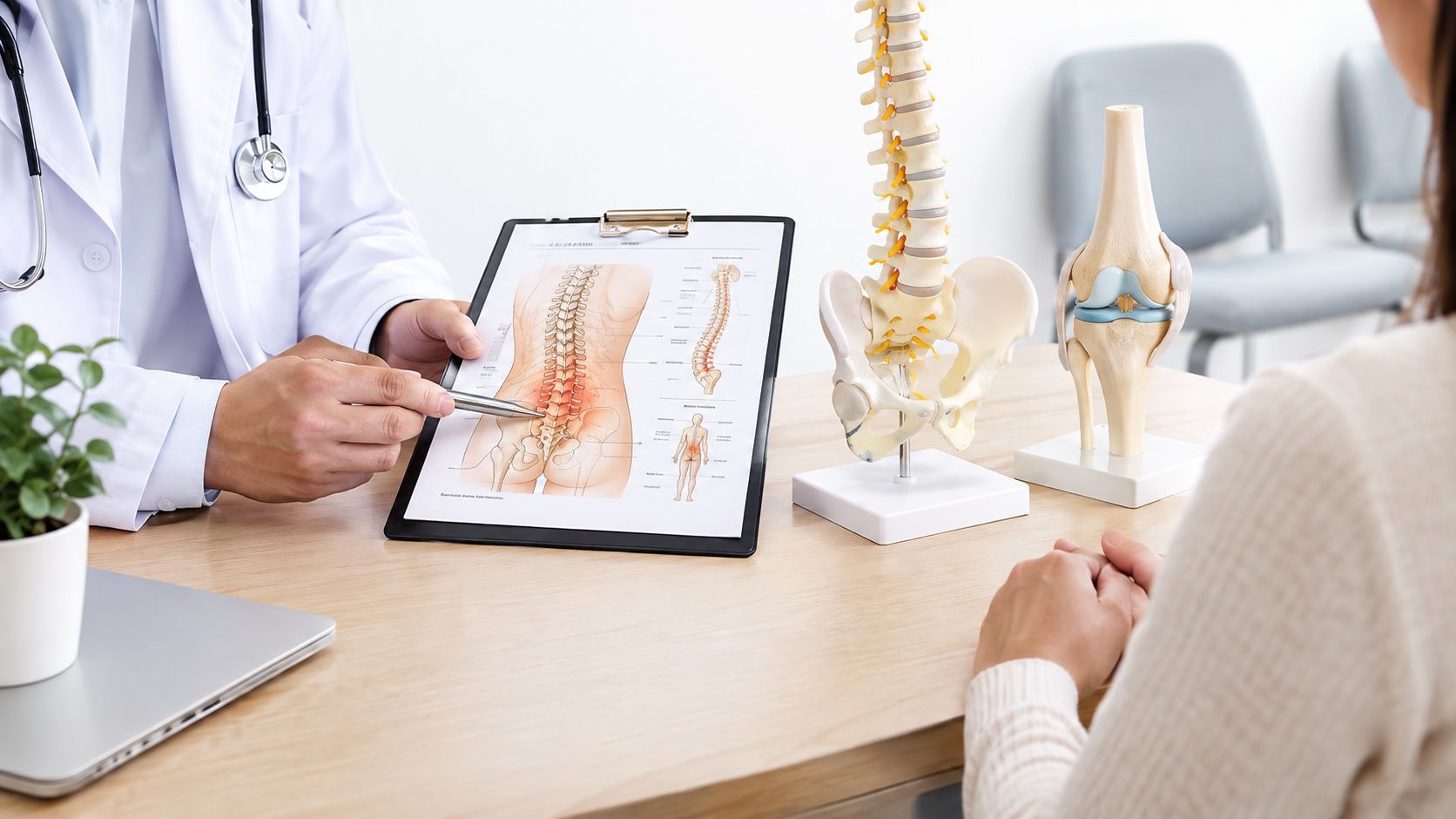
This group includes chronic low-back pain, neck pain, sciatica, herniated discs, spinal stenosis, facet-related pain, and nerve pain that travels into an arm or leg. Burning, tingling, electric sensations, numbness, or pain that follows a narrow path may suggest nerve involvement. Aching with standing, extension, or sitting can point clinicians toward different mechanical sources.
A specialist may classify the pain as nociceptive, meaning it arises from irritated or injured tissues, neuropathic, meaning nerves are involved, or mixed, meaning both patterns occur. That distinction matters because a treatment designed for a joint or ligament won't necessarily address nerve sensitivity.
Joint and musculoskeletal pain
Arthritis, sacroiliac pain, facet joint pain, hip or knee pain, tendon problems, and widespread musculoskeletal symptoms can all require a careful examination. The clinician compares the history with movement findings and imaging rather than assuming every painful area is the primary source.
For example, pain near the buttock may come from the sacroiliac joint, the lumbar spine, the hip, or an irritated nerve. A structured evaluation helps avoid treating the wrong structure just because it appears near the most noticeable symptom.
Injury and post-surgical pain
Pain after an injury or operation can be part of normal healing, but persistent symptoms deserve reassessment. A clinic may review the original diagnosis, surgical records, imaging, medications, and rehabilitation progress. The team also considers whether scar tissue, altered mechanics, nerve irritation, weakness, or a separate condition is maintaining the pain.
Bring a concise timeline to the appointment:
- Beginning: When symptoms started and what happened beforehand.
- Pattern: Where pain travels, what triggers it, and whether it changes during the day.
- Function: Which activities, work tasks, sleep positions, or personal-care tasks are limited.
- Prior care: Medicines, therapy, injections, surgery, imaging, and the response to each.
- Goals: A concrete target, such as walking farther, returning to work duties, or sleeping more consistently.
Headaches and cervical dystonia may also fall within specialty pain care. Chronic migraine requires a pattern-based evaluation, while cervical dystonia involves involuntary neck muscle activity and abnormal positioning. The diagnosis directs the plan, so a referral doesn't automatically mean an injection or surgery. It means the pain pattern deserves specialist assessment.
Evidence Based Opioid Sparing Treatments and Procedures
Opioid-sparing care uses several categories, each with a different purpose. One treatment may calm an irritated nerve, another may help identify the painful structure, and rehabilitation may turn that temporary opening into lasting functional progress. The sequence depends on the diagnosis, examination, medical history, and response to earlier care.
| Treatment Category | Primary Goal | When It Is Considered |
|---|---|---|
| Non-opioid medication strategies | Reduce pain or inflammation while limiting opioid reliance | When medication can support activity, sleep, or rehabilitation |
| Rehabilitation and targeted physical therapy | Improve strength, mobility, endurance, and confidence with movement | When weakness, stiffness, deconditioning, or guarded movement contributes to disability |
| Image-guided injections and blocks | Deliver treatment to a suspected pain source or test its contribution | When examination and imaging suggest a specific nerve, epidural space, facet, sacroiliac joint, or other structure |
| Radiofrequency ablation | Reduce pain signaling from selected nerves | When diagnostic blocks support facet or related nerve-mediated pain |
| Neuromodulation | Change how the nervous system processes persistent pain | When suitable chronic nerve pain continues despite less invasive treatment |
| Minimally invasive spine procedures | Improve function by addressing selected structural narrowing or compression | When anatomy and symptoms fit procedures such as MILD or Vertiflex Superion |
| Regenerative and headache-focused options | Address selected tissue concerns or reduce headache burden | When the diagnosis, evidence, and patient goals make PRP, cell-based therapies, or Botox appropriate |
Midwest Pain & Wellness describes advanced care that may include epidural steroid injections, medial branch blocks, sacroiliac and facet interventions, radiofrequency ablation, peripheral nerve stimulation, and spinal cord stimulation. It also lists MILD, Vertiflex Superion, kyphoplasty, PRP, cell-based therapies, and Botox for chronic migraine and cervical dystonia. These options aren't interchangeable, and availability doesn't mean each one is appropriate for every patient. Advanced pain management services should be discussed in relation to a specific diagnosis and treatment objective.
Evidence supports the opioid-sparing potential of multimodal care when clinicians monitor patients and combine interventions thoughtfully. One chronic pain clinic cohort reported a 55.4% drop in opioid use, from 53.8 MME per patient per day to about 24 MME per patient per day, alongside a 33.8% reduction in numeric pain ratings and improvements in sleep, work, and chores. Evidence syntheses also reported clinically relevant improvements in pain intensity and pain-related function over 9 to 12 months, with NNT values ranging from 4 to 13. The multimodal chronic pain evidence doesn't promise the same outcome for every person. It shows why monitoring the whole plan matters.
What to Expect at Your First and Follow Up Visits
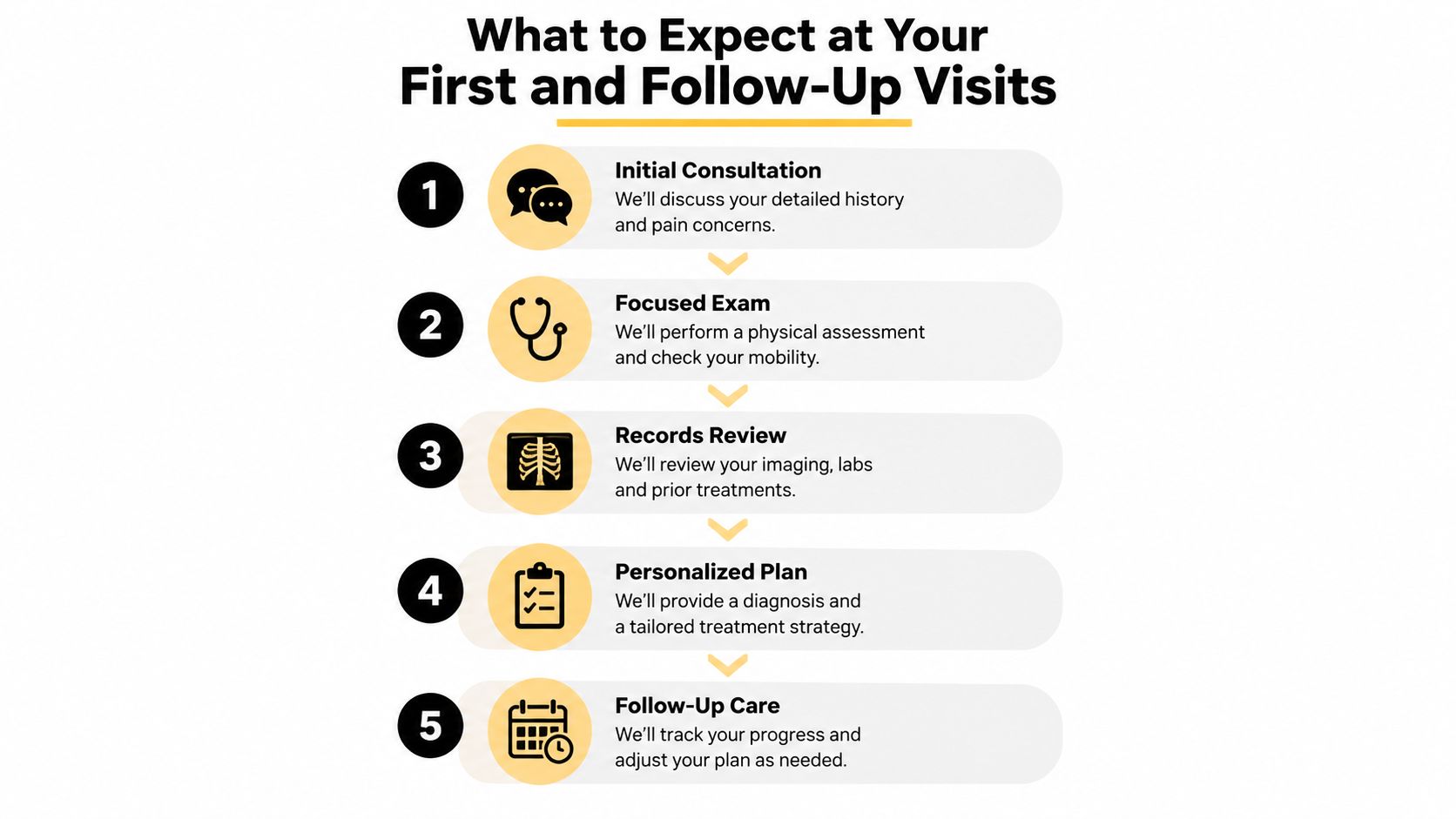
The first appointment is a diagnostic conversation, not a race toward a procedure. The clinician needs enough information to connect your symptoms with examination findings, prior treatment, imaging, and daily limitations.
The initial consultation
Expect questions about when the pain began, how it feels, where it travels, what changes it, and how it affects sleep, work, walking, driving, and household tasks. The specialist may perform a focused neurological and musculoskeletal examination, checking strength, sensation, reflexes, range of motion, gait, and provocative movements.
Records review often reveals why earlier treatments helped briefly or failed. Bring imaging reports and, when possible, the actual images, medication lists, operative notes, therapy records, and information about allergies or medical conditions. A written plan may begin conservatively, then add an image-guided procedure if the diagnosis and risk profile support it.
Follow-up and adjustment
Follow-up visits ask a practical question: what changed in your life? You may discuss sleep continuity, sitting tolerance, walking, work participation, chores, exercise, and side effects. A lower pain rating can matter, but improved function often gives the clearest evidence that the plan is helping.
For headache care, protocols can follow a schedule of Botox treatment every 12 weeks, with benefits building over 2 to 3 cycles. Ask the clinician how success will be measured and when the plan will be reconsidered if progress is limited.
Care may also involve your primary care clinician, surgeon, chiropractor, or rehabilitation therapist. That communication prevents conflicting instructions and helps each provider understand what the others are trying to accomplish. Before your visit, write down your top questions and describe pain in concrete terms using this guide to explaining pain to a doctor.
Bring your goals, not only your symptoms. “I want to stand long enough to cook dinner” gives the team a functional target that can guide treatment and follow-up.
How to Choose a Pain Management Clinic in Illinois
Choosing a clinic is a care decision, not just a location decision. A convenient office matters, but convenience won't compensate for a plan that treats procedures as isolated events or fails to explain what happens after an intervention.
What to check before scheduling
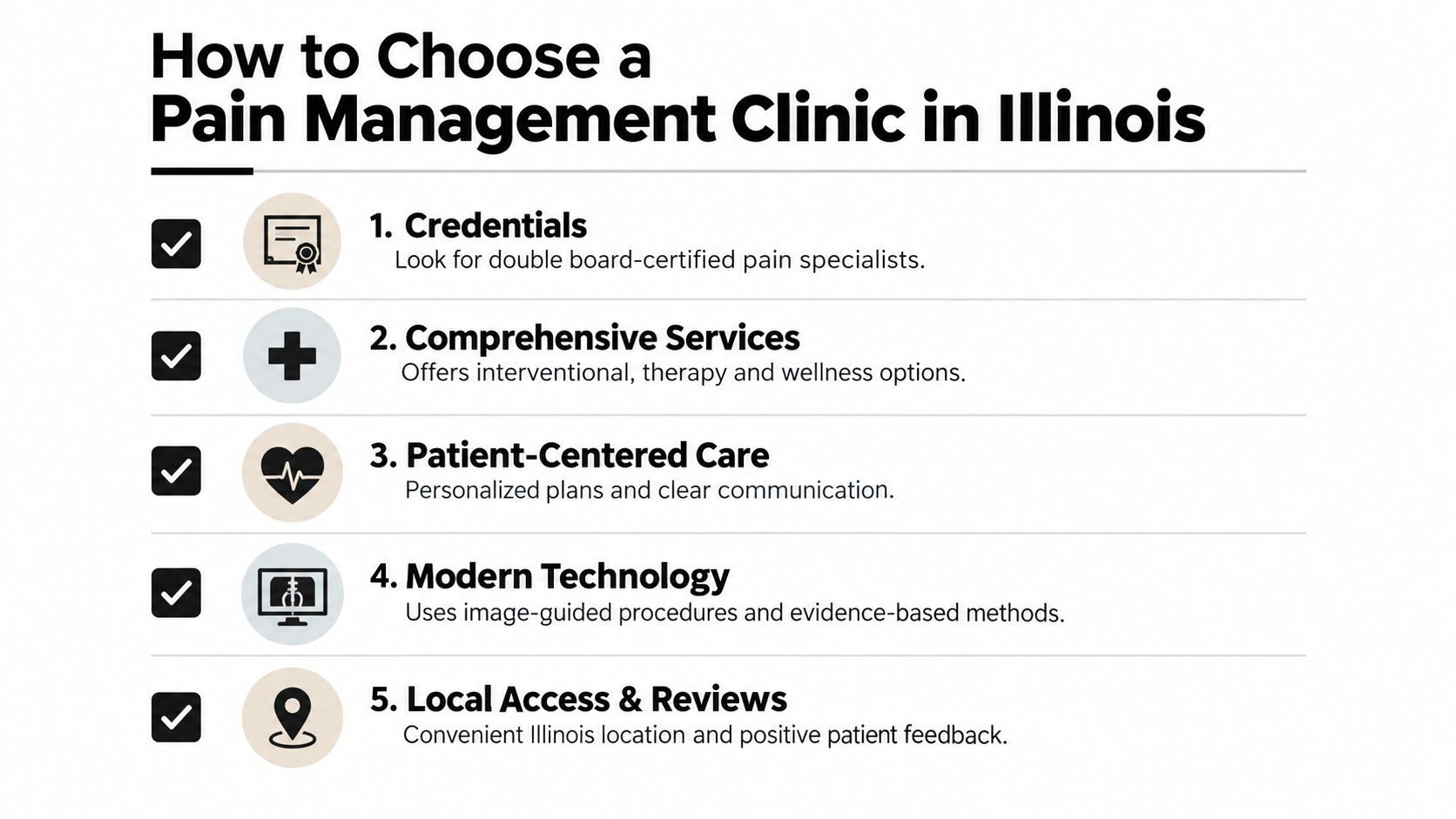
Look for a practice that can explain who evaluates you, how diagnoses are confirmed, and how the team coordinates rehabilitation. Useful questions include:
- Credentials: Does the practice identify appropriately trained, double board-certified interventional pain expertise?
- Service breadth: Can the clinic discuss medication strategies, rehabilitation, image-guided procedures, stimulation, and wellness support without presenting one option as universal?
- Safety process: Are procedures image-guided when indicated, and does the clinician review risks, alternatives, medications, and relevant medical conditions?
- Coordination: Will the team communicate with surgeons, primary care clinicians, chiropractors, and rehabilitation therapists?
- Case support: Does the practice explain how it handles workers' compensation and personal-injury cases, including documentation and communication?
- Access: Are weekday hours, insurance verification, scheduling, and follow-up arrangements clear before the first visit?
The patient survey data points to a real gap between expectations and delivery. In a survey of 1,581 people with pain, more than three-quarters of patients seen at pain clinics or centers said the center offered only pain doctors rather than broader specialists such as psychologists, nutritionists, or physical therapists. The survey on access to pain care supports a simple lesson: ask what “multidisciplinary” means at the specific clinic you're considering.
Why local Illinois access matters
Chicago Ridge is a village in Cook County with a 2020 census population of 14,433 and a July 1, 2024 estimate of 14,036. Palos Heights, also in Cook County, had 12,068 residents in the 2020 census and a July 1, 2023 estimate of 11,515. Census context for Chicago Ridge and Palos Heights population information show why nearby suburban service-area language is useful for local patients.
Residents in Chicago Ridge, Palos Heights, Palos Hills, Evergreen Park, and Hickory Hills may reasonably compare travel time, weekday availability, insurance processes, and continuity of care. For broader preparation, this specialist-doctor selection guide can help you organize questions before calling an Illinois clinic.
Access can still be difficult. An Australian report described average waits of six months to one year, sometimes two to three years, for multidisciplinary pain programs, while a Canadian survey found median waits of six months for a first appointment in public multidisciplinary facilities. Those findings come from different health systems, so they don't predict an Illinois appointment time. They do show why it's sensible to ask about triage, cancellations, referral requirements, and what support is available while you wait.
Taking the Next Step Toward Lasting Relief
Understanding what a pain management clinic does changes the first conversation. You don't need to arrive with a perfect diagnosis. You need a clear account of the pain pattern, the activities it disrupts, the treatments you've tried, and the outcome you want to regain.
Start by gathering imaging reports, medication information, procedure records, and therapy notes. Write down whether symptoms travel, whether numbness or weakness is present, and which positions or activities change the pain. Then identify a functional goal that can be measured during follow-up, such as returning to a work task, sleeping more consistently, walking farther, or completing household responsibilities.
A good plan may include more than one discipline, but it shouldn't feel random. Your specialist should explain why a treatment is being considered, what result would support continuing it, what risks and alternatives exist, and what you should do afterward. A procedure may reduce a barrier, while rehabilitation helps you use that opportunity. Behavioral and wellness support may help address sleep, stress, and the protective movement patterns that keep disability going.
Access deserves an honest conversation, too. If a clinic can't see you promptly, ask whether your referral has been triaged, whether a cancellation list exists, and whether your primary care clinician can help manage medication or urgent changes safely. A 2025 study found that more than half of respondents had difficulty obtaining prescribed pain medications, with reported consequences including unmanaged pain, psychological distress, and suicidal ideation. If you feel unsafe, experience new severe weakness, lose bowel or bladder control, or have thoughts of harming yourself, seek urgent medical help rather than waiting for a routine appointment.
For Illinois patients near Chicago Ridge and surrounding communities, the next step is a focused evaluation, not a promise of instant relief. The right clinic helps connect diagnosis, targeted procedures, rehabilitation, monitoring, and communication with the providers already involved in your care.
Midwest Pain & Wellness offers personalized interventional, opioid-sparing care for chronic back, neck, joint, nerve, post-surgical, injury, migraine, and cervical dystonia pain in Chicago Ridge and surrounding Illinois communities. Visit Midwest Pain & Wellness to learn about evaluation, coordinated treatment options, and how to request care.