You're in the parking lot after a fall, or you're at home trying to decide whether the soreness is just bruising or something that needs real treatment. The worst part is the uncertainty, because a slip on ice, a wet floor, or a twisted landing can look minor at first and still turn into back pain, neck pain, joint pain, or a head injury that doesn't settle down on its own.
Slip and fall injury treatment starts with a simple question, did the body absorb the impact without deeper damage, or did the fall set off a chain of problems that needs medical follow-up. That's especially true in Illinois suburbs around Chicago Ridge, including Oak Lawn, Palos Hills, Palos Heights, Worth, Bridgeview, Hickory Hills, Alsip, Burbank, Evergreen Park, and Orland Park, where patients often move from urgent care or the ER into specialty pain care when pain lingers.
When a Slip and Fall Becomes a Pain Specialist's Case
A lot of patients remember the same moment. You slipped on a wet grocery floor in Oak Lawn, caught yourself awkwardly on a curb in Bridgeview, or came down hard on ice in Palos Hills, then told yourself you'd be fine by morning. Sometimes you are. Sometimes the pain does not act like a bruise, and that is when the case stops looking like a simple nuisance and starts looking like a real injury pattern.
What happens first
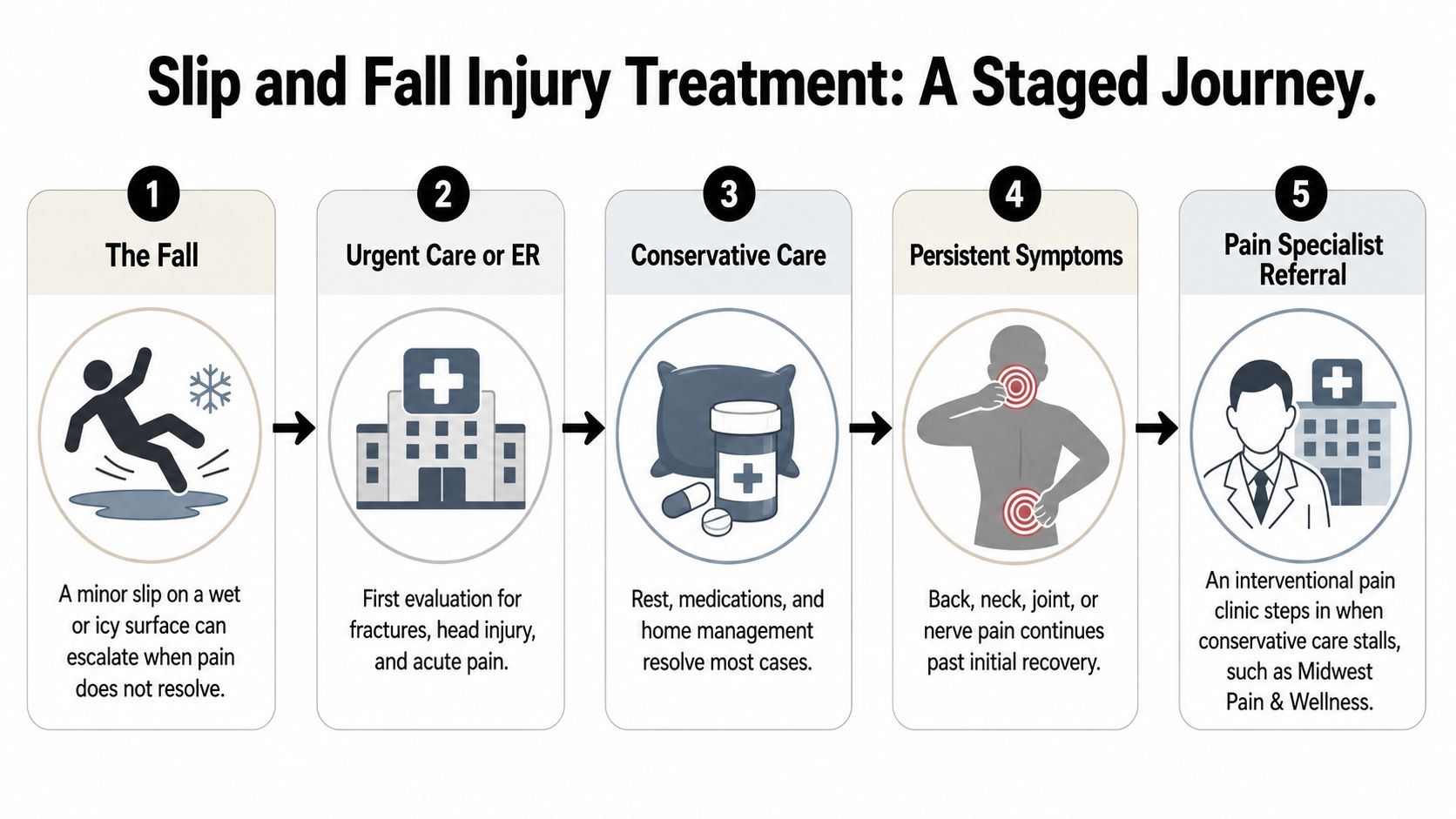
The first stop is usually urgent care or the ER, because the body's immediate job after a fall is to rule out dangerous injury first. Trauma teams use the A, B, C, D, E framework to check airway, breathing, circulation, neurologic status, and exposure before anyone settles into routine pain control or home care. The general approach is outlined in standard trauma references such as the MSD Manuals trauma approach.
That matters because a fall can be more than a sore tailbone or a swollen knee. It can mean a fracture, a disc injury, a head injury, or pain that wakes up an older arthritic segment of the spine and does not let go. In Illinois practice, specialty pain care often picks up after that first acute workup when the problem becomes persistent rather than self-limited.
Practical rule: if the pain is changing how you walk, sleep, bend, or think, it is no longer just something to watch.
Why referral matters
Midwest Pain & Wellness fits into the next layer of care after the acute danger has been screened out and the pain pattern still needs a diagnosis and a plan. That role becomes especially important when the patient is handling employer paperwork, workers' compensation forms, or a personal injury claim and needs care that lines up with the medical record from day one. For patients trying to find the right specialist after a fall, a focused specialist finding guide can make the next step clearer.
The goal is not to skip the ER. The goal is to keep the case from stalling there if the injury is going to need imaging, targeted injections, or structured rehabilitation. A slip can be brief, but the recovery path often is not.
Common Slip and Fall Injuries and the Red Flags You Should Not Ignore
After a fall, the injury pattern usually falls into a few familiar categories. Some are soft-tissue problems, such as sprains, strains, and bruises that can look worse than they are and then settle over time. Others are structural injuries that do not respond well to rest alone, especially when the impact involves the spine, hip, shoulder, wrist, or head.
What the body is really telling you
A twisted fall can strain the low back, irritate a joint, or trigger pain that travels into an arm or leg. A hard landing on the hip can leave someone unable to bear weight, which raises concern for fracture until proven otherwise. Head impact is different because symptoms can show up later, and the person who seems fine at first can develop a worsening headache, confusion, or fogginess afterward.
Older adults need extra caution. Falls are more common in that group, and they are more dangerous, with over 85% of fall-related deaths occurring among older adults in the U.S. (injury trial statistics). Another CDC-cited benchmark says more than 300,000 older people receive hospital treatment for hip fractures each year, and more than 95% of hip fractures are caused by falls, usually sideways (winter slip-and-fall risk).
Plain warning: if someone cannot stand, cannot remember the fall clearly, or develops new neck or back pain after hitting the ground, do not treat that as normal soreness.
When the threshold changes
Anticoagulant use changes the conversation right away. Cleveland Clinic advises hospital evaluation after any fall in patients taking blood thinners, because internal bleeding can be dangerous even when nothing looks dramatic on the outside (Cleveland Clinic slip-and-fall injury guidance). That concern is even higher after head, chest, back, or abdominal impact.
For a quick self-check in the first 48 hours, watch for these red flags:
- Loss of consciousness or confusion. That needs urgent evaluation, not a “let's see how it goes.”
- Severe headache, vomiting, or blurred vision. Those can point to head injury.
- Numbness, weakness, or radiating pain. Those suggest nerve involvement, as detailed in our guide to spinal nerve injury symptoms.
- Inability to bear weight. That is fracture territory until ruled out.
- New neck or back pain after the fall. That can mean spinal injury rather than muscle strain.
If those symptoms are present, same-day medical review is the right move. If they are absent but pain keeps building instead of settling, the case often belongs in specialty follow-up, not just home rest.
How a Pain Clinic Confirms the Diagnosis After a Fall
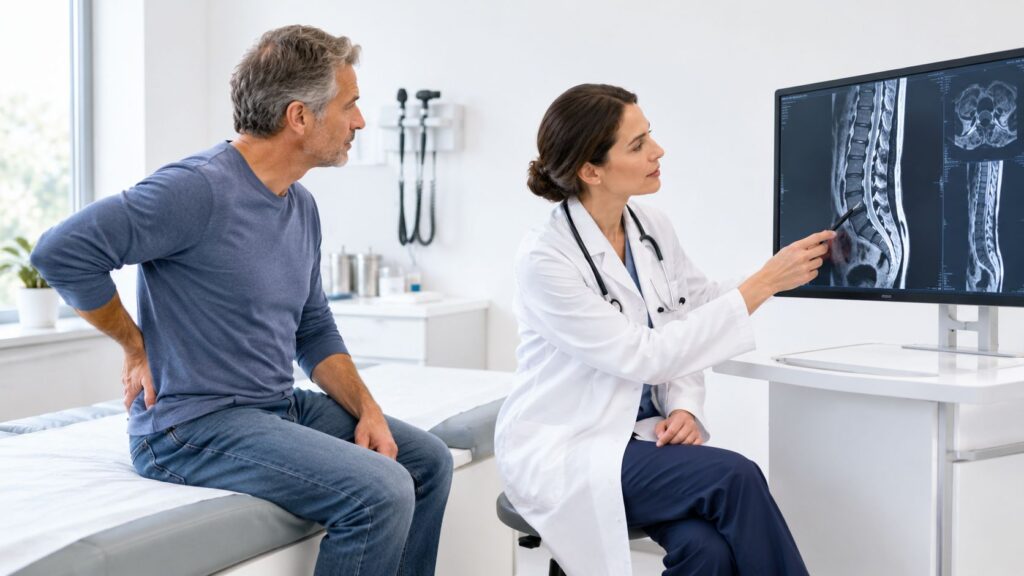
A pain clinic visit after a fall should answer a different set of questions than the emergency room visit did. The ER is focused on immediate danger. Specialty pain care is focused on what is driving the pain now, whether that is a joint injury, disc injury, nerve irritation, fracture, or more than one problem at once. That starts with a focused history, what hurt first, where the pain goes, what makes it worse, and what the initial imaging or discharge instructions already ruled out.
The exam has a purpose
A pain specialist uses neurologic screening, range-of-motion testing, palpation, and provocative maneuvers to narrow the source of pain. If a patient reports leg numbness after landing hard on the low back, that pattern calls for a different workup than soreness limited to the ribs or a shoulder that hurts only when it is lifted overhead. The exam is meant to separate mechanical pain from nerve irritation and from injuries that need a different treatment path.
If head injury is still part of the story, repeated neurologic checks matter until the mental status is clearly normal, and spinal injury concern should push the case toward imaging instead of watchful waiting. That kind of documentation belongs in the chart, along with the clinical findings that support the next step.
Which tests make sense
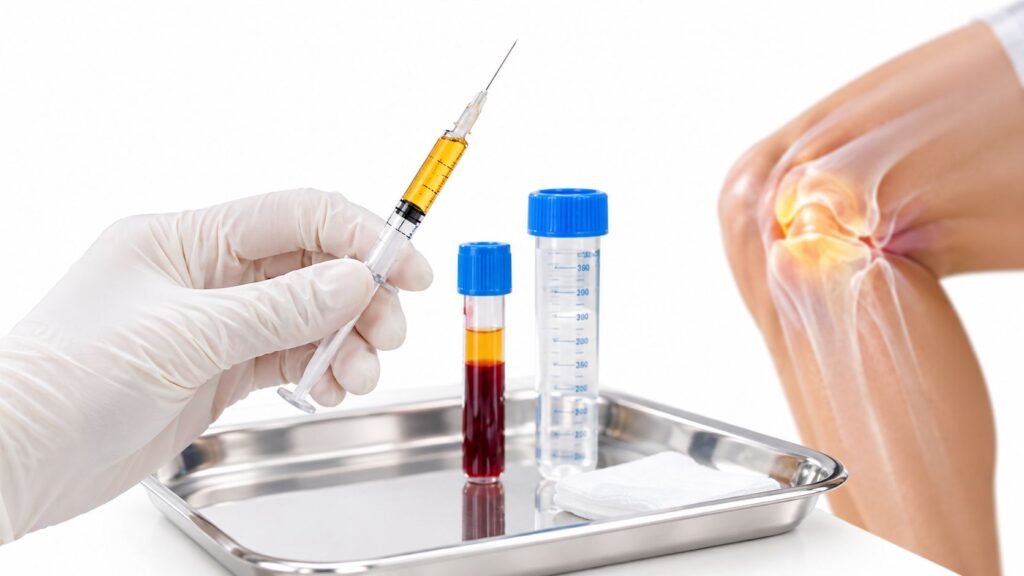
Imaging is not automatic for every fall, and that restraint is appropriate. X-rays help when fracture is a real concern. MRI is useful when the concern is soft tissue injury, disc injury, or nerve compression. CT gives more detail when a fracture is complex or when plain films do not show enough anatomy to make a safe decision.
A clinic visit should also include whatever already exists, ER notes, discharge papers, imaging reports, medication lists, and any work restrictions written after the accident. That reduces duplicate testing and keeps the next decision tied to the actual injury pattern rather than guesswork.
The same logic applies to back pain after a fall. A structured back-pain workup starts with the story, the exam, and the right imaging only when it changes care, which is laid out in this back pain diagnostic guide.
Conservative Treatments That Come First
Most patients should start with conservative care, because not every fall needs a procedure. Rest is useful only when it's paired with the right amount of movement, not when it turns into full shutdown. The body heals better with controlled loading than with weeks of guarding and fear.
What conservative care actually does
At this stage, the goal is to calm the injury down and keep the rest of the body from deconditioning. That usually means activity modification, short-term non-opioid medication when appropriate, and targeted physical therapy that matches the injury pattern. For a strained back, that's very different from generic exercise handouts. For a painful knee, it's not the same as treating a bruised wrist.
NSAIDs and acetaminophen can reduce pain enough to let a patient move, sleep, and participate in rehab. Muscle relaxants may help selected patients with spasm, but they don't fix a structural injury. That's the trade-off. Conservative care often buys time and function, but it doesn't correct a fractured vertebra, decompress a pinched nerve, or stabilize a painful joint on its own.
The mistake I see most often is waiting for rest alone to solve a problem that actually needs movement, supervision, and a diagnosis.
What good rehab looks like
Good rehab after a fall is specific. It should address pain control first, then mobility, then strength, then confidence with daily tasks. A weak ankle that never regains balance control is how people re-fall. A stiff back that never gets reconditioned is how people stay guarded and keep flaring.
Community therapists in the Illinois suburbs can be part of the plan, but the program has to be tied to the injury, not just a generic routine. If progress is flat after a reasonable conservative trial, that isn't failure, it's a clue that the pain source may need a procedure-based solution instead of another round of the same care.
Interventional Pain Procedures for Persistent Post-Fall Pain
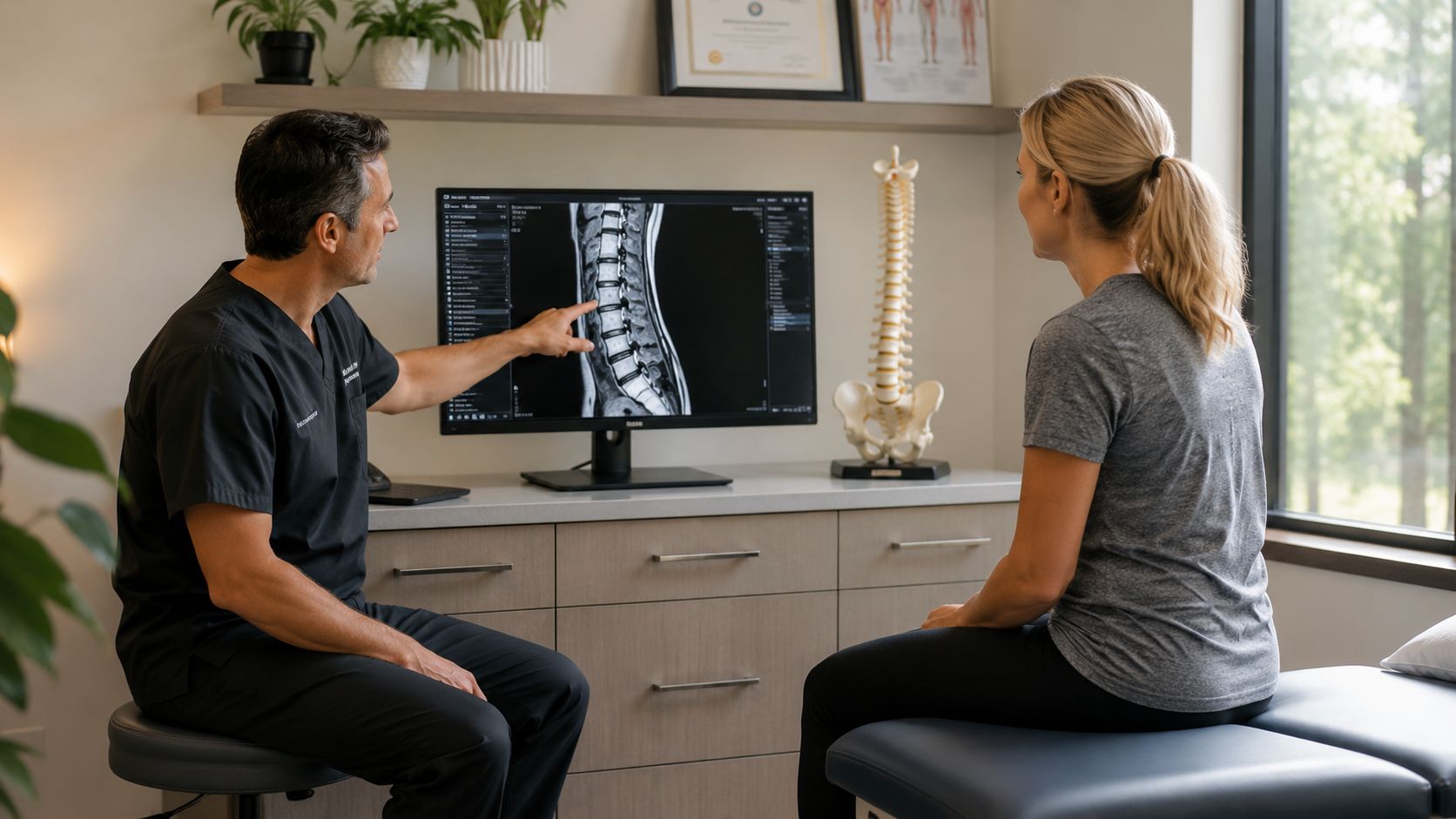
Specialty pain care becomes more than symptom management when pain returns after a fall, limiting work, sleep, or walking. Procedures can target the source more directly than medication alone. The right procedure depends on the diagnosis, and the wrong one adds cost without changing the problem.
Matching the procedure to the problem
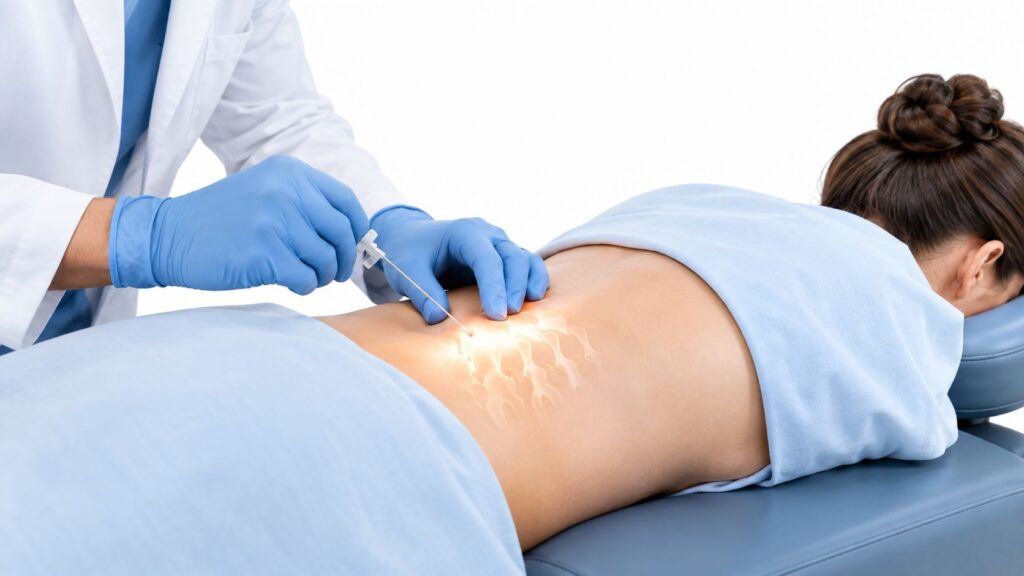
An epidural steroid injection can calm inflammation around an irritated nerve root when disc injury or spinal stenosis is driving pain down the leg. A medial branch block can help confirm whether pain is coming from the facet joints, and if it is, radiofrequency ablation can “reset the pain thermostat” for a longer stretch by interrupting the pain signals from those joints.
Sacroiliac joint injections make sense when the pain sits low and off to one side near the pelvis. Kyphoplasty is a different tool altogether, used when a fall causes a vertebral compression fracture and the goal is to stabilize the bone and restore function. For older adults, that distinction matters because a compression fracture is not the same problem as a strained muscle, and it should not be treated like one.
More advanced options when pain lingers
Some post-fall injuries leave nerve pain that doesn't respond well to injections alone. In those cases, peripheral nerve stimulation or spinal cord stimulation may be considered when the pain has become chronic and disabling. Minimally invasive lumbar decompression, often called MILD, and Vertiflex can also fit selected patients with stenosis-related symptoms when anatomy and prior treatment history point that way.
PRP may be discussed in select situations, but it's not a universal answer. The same is true for every intervention in this space. The procedure has to match the diagnosis, the imaging, and the functional problem the patient has.
Midwest Pain & Wellness uses an opioid-sparing approach, which means the goal is to improve movement, reduce pain generators, and restore function rather than just dulling the nervous system. That approach fits injury recovery better than chasing pain with medication alone, especially when the patient needs to get back to walking normally, sleeping through the night, or tolerating a work shift again.
Rehabilitation and Return to Work After a Slip and Fall
Recovery doesn't end when the worst pain fades. If anything, that's when the important work starts, because a patient still has to rebuild tolerance for standing, bending, lifting, driving, or sitting without triggering another flare. That step matters just as much for an office worker in Evergreen Park as it does for a warehouse employee in Worth.
The return has to be staged
The earliest phase is about protection and basic mobility. After that comes reconditioning, where the body relearns how to move without compensating around pain. Strengthening follows, then work hardening, which is where the patient practices the actual demands of the job, not just a generic workout.
A desk worker may return sooner with ergonomic adjustments, walking breaks, and limited sitting tolerance. A laborer needs a much stricter functional benchmark because lifting, carrying, climbing, and prolonged standing can expose weakness that a light-duty job never reveals. If the injury is a sprain, the curve is usually different than it is after a compression fracture or radicular pain from the spine.
Documentation matters
Return-to-work decisions are medical decisions, but they also shape employer communication and insurance handling. Patients should keep every discharge sheet, imaging report, work note, medication list, and follow-up instruction from the first day after the fall. That record becomes the backbone of both the treatment plan and the claim record when workers' compensation or personal injury paperwork is involved.
Practical takeaway: a good recovery plan makes it easier to prove what the injury changed, how it affected function, and when work restrictions were medically necessary.
Flare-ups during rehab are common and don't always mean the plan is wrong. They often mean the pace needs adjustment. Fear of reinjury can slow patients down just as much as pain can, which is why graded progress usually beats a hard push back into full duty.
When to Seek a Pain Specialist and How Illinois Injury Cases Work
If pain is still limiting sleep, walking, or work after 4 to 6 weeks, specialty evaluation is reasonable, and in some cases it should happen sooner if numbness, weakness, or repeated flares show up. A second opinion after an ER discharge is also smart when the diagnosis feels incomplete or the recovery trend is going the wrong direction.
Illinois patients often need more than a diagnosis. They need a clinic that can document the medical picture clearly enough for a workers' compensation carrier or personal injury attorney to use it without confusion. In a case with downstream costs, that early documentation protects both health recovery and the financial side of the claim, which is especially relevant when a fall leads to prolonged treatment or missed work. The occupational burden can be substantial, as CDC data showed 559,600 nonfatal workplace slip, trip, and fall cases involving days away from work in 2022, which was 27% of all such occupational injuries and illnesses in the U.S. (CDC occupational slip, trip, and fall data).
For patients in Oak Lawn, Palos Hills, Palos Heights, Worth, Bridgeview, Hickory Hills, Alsip, Burbank, Evergreen Park, and Orland Park, the best next step is a specialist visit that ties the symptoms, the imaging, and the paperwork together before the case gets messy.
Midwest Pain & Wellness helps Illinois patients sort out post-fall pain with medical evaluation, image-guided procedures, and coordinated documentation for injury claims. If your pain hasn't settled after a slip and fall, visit Midwest Pain & Wellness to get the next step moving with a clinic that understands both recovery and the paperwork that goes with it.